Tag Archives: Christ

Swords Into Ploughshares

Sermon preached for Advent Sunday 2025 based on Isaiah 2:1-5 and Matthew 24:36-44

The book of Isaiah is one of my go-to books in the bible when I want to think about hope and the future. It is traditionally attributed to Isaiah ben Amoz, who prophesied during the 8th century BC, primarily in Jerusalem, whose ministry occurred during a tumultuous period in the history of the Israelite kingdom of Judah, which was marked by political instability and threats from powerful empires like Assyria and Babylon. His prophecies addressed both the immediate concerns of his time and the future of Israel.

Now, the first thing to say is that when we talk about Israel in the bible, it is not the same thing as the modern- day Zionist state that was created in 1948 through the Balfour Declaration of 1917, and we shouldn’t equate one with the other. Biblical Israel, spoke about a covenant people of God, whose religion had ancient roots, based on the Torah and the worship of the God of Abraham, Isaac, and Jacob. Zionism, on the other hand, is a modern political ideology that seeks to establish and maintain a Jewish state, irrespective of religious beliefs.

However, these two factors played a part in making me initially feel saddened that Isaiah’s prophecy they ‘they shall beat their swords into ploughshares, and their spears into pruning-hooks; nation shall not lift up sword against nation, neither shall they learn war any more’ seems so remote today as it perhaps has throughout human history.

I would venture to say that every time each of us prays, we include a prayer for peace, it being one of the most longed for answers we seek, yet it never quite materialises in the way we hope. I think this feeling that I had was increased by having listened to a track that Elton John wrote on his album Blue Moves called “If There’s a God in Heaven (What’s He Waiting For?)”. The song is characterized by its powerful lyrics that address themes of societal breakdown, poverty, and the apparent indifference of a higher power to human suffering.

I then have to shake myself away from these thoughts and remember that God always hears our prayers, is aware of and is already dealing with these situations, by putting the right people in the right place to bring about peace, but that the gift of human free-will means that political and personal ambitions of some individuals and groups are deaf to the possibility that people could actually live in peace as a human race.

So, we look at global conflict, economic uncertainty, cultural turmoil, and natural disasters, and we wonder where history is heading and when things will finally be made right. Scripture does not shy away from that longing, and this morning’s readings speak directly to the tension of waiting, and the hope we have in God’s promises and the need to be prepared. As we enter the Advent season, we are called to prepare our hearts for the coming of Christ and the importance of being vigilant and ready for his return.

Isaiah presents a vision of the future where ‘the mountain of the Lord’s shall be established’, and ‘all the nations shall stream to it’. This powerful imagery symbolizes a time of peace and unity under God’s reign, and he encourages us to look beyond our current struggles and to envision a world transformed by God’s presence. Whilst Jesus is giving us a warning about the future – that we must be ready because the exact time of his second coming is unknown.

Isaiah sees something extraordinary: ‘In days to come’ he says, God’s mountain will be raised up, and all nations will stream to it. This is not just a picture of Israel’s hope—it’s a picture of the world’s hope. He describes a future where the desire of the nations is God Himself. This is truly remarkable because as I’ve just mentioned, our world today is drawn toward power, wealth, and conflict. But Isaiah sees a day when the gravitational pull of the world shifts—when people are attracted not by violence or self-interest, but by the wisdom, justice, and beauty of God.

Then we have that most beautiful promise of complete peace, because all thoughts and means of conflict will end. Isaiah is not offering a politician’s promise or a human dream. He is offering God’s future. A future where instruments of destruction become tools of cultivation. A future where military forces are no longer needed. A future where peace is not maintained by threat, but by transformation.

Isaiah’s vision doesn’t end simply with this poetic imagery, the following verse is a command to walk in the light now. ‘O house of Jacob, come, let us walk in the light of the Lord!’. In other words, live now as if that future is already coming, by letting the future shape the present.

So, if Isaiah is showing us the goal, Jesus shows us the urgency. Jesus says very clearly, ‘But about that day and hour no one knows…only the Father. He also uses a simple but sobering image: a homeowner who would have stayed awake if he knew when the thief was coming. This timing belongs to God alone; not to angels, nor prophets, not to the most educated believers, not even Jesus in his earthly humanity. We cannot predict the day, we can only prepare for it.

They shall beat their swords into ploughshares,
and their spears into pruning-hooks;
nation shall not lift up sword against nation,
neither shall they learn war any more’

Jesus compares his second coming to the days of Noah. People were eating, drinking, marrying—living ordinary lives—when suddenly everything changed in an instant. There will be no email alert, no breaking-news headline, no world calendar reminder. Life will be going on as usual when Christ returns, which is precisely why we must always be ready. A readiness born out of love, loyalty, and longing—not anxiety.

Isaiah says God’s future is glorious – walk toward it. Jesus says God’s coming is unexpected – stay awake for it. So how are we invited to live between these two messages? Well, Isaiah invites us to allow the future peace of God to shape the way we see today’s world. Christians are not naïve optimists who pretend evil doesn’t exist. We are hopeful realists who believe evil does not have the final word. When the world is filled with conflict, when nations threaten nations, when peace seems impossible – Isaiah reminds us that God has already declared the ending.

And Jesus says readiness is not about predicting the future – it’s about being faithful in the present. Being ready does not mean standing on a hilltop, staring up at the sky. It means doing the everyday work of discipleship: loving our neighbours, seeking justice, forgiving enemies, serving the poor, praying without ceasing, living with integrity, practicing mercy, following Jesus when no one else is watching; and that’s plenty to keep our thoughts and bodies occupied in doing what we are called to do.

Jesus’ words challenge us to examine our priorities and how we spend our time. Are we focused on the mundane aspects of life, or are we actively seeking to grow in our faith and relationship with God? It is a call to action, urging us to reflect on how we can contribute to this vision of peace and justice in our own lives and communities. It challenges us to be agents of change, promoting reconciliation and understanding among nations.

The world may look dark at times, but dawn always begins in the dark. And the church is called to be a people standing on the edge of morning – a people whose lives shine with the coming light of God.

So, this Advent let us commit to deepening our relationship with God, through prayer, reading the scriptures, and acts of service. These things help us stay focused on what truly matters and prepare our hearts for the coming of Christ. To be inspired to live out our faith actively, contributing to the vision of peace and justice that Isaiah proclaims.

This Advent season, let us prepare our hearts and lives for the arrival of our Saviour, who comes to bring light and hope to the world, to anticipate the celebration of Christ’s
birth but also prepare for his ultimate return, living each day in the light of His love and grace.

This Advent let us pray for peace and know that the Prince of Peace comes to show us the way.

Amen

When looking for an image to go with this particular blog I came across this poignant painting. I would not dare to suggest what the artist, Michael Cook’s own thoughts were behind its composition, but it speaks to me of longing and hope, that in the midst of war there is a reason for fighting and a dream that new life will come, and that swords will truly be made into ploughshares. This beautiful piece of artwork was commissioned by Melbourne Parish Council to commemorate the centenary of the Armistice, and all money from sales goes back to the Parish Council. https://www.hallowed-art.co.uk/product/swords-into-ploughshares/

The Perfect Time In The Perfect Way

Sermon preached on Holy Cross Day – 14th September 2025 based on Philippians 2:6-11, John 3:13-17

May I speak and may you hear through the Grace of God: Father, Son and Holy Spirit. Amen

This morning, I want to start with a series of question for you to think about. What if Jesus had never come 2000 years ago, and instead was born just before the beginning of the twenty first century, around 1992 say?  What would his birth, life and ministry have looked like in the present day, but more importantly, how would it end, in order to produce the same results of millions of people coming to believe in him and in God as part of a worldwide religion?

Would he have been shot with an assassin’s bullet? Both the good and the bad have died in this way. Would he have been caught up in some major disaster, helping others and dying? With all of the social media available today, would his death have been filmed and the world clicked more than a million times on the video, with sad, caring emojis, whilst the responses became full of condolences, tasteless humour and vitriolic comments?

The problem is – and it’s not one that I want to try and reconcile at the moment – is that being legally condemned and sentenced to death is no longer an option in our justice systems.

Which is why I believe that Jesus died at the perfect time and in the perfect way.

Whatever we might think of the Jewish or Roman systems of justice, the fact that it offered crucifixion as the ultimate punishment, has enabled us to use it as means to truly see the extent of God’s love for the world and us as individuals. Which is why today the church celebrates Holy Cross Day in its calendar of liturgical feast days for remembering and honouring saints and on this occasion holy objects.

From as early as the seventh century, the church celebrated this feast day to acknowledge a particular event. This was a discovery on the 14th of September around 326AD, by Helena, the mother of the Roman emperor Constantine, of what many believed to the empty tomb and true cross of Christ during a pilgrimage to Jerusalem.

She had ordered a pagan temple to be destroyed, which revealed, buried underneath, three crosses, which were assumed to be the crosses of Jesus and the two thieves. A painting by Agnolo Gaddi completed in 1380 in the choir of the Franciscan Basilica of the Holy Cross in Florence (see image above) depicts Helena making this discovery.

A first glance the painting presents six crosses, which makes it look a little like a builder’s yard in which Helena is trying to decide which cross is the real one. However, closer inspection reveals that the artist has joined two parts of the story together into one image, and on the left-hand side, in order to determine which one is that of Christ, Helena has a dying woman in a bed brought to the site, who was completely healed at the touch of the third cross. The right-hand side appears to be the cross being erected on the site of the church of the Holy Sepulchre that Emperor Constantine had built at a later date.

The story was also recorded by Jacobus de Voraigne in his book, The Golden Legend, which became an immensely popular and influential source of Christian lore during the Middle Ages, providing a convenient educational resource for clergy and laity alike, presented in an accessible, narrative style. It was one of the most widely read books of its time, second only to the Bible, and significantly influenced medieval art, poetry, and stained-glass windows, allowing ordinary, everyday people the chance to visualise the stories, many of which they were unable to read for themselves.

Helena’s ‘True Cross’ was subsequently brought back to Europe as a prize of the early church, and as news of it began to spread, countless pieces and splinters began showing up all over the continent.  The great majority, however, were forgeries (many made from wood that does not even exist in the Holy Land); and while Helena’s cross probably did come from Jerusalem, and while it almost certainly was a real cross in the sense that it was used for executions, there would have been hundreds, if not thousands of such crosses in Judea, to which we should add the likelihood that recycling, decomposition and the conversion to firewood after too many uses, makes its authenticity questionable.

Based on this, it is highly unlikely that the actual physical cross on which Jesus died would have been discovered. The fact is we don’t really need it to be so, because rather that seeing the cross as an object of worship in itself, it is better to recognise it as a symbol of Jesus’ sacrifice and salvation. It reminds us to boast in nothing, ‘except in the cross of our Lord Jesus Christ’.

We may regularly make the sign of the cross and many choose to bow to the cross in our liturgy, not as an idol to be prayed to, but a potent visual symbol that embodies the depth of God’s love and the height of Christ’s glory at the perfect time and in the perfect way.

The cross is both scandal and glory, weakness and power, shame and victory. When we look at the cross, we see the deepest mystery of our faith: the Son of God humbling himself to the lowest place in order to raise us up to life. The cross is not an accident of history, but the perfect plan of God’s redeeming love.

Paul tells us whilst Jesus had equality with God he does not cling to this glory. Instead, He empties himself, taking the form of a servant, entering our humanity, and embracing the frailty of flesh, which means he goes lower still, through obedience to God and to death, through the most shameful, agonizing death the world could imagine: the cross; …which was the lowest place imaginable. It was not only brutal but humiliating, reserved for criminals, designed to shame as well as kill. This shows us how far God was willing to go for our salvation. It strips away any illusion that we can earn God’s love.

As Jesus explains to Nicodemus, the Son of Man must be lifted up, which refers both to the cross and to his glory and exaltation. ‘For God so loved the world’ and the cross is the measure of that love. The cross is not about wrath unleashed but love poured out.

And we know that the story does not end in humiliation. The cross is not just a place of suffering. It is the turning point of history. It is the moment when the King is revealed at the perfect time and in the perfect way —not in worldly power, but in sacrificial love. His throne is a cross. His crown is of thorns, and he reigns forever.

The cross is our landmark, our anchor, our hope.

At the cross we see the depth of God’s love—so deep that He gave his only Son for us.

At the cross we see the height of Christ’s glory—so high that every knee will bow before him.

So let us look to the cross—not as spectators, but as believers.  We must allow it to shape how we live. We are called to humility, to self-giving love, to obedience to God’s will. The cross calls us to trust—not in our own strength, but in the love of God revealed in Jesus.

To take up our cross is to walk the path of humility, to put others before ourselves, to live in sacrificial love. The world may see that as weakness. But at the foot of the cross, we know it is the way of Christ, the way of true life, in fact the perfect life, to be lived at the perfect time and in the perfect way. Amen.

Do You Know How Much That Cost?

Sermon preached on Passion Sunday 6th April 2025 based on John 12:1-8 and Philippians 3:4b-14

‘Do you know how much that cost? I could have used that for a lifetime,’ was the heated response to discovering my best perfume bottle smashed on the bathroom floor and my two daughters looking guilty, but both ready to finger point the blame on the other. ‘But mummy, we were playing princesses and you always look like a princess when you go to one of daddy’s balls, and we wanted to smell the same’.

How could one carry on being angry, with that explanation, but I did try hard for a little while longer and there was no pudding at dinner time…

The fact is we make a lot of value judgements, about things that we think are precious, we sometimes even hoard things, thinking that one day we will benefit from being the only one that has a year’s supply of toilet paper, and we salt our money away forgetting that it will be of no value to us when the final curtain comes down, and we have not made any memories for those who come after us to share.

Now I’m not suggesting that we should waste these things, and we are not going to solve world hunger or provide for all those less fortunate than ourselves overnight, but knowing when to be generous, not only with your money or your time but your love is surely more important.

In our gospel reading today we find Jesus once more visiting the home of his dear friends, Mary, Martha and Lazarus. He is on his way to Jerusalem to face a fate that will ultimately prove all of the things that he has taught his followers and fulfil the prophetic messages that the Saviour of the World, the Messiah has lived among them. It’s a fate that he accepts willingly but which is much harder to accept for those who have loved and known him as a man living among them, a man which the words of one worship song describes as ‘way maker, miracle worker, promise keeper, light in the darkness’.

Of all the people surrounding Jesus that day in the house, it was Mary who realised that now was not the time to hoard her most precious possession, but to use it unstintingly to show her devotion to the person who had commended her choice to sit at his feet and had taught her everything she needed to know about how life should be lived.

Now it was her turn to offer a deep reverence and recognition of Jesus’ impending sacrifice. It also held a rich symbolic meaning, that through the act of anointing, an action usually reserved for the consecration of priests and kings, she recognised Jesus as the true Messiah. Where she once sat, she now anoints his feet with her hair, displaying humility and devotion.

Her use of pure nard, a valuable and aromatic oil, signifies the importance and sacredness of the moment, and its perfume was bittersweet, filling the house with its fragrance, but also a prophetic act foreshadowing Jesus’ death and burial. His acknowledgement that this was done ‘in advance of my burial’ also allows us, who already know what is to come, that there would be no need to follow the normal burial rituals as there would be no body in the tomb which to anoint!

Still, there has to be a killjoy to this incredible act of devotion, and here is where Judas steps in. I have to admit that having written a thesis on whether he might be identified as God’s scapegoat, I have own up to having a soft spot for the reviled figure of Judas.

Without Judas at this time there would have been no ‘betrayal’, no manipulated trial, no crucifixion and thereby no resurrection. Perhaps it was inevitable that someone amongst his followers would have eventually turned against him, with the promise of financial reward, but the poignancy that it was one of the disciples at this point in the story is both hard for us to comprehend as its consequences were to be for Judas.

Being a disciple meant having a unique and intimate relationship with Jesus, which makes Judas’s later actions even more significant and tragic. John’s stark statement, ‘the one who was about to betray him’ foreshadows the fulfilment of Old Testament prophecies, such as Psalm 41:9, which speaks of a close friend lifting his heel against the psalmist.

Even my close friend, someone I trusted, one who shared my bread, has turned against me.
Psalm 41:9

Moreover, Judas’ betrayal is a critical event in the Passion narrative, raising questions about predestination and human responsibility, as Judas’ action were foreknown by Jesus, yet he acted of his own volition. Here was someone who must have grown to know the true value of being one of Jesus’ disciples, but who wasn’t ready to give his all if it meant giving up what was precious to him, his life, which is ironic as his decision ended up with him doing just that.

Judas’s questioning attitude contrasts with the faith and devotion expected of a disciple and follower, highlighting his internal conflict and eventual betrayal. For John the Evangelist, who was writing his gospel some fifty years after the events of Jesus’ passion, his thoughts about why and what Judas had done had not improved with age. His scathing remarks about a thief, who stole from the common purse, does not speak of love and forgiveness, and by this time the name of Judas had become an idiom to mean someone whom you accused of being deceitful and a betrayer of friends or country.

And then there is Paul, persecutor turned zealot, but with good reason. As a 1st century Jew, he could claim to have attained a sufficient righteousness before God, exemplified by adhering to the Torah’s commandments and engaging in acts of loving-kindness, aiming to be a light unto the nations and fulfilling his purpose as one of God’s chosen people.

Yet this valuable store of righteousness, is being cast aside in exchange for what Christ is offering instead. Not a righteousness ‘that comes from the law, but one that comes through faith’. Everything is being swept aside as ‘rubbish’, of so little worth because of the value of the heavenly prize that Jesus offers, eventual resurrection from the dead.

So where do we see ourselves in all of this? Are we willing to give up everything? Do we give up those things that are precious to us to show how much faith we have?

The fact is each and everyone of us is seen by God as individuals, people who face daily decisions about how we live our lives. He knows the choices we have to make about how we spend our time and our money, but more importantly about how we share our love and our care for others. How we share the Good News that Jesus’ passion brings for all of us.

Perhaps this could be a new beginning as once more over the next couple of weeks we are going to hear the story of the greatest gift ever offered to us all. Let’s just make sure that we really hear the message and be prepared to accept and continue to generously share it each and every day going forward.

Amen

Letting Go

Talk based on John 17:11-19

I wonder how many of you, if you’ve ever been a parent, or have trained someone in an apprenticeship or simply have given some instructions and then had to leave someone to carry them out without supervision. Then we come a point that we all have to let someone go in order for them to flourish on their own. It can cause much heartache and a lot of prayer that they will remember everything you have taught them.

I can remember both of my girls leaving home and the feeling of helplessness that I wouldn’t be there to step in and protect them if they came up against some adversity, and over the years, like everyone I suspect, from time to time things have not always gone smoothly. but I have prayed to God that he would be there with them, and sure enough whether the outcome was what I would have wanted or not, he seems to have answered my prayers.

Of course, I haven’t had to face those times of feeling powerless to act alone, and reaching out for prayer from others and sharing my concerns has helped me see what is happening a little clearer and gain greater understanding that a mother cannot always make things better with a hug and a magic kiss – although it works with my grandchildren… but that prayer can be the most valuable thing I can do.

In today’s gospel, Jesus’ prayer for his disciples continues from that we heard on Sunday, and like a lot of John’s gospel it is full of theological toing and froing around the topic – but at its heart it is telling us that Jesus will be letting go of his earthly protection of the disciples and it handing them into the care of the Father. He has taught them how to live by God’s Word and has warned them of the dangers they will face as his followers in their lives on earth. He knows that this will set them at odds with a lot of people. He needs them now to take up the reins of his ministry and start to do things for themselves, however hard that might be to start with.

So how good a job did they do on their own?

For nearly 2000 years the Word of God has been lived by millions of people, from that small group of Jews become Christians to worldwide mission and founding principles of many democracies. Not everyone has agreed that it is linked to a higher power than that on earth. Its radical idea of living in a loving community, of showing vulnerability and forgiveness has caused many to decry its power. For the disciples themselves, not many lived to see old age but became matyrs. However, they remained true to their mission and set an example for others to follow. And follow they did, which is probably one of the reasons that we are here today.

How often though do we feel like giving up on this difficult world of ours, so resistant to the gospel and its values; when we look at our divided world, where not even those who believe in Christ are united. Yet Jesus, who is fully aware that we share his same lot of being hated by the world, does not ask the Father to remove us from the world, but to protect us, as we do our best to carry out our mission, and we must continue to pray for healing and the overcoming of division. For the disciples and for us, we shouldn’t ask to be taken out of the world with all its messiness. This is where we belong until the time comes for us to follow Jesus to the place he was going to. We can face all of the risks and the struggle that it sometimes is for survival because we can be assured of God’s protection.

Jesus tell us that we too are being ‘sent’ in his name to continue his mission. Our mission as his followers is in the midst of and in the depths of the world. He wants his love and message inserted in the centre of the world, the city, the neighbourhood. In following him in mission and love, we are ourselves blessed. Jesus’ love for the disciples didn’t fade because he wasn’t with them any longer, it endures eternally. When he asks God to protect and guide them this is a request that includes all those that have come after and are going forward today

The reality of the risen Christ is that, from now on, nothing and no one will ever be able to separate us from his love and the same is true for those we love. Parents and guardians spend their best years guiding children in life and in faith. Then there is a gradual letting go as they grow into adulthood.

Like Jesus we should pray for those who move beyond our active care. This morning, at this very moment, my daughter Ruth is in hospital undergoing a planned C-Section operation for the early arrival of my latest grandchild. She is beyond my physical reach, but I am praying for her and the doctors and nurses, for their skills and protection. But most of all I have placed them in God’s hands, because the Father’s arms are a safe place for them and for us.

Amen

Go back

Your message has been sent

Warning
Warning
Warning
Warning.

What’s In A Name?

Sermon preached at St Peter’s, Boyatt Wood on New Year’s Day 2023 based on readings Luke 2:15-21 and Psalm 8

May I speak and may you hear through the Grace of our Lord; Father, Son and Holy Spirit. Amen

Names are important to us, at least I’m very attached to mine. It allows me to be identified through my passport and bank account. It put me in my place on the school register and other lists, and it gives me a place within my family history… It’s also useful for people to grab my attention.

As parents we might have agonised for months what our unborn child should be called. Maybe we had a family name in mind, or we read baby name books to try and find something a little unusual and more unique, or perhaps we checked what the initials might spell, after all would it be easy to go through life as Graham Oliver Downes?

If you had been born a boy in Tudor times you would probably have received one of only seven names, John, Thomas, William, Robert, Richard, Henry or Edward, and been the same as every other Tom, Dick or Harry.

However, our parents today did not have any of these problems, because the name of their son had already been decided for them. He was to be called Jesus. His name had been decided before Mary had even known she would become pregnant and was told to her by the angel Gabriel, ‘And now, you will conceive in your womb and bear a son, and you will name him Jesus’ (Luke 1:31).

Joseph, too, was informed in a dream, ‘do not be afraid to take Mary as your wife, for the child conceived in her is from the Holy Spirit. She will bear a son, and you are to name him Jesus, for he will save his people from their sins’ (Matthew 1:20-21). And he did just that, from Matthew’s gospel we hear that, ‘he took her as his wife, but had no marital relations with her until she had borne a son; and he named him Jesus’ (Matthew 1:25).

It is only in Luke though that we hear that Jesus undergoes the Jewish ritual of circumcision, at 8 days old, and receives the name ‘given by the angel’.

Actually, the name Jesus was quite popular in first-century Judea. For this reason, we often hear him being distinguished by his childhood home, when he is ‘Jesus of Nazareth.’ His neighbours would have simply known him as the son of Joseph the carpenter, but his name was important for other reasons.

The name Jesus, announced to Joseph and Mary through the angels, means ‘God (or Yahweh in Hebrew) saves’ or ‘Yahweh is salvation.’ Transliterated his name is Yeshua, a combination of Ya, an abbreviation for Yahweh, and the verb yasha, meaning to rescue, deliver or save. Now we can see it’s significance when applied to the person of God who has become our Saviour.

Jesus was sent by God for that particular purpose, to save us, and his personal name bears witness to that mission. In Acts we hear Peter, emboldened by the Holy Spirit declare, ‘There is salvation in no one else, for there is no other name under heaven given among mortals by which we must be saved’ (Acts 4:12). Mortals, whom we hear in this morning’s Psalm, God is mindful of, having ‘made them a little lower than’ himself. Yet who will be saved?

The call of salvation goes out into all the world, and all who come to God through Christ become part of the people of God. They are to be saved from their sins through the power of the Holy Spirit, and when I say ‘they’, I include all of us here today. This is truly the good news of Christmas. The baby born on Christmas Eve is the Son of God who came to save his people from their sins.

If ever a name was packed with significance, it is the name Jesus. It is the name that establishes the tone for everything we should do, ‘in word or deed’ as Christians. We are called to proclaim that salvation is in the name of Jesus alone, that we receive forgiveness through his name and that at our baptism we will receive the gift of the Holy Spirit. Healing and miracles were performed in the name of Jesus, and he teaches us to pray in his name, so that as John’s gospel tells us, ‘I will do whatever you ask in my name, so that the Father may be glorified in the Son. You may ask me for anything in my name, and I will do it’ (John 14:13-14).

In every way, Jesus lives up to His name. His name reminds us of the power, presence, and purpose of the risen Christ. It assures us that God’s gracious intention is to save us. Our Lord Jesus brought God to humanity and now brings humans to God through the salvation he purchased.

But what of our names? It is easy to overlook the extraordinary nature of Luke’s statement that Jesus’ name was told to Mary pre-conception, implying God’s pre-knowledge of Jesus and the role he would assume. Of course, we can read the Old Testament prophecies about a Saviour, and accept that, as one of the Persons of the Trinity, Jesus would have been ‘known’ before he began his life as one of us.

The fact is that we too have always been known and ‘named’ before we were conceived. If we read verses from Psalm 139, about an all-knowing God, For it was you who formed my inward parts; you knit me together in my mother’s womb… My frame was not hidden from you, when I was being made in secret, intricately woven in the depths of the earth. Your eyes beheld my unformed substance.

God knows all of us by name. We are not just numbers. We are persons with names and each of us have a different life story. There are millions of us, yet God knows each of us personally. We should never forget that. God does not treat us impersonally either. He knows our history. He knows our struggles. He knows our personalities. He knows us inside out. Yet he loves us without hesitation. We don’t need to fake anything in order to be good enough for God. We can come as we are and know that God receives us with great joy. God knows us by name.

I can think of no better way to start a New Year than with a fresh realization that we are wholly and deeply known to a loving God, and that, whatever our individual ‘name’ may be, our own unique and distinctive calling which we are continually discovering, if we are Christians, is to walk under the banner of the name of Jesus Christ.

 O Lord, our Sovereign,
how majestic is your name in all the earth!

Amen

Go back

Your message has been sent

Warning
Warning
Warning
Warning.

The Light Shines In The Darkness

Sermon preached on the Second Sunday Before Lent based on the following passages – John 1:1-14 and Colossians 1:15-20

May I speak and may you hear through the Grace of our Lord; Father, Son and Holy Spirit. Amen

In the beginning was the Word… perhaps one of the most evocative starts to a gospel or indeed any scripture, where we are presented by a mystery. Of course, one would expect nothing less of John and whilst all four gospels can be said to be biographies of Jesus, as the former Archbishop of Canterbury William Temple once said, ‘the Synoptic Gospels [i.e. Matthew, Mark and Luke] are like photo albums, whilst John’s gospel is like a portrait’, and a portrait is something we can spend many hours standing in front of to try and gauge what the artist is trying to tell us.

In the beginning was the Word… John’s opening sentence echoes the opening words of the book of Genesis which firmly places the Word in creation, communicating God’s will and evidence that it is eternal and has always been at work throughout.

With its capital ‘W’ we can see that it is a title not a noun or a verb, and John identifies the Word as God in the person of Jesus; and although the term Word or the Greek Logos is not retained as a title in John’s Gospel beyond the prologue, the whole gospel presses the basic claim that the Father, the Son, and the Holy Spirit together are one God. Here is God present to his people and knowable to his people in self-revelation and redemption.

Accordingly, Jesus is the source of life and light for all people everywhere; but what of that light? God had sent an advance messenger in John the Baptist to provide testimony as to the true light. A light that will enlighten, educate and clarify God’s purpose in wanting to redeem all who will believe in him. A light that will dispel the darkness and evil that shrouds the world in so many places.

Certainly, over the last year we have seen a lot of darkness in the world; darkness that is more like an invisible fog that clings to bodies and minds. Yet the one thing that has kept many people going is a sense of faith that there is hope for the future. In amongst all that darkness a small flicker of hope has burned steadily, ‘and the darkness did not overcome it’.

The light shines in the darkness, and the darkness did not overcome it
John 1:5

And today, more than ever that small flame is burning even more brightly as we appear to be at a turning point in the Coronavirus pandemic, with the vaccine programme rollout and lockdown measures reducing the rate of infection. Yet, we can’t reduce God’s role to that of a single unextinguishable tealight!

However, the light is indeed eternal, and as mentioned, is a light that will enlighten people everywhere. It is a spiritual light, that awakens a response to the person of Jesus, but it is also a light that kindles in our heart and minds the knowledge and skills needed to bring light to others. 

In flashes of inspiration or eureka moments – from Archimedes in his bath; Newton under his apple tree and the scientists at AstraZeneca in their test tubes, to the light that shines out from people’s eyes in simple acts of kindness and love done purely for the benefit of others.

There is nothing that can stop this light from shining and yet people still choose, just as Jesus’ own people did, to turn away, to shield their eyes and fail to recognise God even when he walks among them.

And walk among them he did, which was quite extraordinary, that the Word of God, the agent of creation, should choose to become ‘flesh’, to become a human being, taking on our nature, with all its wayward appetites and frailties. But just like then, his death could not extinguish the light, and those who believe in him, whether then or now, all creatures of the original creation find themselves transformed through his blood on the cross into a new spiritual creation, as children of God, in which the light of Christ resides.

This then is the light that we all have within us as followers of Christ. Even so, for many people there have been times when the surrounding darkness has threatened to overwhelm us, unable to fully imagine the number of deaths related to the Coronavirus, the mental anguish of being parted from loved ones, the exhaustion, the rules, the sheer inescapable nature of the way we are having to live our lives; it all takes its toll.

Yet, the light still shines deep within us. slow and steady – we just have to allow it push away some of that darkness, to hand over our worries and concerns to God, to let him reveal the signs of hope and new life for each of us, just as he revealed his glory in the life of Jesus.

A ‘glory’ not as a radiant vision or dazzling light but in his sacrificial love for the world that revealed his true worth. Centuries before, Moses realised that God ‘is compassionate and gracious… abounding in love and faithfulness’ but it is God’s Son who is ‘full of grace and truth’. And it is through this Grace that the invisible God is never truly hidden but is always revealed in the perfect light of his son, Jesus Christ, the light for and of the whole world, now and forever. Amen

Go back

Your message has been sent

Warning
Warning
Warning
Warning.

The Wisdom Of The Wise Men

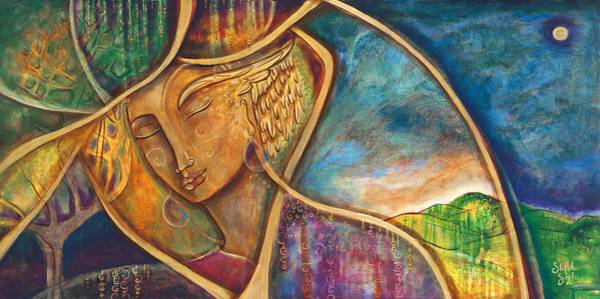
Divine Wisdom by Shiloh Sophia McCloud

A sermon for Epiphany based on the readings Ephesians 3:1-12 and Matthew 2:1-12

May I speak and may you hear through the Grace of our Lord; Father, Son and Holy Spirit. Amen

What makes a wise man or woman for that matter? Is it having knowledge of many things? Is it using the knowledge you have to make wise decisions? I would say it needs to be both, after all knowing that a tomato is a fruit does not mean it will go well in a fresh fruit salad…. or maybe it would if you’re Heston Blumenthal!

Today Matthew gives us a beautifully compact version of the story of the wise men, no word is wasted. I say version, because there is an ancient manuscript, The Revelation of the Magi, but that is an apocryphal gnostic text, so let’s stick with the gospel.

These men have the knowledge that they have gained from studying the stars, researching their own texts and discerning what the appearance of an apparently new star might mean. They could have parked that knowledge there, recorded it for future generations to wonder if it were in fact, just the alignment of Jupiter and Saturn to produce a Great Conjunction that we could witness in 2020, for the first time in 800 years.

But then it wouldn’t have got the more familiar name of ‘the Christmas Star’. What they did was to use this knowledge to make a wise decision, to follow it and see where it might lead, and to come prepared to honour a child that was foretold to be the king of the Jews, a king worthy of homage and the travails of the journey.  

So, these were indeed wise men. Then I found this unattributed quote that says, ‘Wisdom is the perfection of knowledge of the righteous as a gift from God showing itself in action’. Surely in this story, here is wisdom as knowledge and wisdom in action.

‘Wisdom is the perfection of knowledge of the righteous
as a gift from God showing itself in action’

But what of wisdom itself? Over my desk, I have a lovely painting of a figure entitled Divine Wisdom, she is called Sophia, the Greek word for wisdom, and she is a central idea in Hellenistic philosophy and Christian theology. She appears in the Book of Proverbs, ‘Wisdom cries out in the street; in the squares she raises her voice’ (Proverbs 1:20). However, she come into her own in one of the accepted apocryphal books which is often used in our lectionary of readings, The Book of Wisdom. She is described as, ‘more beautiful than the sun, and excels every constellation of the stars. Compared with the light she is found to be superior (Wisdom 7:29) and ‘She gave to holy people the reward of their labours; she guided them along a marvellous way, and became a shelter to them by day, and a starry flame through the night’ (Wisdom 10:17).

The Book of Wisdom, was written about fifty years before the coming of Christ. Its unknown author was probably a member of the Jewish community at Alexandria in Egypt and his profound knowledge of the earlier Old Testament writings is reflected in almost every line of the book; the first ten chapters in particular providing background for the teaching of Jesus and some New Testament theology about Jesus. However, its primary purpose was to convey the message about the splendour and worth of wisdom.

Accordingly, here too is wisdom as knowledge and wisdom in action.

In Jesus, the mystery of God was revealed, as Paul tells the Ephesians ‘In former generations this mystery was not made known to humankind, as it has now been revealed to his holy apostles and prophets (Ephesians 3:5)’ and it was to those who not only gained this knowledge but who were to act upon it that wisdom was given, ‘so that through the church the wisdom of God in its rich variety might now be made known to the rulers and authorities (Ephesians 3:10)’

So why should we, as the church and as individual seek wisdom today?

Well, there has been much over the last year that has tested us like never before. The free will that we have, to gain knowledge and learn and discover, means that we are much wiser about a virus that has threatened and changed nearly every aspect of our lives.

Wisdom and knowledge have led us to develop new medical devices, procedures and medicines as we have pooled that knowledge. Our governments and global organisations have had to gain wisdom and knowledge to understand what is happening and then to apply that knowledge in the wisest way possible.

Of course, there are always those who would say they have not always been so very wise, and hindsight is a wonderful thing; but whilst the foolish or unwise have developed conspiracy theories that frighten and disable, theories that can be debunked just as quickly as they spring up, wisdom enables us to recognise the difference.

Definitely then, wisdom as knowledge and wisdom in action

On an individual level, I think we have learned a lot about ourselves. Maybe things that have surprised us. We have experienced emotions and seen and heard things first-hand as never before in our lives, whether we are young or old, wise or unwise.  

However, as Christians we are privileged to receive God’s grace that gives wisdom. Our knowledge of God and our faith enables us to see his leading, to hear his guidance and gives us a heart of courage to journey faithfully and find our way even when the path may seem difficult and dark.

It also means that we are enabled to reach out and to bring light into the lives of those around us. To shine in the darkness by putting our knowledge of God into action – to make known the wisdom of God.

The star that shone so brightly some two thousand years ago, can still illuminate and reveal the way – the way that leads to a child, who would grow into a king. The king of the Jews, the king of all God’s children, the king of the past, the present and the future, the king of kings, the wisest king of all!

Amen

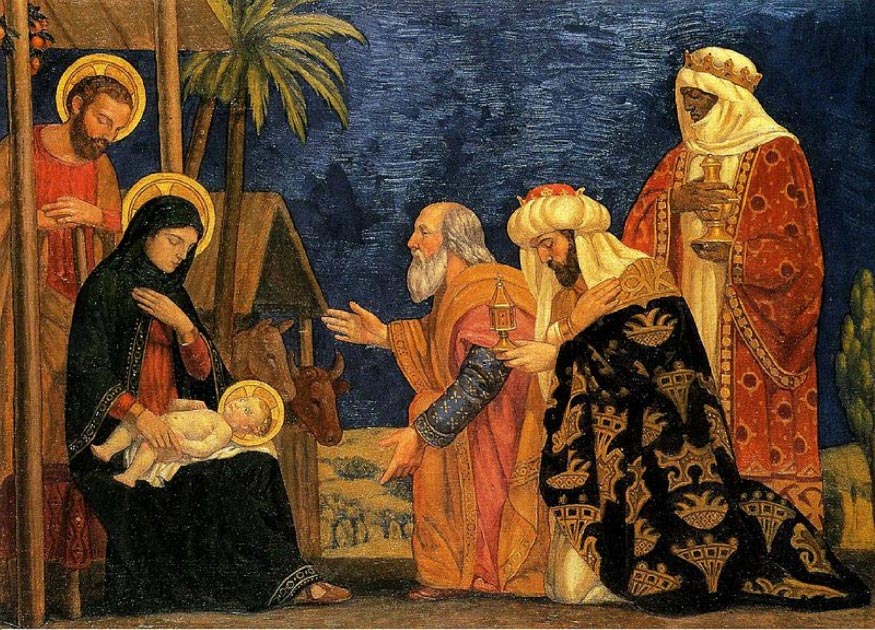
The Magi

Go back

Your message has been sent

Warning
Warning
Warning
Warning.

The Right Man In The Right Place At The Right Time

San Juan Bautista, Alvise Vivarini, c1475

Sermon preached on the second Sunday of Advent 2020 based on the following readings 2 Peter 3:8-15a and Mark 1:1-8

May I speak and may you hear through the Grace of our Lord; Father, Son and Holy Spirit. Amen

We have a saying in our family, ‘Patience is a virtue, virtue is a Grace. Grace is a little girl who wouldn’t wash her face!’ It was often quoted when one or other of the children were eager to attain something sooner rather that wait. Of course, waiting when you’re very young can be a hard thing to do, especially if it’s something exciting that might be about to happen; but it’s no less hard waiting whatever your age.

In Peter’s letter he is faced with a congregation who are disillusioned and impatient by the non-appearance of Jesus coming in glory, definitely an event to be excited about. Even so, the ‘I want it now’s don’t get – they need to learn a little more grace. Instead he encourages them to live lives of holiness and godliness, to wait in ‘peace, without spot or blemish’. After all God’s time-relativity is different to ours. Except, there is still the need to be ready for the unknown moment of his return to the Earth.

But patience is not an attribute recognised by the writer of Mark’s gospel, as he takes us back to the beginning of the story. He starts off like a bullet train out of the station and to be honest never slows down or pause to take on water or fuel till the very end… an end that actually needed something added to it later!

His opening sentence is like a shout, a proclamation, a declaration of intent, ‘the beginning of the good news’. This is the gospel ‘of Jesus Christ, the Son of God, a word derived from the Anglo-Saxon term god-spell, meaning ‘good story’. No starlit stable, no paternity angst, no migratory gift bearers, just straight into the reason that he was here on earth amongst us – to redeem us for all time.

Nevertheless, his first appearance is heralded by an unlikely character, a wild man of the desert, clad in camel’s hair and sustained by a diet of kosher protein and wild honey (locusts are mentioned in Leviticus as a ‘clean’ food). John the Baptist certainly dressed like Elijah and was fulfilling the prophecy of Isaiah to be ‘the messenger’ who was preparing the people of God for the long-awaited Messiah.

But why was this messenger so different from the many prophets that God had send before? What was it about this man that was attracting people to come out into the wilderness from the region of Judea and Jerusalem to be dipped in a river as a sign that were re-turning towards God – a baptism of repentance.

Well, it had been about 500 years since Malachi had stepped off the earthly stage, and since then no genuine prophetic voices had been heard.  Without a prophet, people in the land began to divide into parties and groups, each claiming the right to interpret the scriptures and lead the people.

So, the time was ripe for the long-awaited Messiah to appear, even so we could ask why this was the moment in time that God chose to do so? What we do know is that he came according to God’s time schedule, as Paul states in Galatians, ‘When the fullness of time had come, God sent his Son, born of a woman, born under the law, in order to redeem those who were under the law’ (Galatians 4:4-5)

And if we were to try and put forward a reason why it was a perfect time for the spread of the gospel, we might assume that the Pax Romana, a time of peace in the Roman Empire, and great road and water transport systems, allowed for information to be passed quickly. In addition, Greek was a common language with allowed the Gospel to be communicated to a wide range of peoples, although language is no barrier to the Holy Spirit.

Today’s technological advances in global communications might suggest that now would have been a better time to reveal the Messiah, but would people be prepared to go and submit to a need for repentance from an eccentric looking, religious firebrand in the wilderness of our city suburbs? Yet alone recognise and accept Jesus?

But do not ignore this one fact, beloved,
that with the Lord one day is like a thousand years,
and a thousand years are like one day.

2 Peter 3:8

God always communicates with us in ways we can understand and twenty first century humanity has sufficient reason to believe in Jesus. That he chose to come some two thousand years ago does not change the fact that he came and fulfilled everything that the Bible had predicted. Two thousand years ago, people were ready and able to understand just enough to get the message across; after all for the Lord, ‘a thousand years are like one day’ so it was God’s perfect time for him to come to us.

But it was not to be in the way that most people expected. He would not be a military leader. He would not crush the Romans and set up a Jewish state. The true Messiah would seem utterly defeated before he won.

Yet win he would, and John the Baptist knew this. Although his water of baptism would physically and metaphorically wash people clean from their sins, the power and glory of Jesus would lie in his ability to immerse, plunge or drench people in the Holy Spirit (from the Greek word baptizo).

For us, this drenching means that we are forgiven and brought back into a proper relationship with God; we are blessed with powerful gifts to prepare us for service and for building up the body of Christ, and we are given hope for the future, whatever that looks like and whenever it happens

As Peter says, ‘The Lord is not slow about his promise, as some think of slowness, but is patient with you, not wanting any to perish, but all to come to repentance.’ We can’t hurry time, but this Advent we can repeat our heartfelt wish – Maranatha – come Lord Jesus. Come amongst us and be with us once again and we will welcome you

Amen

Maranatha written in the Southwick Codex

Go back

Your message has been sent

Warning
Warning
Warning
Warning.

A Heart of Stone?

Heart of Stone

Evensong Message for Pentecost 2018 – Reading Ezekiel 36:22-28 and Acts 2:22-38

Today we celebrate Pentecost – an outpouring of the Holy Spirit – sent just as Jesus had promised – enabling and transforming those who were willing to receive it, with physical signs of flames and wind and a universal understanding of the truth being spoken to those listening and watching this in amazement. Just as Ezekiel had prophesied here was a gathering of the nations to hear the Word that would then spread out like wildfire from Jesus’ own land to ignite the flame that would become a global phenomenon – the birth of Christianity, with its message of faith, hope and love.

Here was something new then – or was it?

Surely people had had faith before? Jesus himself was a Jew, part of a well organised and structured faith; and whilst there were not necessarily a large number of organised religions as we would think of them today, there were many faith traditions. The Roman and Greek pantheon for example, Norse and Celtic traditions, many of which were Polytheistic, and often had an emphasis on communal public worship, and sacrifice (either of animals or humans) as an offering to the Gods; going right back to simple sun worship and pantheism.

 Hope is perhaps a little bit more difficult to measure prior to Christianity. What is it people were hoping for? For many it did centre on there being more to life than our brief span of three score years and ten – four score at a push. For the Greeks, a favoured few, were considered to have been physically immortalized and brought to live forever in places like Elysium. For others it was the ability to be reincarnated and to have the chance to live again, back on earth, albeit in a different way; but for most people, at the moment of death there was, however, no hope of anything but continued existence as a disembodied soul, endlessly swirling around in a cosmic soup.

And of course there was love, whether it was a strong feeling of affection and concern arising from kinship or close friendship or accompanied by sexual attraction. We all know that the Greek and Roman gods indulged in love with a relish, both among themselves and mere mortals, but rarely was it considered a love that was for all peoples, a love that begged relationship and which sought reconciliation as its ultimate goal.

Christianity though was and is different. Faith was not just something you did, it is how you live; hope was not limited, it is tangible and everlasting and love was not exclusive, it is mutual and unconditional. This wasn’t some distant deity dandling human beings like puppets, this is a God who lives right alongside us.

In order to love one has to engage with our minds and our hearts. The two organs in a human body that not only sustain life but which enable us to understand what life is all about. But it is our hearts that pump blood around our bodies to every other organ which enable us to think, to feel, to touch, to sense and which have become universal symbols of love; and a heart that does not love can be said to be as lifeless and useless as a heart of stone.

A heart of stone does not allow our ears to hear the cries of those in need or our eyes to see injustice being done. A heart of stone does not allow us to feel emotions of compassion or joy, it does not permit our arms and hands to reach out to hug or be hugged or comforted.

 A heart of stone does not allow us the desire to know God and to become followers of Christ, because a heart of stone cannot love either itself or others. Even so, God is able to reach out to the most hard-hearted individuals and to use them for his glory.

 ‘A new heart I will give you,
and a new spirit I will put within you;
and I will remove from your body
the heart of stone and give you a heart of flesh’.

However, having a heart of flesh is not an easy thing to live with. A heart of flesh can feel the keenest of suffering, the deepest of sorrows and the innermost pain. There are times when it is almost unbearable to experience these things, but our hearts do not give up

The fact is that the heart it is the hardest working muscle in the body – the first organ to form during development of the body, and the last to shut down in death. But that’s just physiology. The difference is the presence of the Holy Spirit. It is the Spirit in the form of love that enables us to ‘bear all things, believe all things, hope all things, endure all things.’

 When Peter stood up on the day of Pentecost, it was the Spirit that enabled him to declare so boldly that despite what the people had done to Jesus, there was no power on earth that could have held him down and he used the scriptures to back up this declaration.

Quoting from Psalm 16, the Michtam of David, or the Golden Psalm, he spelt our very clearly the faith, the hope and the love Jesus knew was his in God,

“I saw the Lord always before me,
for he is at my right hand so that I will not be shaken;
therefore my heart was glad, and my tongue rejoiced;
moreover, my flesh will live in hope.
For you will not abandon my soul to Hades,
or let your Holy One experience corruption.
You have made known to me the ways of life;
you will make me full of gladness with your presence.”

 It was the witness of the disciples through the power of the Holy Spirit that persuaded others that indeed, Jesus was both Lord and Messiah. As it says, ‘they were cut to the heart’. To the very centre of their being.

 When we are filled with the Holy Spirit, there is nothing that we cannot accomplish, whether it is showing compassion, sharing joy, or seeking peace. When our hearts beat to the same rhythm as God’s then nothing will be the same and everything will be transformed by love

Love of the Holy Spirit

Go back

Your message has been sent

Warning
Warning
Warning

Warning.


A Voice Crying in the Wilderness

A voice a calling out

A sermon for the third Sunday in Advent recalling John the Baptist as the ‘one calling out in the wilderness’, and the call to be that voice today.

Reading: John 1:6-8, 19-28

May I speak and may you hear through the grace of our Lord; Father, Son and Holy Spirit. Amen.

I wonder how many of you will admit to watching ‘I’m A Celebrity, Get Me Out of Here’? Not that I’m saying there’s anything wrong if you do. I think we all have a natural curiosity to watch people who for one reason or another are deemed famous, doing things that are strange or unusual. I must admit that if I hear in the news that someone is proving to be a real character, I might flick over and catch part of an episode to see what all the fuss is about.

Of course it’s easy for us nowadays, with satellite TV and catch up, to bring things that are happening ‘live’ into the comfort of our living rooms or on our mobile devices to satisfy our curiosity, but in Jesus’ day any apparent fame was broadcast by word of mouth and only those who were serious about finding our more would make the effort to travel long distances on the testimony of a friend or neighbour; and yet, we hear in Luke’s gospel that ‘the crowds’ were coming out to see John the Baptist; and today in John’s gospel we catch a sense that the strict traditionalists, the Pharisee’s, had got wind of a strange and curious man doing things that were unsettling and causing ripples in their neat and tidy well-ordered lives. Who was this man?

Obviously, not concerned enough to distance themselves from undertaking their strict religious observances in the temple in Jerusalem, but enough to send a contingent of representatives to find out more, just in case. What then did they find as they journeyed out into the wilderness around the River Jordan? The gospel writer tells us that the place they found John was at Bethany – not the village just east of Jerusalem, near the Mount of Olives, that was the home of Mary, Martha and Lazarus. No this Bethany, although nowadays not officially known, would have had to have been about 50 miles to the North of Jerusalem, in Jordan, and is thought to be modern day Al-Maghtas, an Arabic word for a site of baptism or immersion and which has been venerated as such since the Byzantine period.

That’s the place but what about the man? John, even by biblical standards, would have presented an eccentric appearance, dressed in camel hair clothing secured with a leather belt and a physique that was sculpted by a diet of locusts and wild honey, one can imagine his wild hair and austere demeanour were not the things that were attracting the people to him. He probably looked like an ancient prophet, if not smelt like an ancient prophet and his words echoed the prophecies of those Old Testament prophets who had gone before him. Perhaps his disregard for his own personal appearance confirmed his humble and self-effacing nature, but let’s be under no doubt, John was no shy wallflower, he knew what his role was and he was certain about the mission he was undertaking.

In answer to their attempts to guess his identify, he wasn’t the Messiah and he wasn’t the re-embodiment of the prophet Elijah, but he was the messenger that the prophet Isaiah had said would appear as a herald to prepare the way for the Messiah’s appearance; to make straight the paths, to smooth the way, to give people a chance to re-order their lives before it was too late. Yet Isaiah had mentioned nothing about the need to be baptised in order to repent of your sins and certainly this form of baptism was not something that the Jewish people would have seen as normal. Ritualistic washing, however had been practised since the time of Moses, through the Leviticus laws when a person needed to be cleansed and purified in order to be able to make sacrifices in the Temple.

This ritual was later expanded to taking a dip in a ‘mikveh’ or immersion pool, with steps leading down on one side and then up on the other, having passed through the pool of water; think of the pools of Siloam and Bethsaida, that were used for high days and holidays at the Temple site. And as with a lot of Jewish ritual law there are six different options that satisfy the requirements starting with pits, to cisterns refreshed by rainwater, custom-built ritual baths, then fountains, then flowing waters. But natural lakes and rivers were considered to be the best, so the ‘living waters’ of the River Jordan were definitely ideal.

But as John says this is only the preliminaries, water would give way to immersion in the Holy Spirit, and he was very, very clear of his unworthiness to carry out this form of baptism. There was another coming after him. Curiosity satisfied then for the Pharisees’ researchers, they would no doubt return to their leaders with more food for thought than reassurances. But that still leaves us with the question of why so many people were attracted to the message that John was voicing and what that means for us today. What was this baptism of repentance that he offered?

Like ourselves this Advent, the people had been watching and waiting, in fact they had been waiting for over 400 years. This period of seemingly divine silence is the name given to the period of time between the last of the Old Testament prophets and the arrival of Jesus in the New Testament. It had begun with Malachi’s prediction of Elijah’s return, ‘I will send you the prophet Elijah before the great and terrible day of the Lord comes,’ hence the Pharisee’s question and was now to end with its fulfilment in the coming of John the Baptist.

Silence however didn’t mean that the people had been living in limbo, because despite the lack of Scripture detailing this period, a great deal happened. The Jewish homeland had first of all been taken over from the Persians by the Greek Empire followed by an Egyptian occupation. Then halfway through the Syrians overtook Jerusalem, followed by the Greek king, Antiochus Epiphanes’ desecration of the Holy of Holies within the temple which led to a revolt, led by the Maccabee brothers to retake control of the Jerusalem, only to be conquered by the Roman Empire, the state the people found themselves in now.

You can understand, therefore, when the strange and unusual figure of John appeared in the wilderness, calling people to repent, to turn back to God , then they were ready and curious enough to seek him out. There were some, like the Pharisees, who came to the Jordan to observe John’s ministry but who had no desire to step into the water themselves. However, even those who did wade into the river, it wasn’t enough to be ritually purified, John’s baptism was more than that – it was a symbolic representation of changing one’s mind and going a new direction – a direction that pointed toward Jesus. His was the voice calling as we are called to be that voice.

On a personal level, I have always been reminded that this task has been passed on to us each time I say out loud the Benedictus during Morning Prayer. The second half of the canticle is an address by Zechariah to his own son, John the Baptist,

You, my child, shall be called the prophet of the Most High; for you will go before the Lord to prepare his way, to give his people knowledge of salvation by the forgiveness of their sins.

You, my child… that you is directed at each and everyone one of us to be the voice, offering the knowledge that points people toward Christ. With John’s baptism, a person repented of sin, acknowledged their need for salvation, and was therefore ready to place their faith in Jesus Christ. It foreshadowed what Jesus would, did and still does accomplish, as the Benedictus goes on to say

In the tender compassion of our God the dawn from on high shall break upon us, to shine on those who dwell in darkness and the shadow of death, and to guide our feet into the way of peace.

John the Baptist wasn’t a B-list celebrity in the jungle or wilderness, someone you think you’ve heard of but you’re not sure you recognise them – he was definitely A-list, but he wasn’t the main attraction. His baptism was a purification ceremony meant to ready the peoples’ hearts to receive their Saviour. In this season of Advent we too are watching and waiting to receive once again with joy our Saviour. It’s an event worth calling out about…

Amen

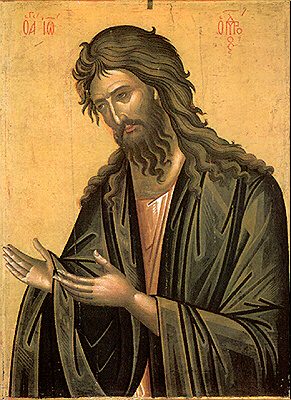
John_The_Baptist

Go back

Your message has been sent

Warning
Warning
Warning

Warning.