Category Archives: Ministry

From Alpha to Omega


Easter Sunday Evensong brought to a close an amazing day of celebrations and the end of the journey we had been on throughout Holy Week. From the highs of Palm Sunday, with it’s joyous branch waving, through the sharing of a Seder meal and watch on Maundy Thursday via the reflective solemnity of Good Friday to the bursting alleluias of Easter Sunday. Now in this more formal choral service there was room for one more talk,  and it took us to the very end of the story. Based on Revelation 1:12-18 here were my thoughts.

This morning we were at the very beginning of the amazing story of the resurrection of Christ and this evening we are taken to the end times through the apocalyptic writing of John, a ‘servant’ of Jesus.

Jewish apocalypses were generally written at times of crisis and we know that the early Christian church regularly faced persecution from the Roman authorities and that many Christians had already been martyred, and that the writer John had himself been imprisoned and exiled on the Greek island of Patmos, because he had been spreading the word about Jesus.

The first Christians lived in eager anticipation of Christ’s return, but some 60 years after his death it had still not occurred. They needed something to inspire them to stand firm; to remind them that God is in control, no matter how things may look and these revelations are trying to encourage the reader, both then and now, to look at the ‘big picture’ of human history.

It is as though a veil is being drawn aside and future events and scenes of heaven are ‘revealed’. Through Christ, God is bringing history to its climax and close, and the need to focus on the end of the world when God will reign supreme in justice and peace.  Christ speaks to his Church through John, to encourage and guide his people. He urges them to persevere through times of darkness and great stress, for after this life they will live with God in a glorious new world.

John describes his visions in the extraordinary picture language first used in the Book of Daniel. He has a vision of Jesus ‘like a Son of Man’. This had been Daniel’s vision – a human being who fully represents the human race, appearing in clouds and great glory, to be given God’s power and authority to reign over all things.  However, John’s vision has far more detail than that of Daniel’s. I tried to find an image that I could give you to look at whilst we though about this passage, but I couldn’t find an artistic interpretation that did justice to this extraordinary vision, you are going to have formulate your own picture in your head.

We can imagine his long robe is dazzling white and the golden sash reflects and bounces that light back to us. This Son of Man has the same pure white hair as Daniel’s God, the Ancient of Days, the bright white of pristine snow that glints in sunlight, almost too painful to look at.

We cannot tell what colour his eyes are because they are eyes that blaze with the fire of holiness, and his feet  glow with the strength of burnished bronze. His voice has the fluid melodious sound of rushing water and his mouth speaks truth with power and precision. His face is brilliant like the sun in a cloudless summer sky,

This glorious Christ stands among seven golden lampstands. These are his churches, which give his light to the world. He also holds in his hand seven stars – the angels that care for each local church. I wonder if we ever imagine our own church with its own guardian angel?

In the world, the churches are like lampstands, and Jesus gave the same picture to his disciples. They are not to hide the truth, like putting a light under a bowl. The are to lift it high, where it can give light to everyone. This then is our calling as a church and as individuals, to life the name of Jesus up so all may enter in the warmth and brightness of his presence. A presence that is fearsome but not frightening, as John found out when he fell at his feet as though dead. For Jesus is the first and the last, the alpha and omega. This morning and every morning our exclamation should be ‘Alleluiah, Christ is risen! Because as Jesus reveals to John ‘I am the living one, I was dead, and see, I am alive for ever and ever; and I have the keys of Death and of Hades’.

John is in exile, perhaps sentenced to hard labour; his body may be in prison but his spirit is free. Christ’s revelation of himself to his disciples, to the world and to us, means that we too are free and that our future is secure.

Alleluia, Christ is risen
He is risen indeed, Alleluia!

Amen.

Go back

Your message has been sent

Warning
Warning
Warning

Warning.

Judas – Servant or Scapegoat


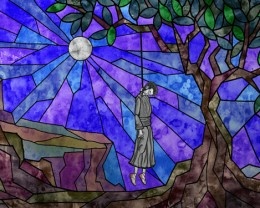
Judas HangingThe turning point for Jesus and Judas? My dissertation for my MA focused on the question of whether Judas Iscariot might be God’s scapegoat. This sermon preached on Maundy Thursday 2017 is based on John 13:1-11, 31b-35 and suggests that there may be more to his actions than the traditional view of Judas the unrepentant, egotistical betrayer of Christ

May I speak and may you hear through the grace of our Lord, Father, Son and Holy Spirit

This evening we hear one of the pivotal stories of what it means to be a Christian. John, declines to provide us with an account of the breaking of bread and sharing of wine, the origin of our Holy Communion, but instead gives us an account of Jesus washing his disciples feet as mark of servanthood which models for them a life of mutual acceptance and forgiveness which must be the mark of his followers for all time.

Apart from Peter, who, with his usual bluster and enthusiasm, misinterprets Jesus’ actions, our attention is focused on Judas; Judas Iscariot, the betrayer of Christ. Of all the gospel writers, John focuses on the persistent presence of the devil; for all those who come to believe in Jesus, particularly the Jewish converts, are changed into Children of God rather than children of the devil.

We are also not given an account of the temptation of Jesus in the desert by John, but it is useful to remember Luke’s account, where at the end of his failure to persuade Jesus to have anything to do with his enticements, the devil leaves him ‘until an opportune time’. This then is that opportune time and Judas is to enter centre stage for his brief but eternal moment of fame.

Here then might be his story:

‘The past few weeks and days have been very unsettling. For the last three years we’ve been travelling with Jesus, seeing him doing such miraculous things and managing to outsmart those who wish to do him harm. I’ve never been more certain of anything, that he truly is the one who has come to liberate not only our own people, but many others from the tyranny of brutal regimes… and yet so many are saying he’s gone too far, what he asks us to do is too hard a life to follow, that he must be demon possessed and so they are turning away. His talk of oneness with the Father, calling people to salvation and eternal life for some is an outrageous blasphemy and yet I’ve seen for myself the wonderful deeds he has and is doing.

Restoring sight to the blind, curing the sick and the lame, freeing people from injustices and teaching ways of love and peace above hatred and violence – why don’t the people get it. I’ve learned so much from him and he’s trusting me, as one of the twelve, to be part of his mission, to show others the power of God; and what better demonstration of that power than his bringing Lazarus back from the dead – there can surely be nothing more amazing or mind-blowing. Yet, even that has had the effect of dividing people and has added weight to the authorities case against him, that they are losing control of the crowds and fear an uprising. Certainly our latest arrival in Jerusalem shows that he has an incredibly popular appeal, but still for someone who claims that we should do all we can to support and uphold the poor, the way he allowed Mary to be so extravagant with that precious nard is at least questionable.

There have been moments lately when my mind seems foggy, my judgement clouded and I can’t think straight – what really is his purpose for me? Am I to abandon the faith of my father and forefathers; isn’t there a way that we can explore a way to move forward? What might it take to bring both sides together? Might it be best to talk to the authorities and hand the problem over to them? … Is that what he wants me to do?

Now though, as we sit here sharing a meal, he’s once again demonstrating his upside down thinking; the master who acts as a servant, by offering to wash our dusty feet. Look at Peter, who earlier protested so vehemently that he would allow him to do no such thing, suddenly eager that Jesus should bathe his whole body… and yet when he came and knelt before me, his gentle hands wiping away the dirt and grime, I couldn’t look him in the eye. Does he know what I’m thinking?

He must do, but it didn’t stop the feeling of cold panic that swept over me when he clearly stated that he knew at least one of us was not as innocent as they seem. Is that his way of telling me he knows what I’ve determined to do? Even so, we have broken bread together and his offering to me of the choicest morsel surely shows that he still loves me. Perhaps it is the right thing to do.

Judas leaves the circle of the disciples.

I seize a lull in our conversations to slip out, and the darkness of the night compared to the bright glow of the room I have left renders me temporarily blind. As I move quickly away, the sound of laughter and fellowship follows me through the still, cool air, however, my heart is heavy and mind whirling – do I sense the enormity of what I am about to do? May God forgive me if I’ve chosen the wrong path’

Judas made a choice, whether under the influence of the devil or not, but John makes it very clear that whilst Jesus was about to be betrayed, he would not be taken by surprise. He has not been deceived and his arrest, trial and crucifixion will not be a dreadful miscarriage of his plans, but their fulfilment. Instead the event will glorify Jesus and through him glorify God, not by being recognised, proclaimed and crowned as king, but by going obediently to disgraceful death on a cross.

Judas leaves the circle of the disciples before he can hear Jesus’ commandment that a mutual reciprocity of love is the best way to show others that they are one of his disciples. Love that is to be shown even to those who find themselves far away from God; those who cannot see or understand what purpose God might have for them; even those who seem unforgivable. God knows his plans for us, plans to prosper us and not to harm us, plans to give us hope and a future.

Amen

Go back

Your message has been sent

Warning
Warning
Warning

Warning.

Come and See…


come-and-see

Come and see – John 1:29-42


How do we share good news? Do we rejoice that we have heard something wonderful but forget that others too might like to hear it? Do we ever think to invite them to come and hear it for themselves?

Questions that we all need to ask ourselves from time to time, and the Gospel on the second Sunday of Epiphany helps us to consider the importance of issuing that invitation.

Based on the readings: 1 Corinthians 1:1-9 and John 1:29-42

Last week I was asked give a talk to a Mothers’ Union group under the title ‘My Journey… So Far. it was actually a very useful exercise which enabled me to reflect on what had been turning points in my life; who had been part of those and what it was that brought me to where I am today.

I also liked the idea of ‘so far’, because it helped me to see that in spite of my advancing years there are times when I seem no closer to becoming a mature Christian than I was at the beginning. Also where was that beginning? At my birth? At my baptism? At my Confirmation, Ordination or Priesting? What I do know is that somewhere along that timeline I was invited to ‘come and see’. I wonder if you know the circumstance or people who said the same to you and what was it that we were being invited to see?

For me, despite a non-church background, it was the fact that when I wanted to arrange the baptism of my youngest daughter Ruth, the vicar who was preparing us – without a hint of contempt or disapproval – simply pointed out that neither parents nor godparents had been confirmed. It was a subtle nudge as if to say, you want to join this club, but you have no idea about its constitution, its purpose or its demands. Without using the exact words it was like he was saying why not ‘come and see’, perhaps then you’ll know what the attraction is.

So I did just that, I took myself off to church one Sunday, which was pretty scary when you’re on your own. I got to know the people there, both as fellow worshipper and through social events. They were friendly, helpful and I found their attitude to life, which reflected their faith, very attractive. I joined Lent groups; study groups; I read and discussed important life questions; I listened and learned. Not just from those up front, but talking to all different sorts of people, and not just those in the church but with friends who were not Christians. But then it wasn’t just about me.

He said to them, ‘Come and see.’
They came and saw where he was staying,
and they remained with him that day
John 1:39

One of the hardest points in my life was making a decision to talk openly about my faith with my work colleagues at the school I was working in. I can remember having to make a real conscious decision to do this. Not by telling them, ‘Jesus loves you and you need to believe in him to be saved’ – although technically that is true. Instead, I’d chat about what I’d been doing in church over the weekend, the church social events I’d attended and saying to them they’d have to come along next time as I’m sure they’d enjoy it. Amazingly, it was as if the floodgates had been opened and other Christians began to appear out of the woodwork so to speak, to join in the conversations. It became natural and easy-going, again an unspoken ‘come and see’; and John’s gospel reflects this process very clearly.

John’s gospel doesn’t give us Jesus’ baptism in real time, but a retrospective recount of this epiphany moment and an affirmation by John the Baptist that Jesus lives and moves in the power of God. No shrinking violet, John, he further witnesses to this fact by his exclamation to two of his disciples that this is the one they have been waiting for – the Messiah. He has whet their appetites and they are interested in finding out more. So they follow Jesus, who asks them what are they looking for. He doesn’t assume anything, he wants them to discover for themselves, so he invites them to come and spend some time with him, and we can only imagine the conversations and questions they must have had. What we also see is that Jesus is beginning to call a group of people together, to build a community that will be able to hold that knowledge for the world and share it. All through that simple response ‘come and see’.

Now, those two men could have just gone home and talked about an amazing afternoon they’d just spend, but at least one of them, Andrew, realised that what he had heard was ‘good news’, something to be shared and so he brought his brother, Simon, so that he could see for himself. I wonder when was the last time we invited one of our friends or neighbours to come and join us at church; when we invited them to come and see? We have to remember though, that come and see isn’t about saying come to church, sit through a service where everyone else seems to know exactly what they’re doing – standing up, sitting down, singing responses (and believe me that was exactly what it was like for me on my first visit to church). Where we’ll sign you up for a rota, get you on to a committee. It should be more about simply come… and see if the people are welcoming, see if what’s being talked about is being lived out, spend some time with us.


welcome_to_church

Extending a welcome to church


The trouble is, like me previously, we know that we have seen and heard something good, but for some reason we feel reluctant to share it. It’s great talking with your friends from church about your faith, but it takes a lot of courage to speak to other people. Maybe nowadays, when we are surrounded by so much that is secular and politically correct, we think people will somehow see us as strange, misguided fanatics; and we want to fit into our neighbourhoods.

Or maybe we pre-judge who we think might be interested; ‘they won’t want to come’, ‘I’ve never heard them talk about anything religious’. We need to realise that we are not looking for ‘perfect fit’ people, we are not the ones who decide whether or not a person is willing to hear or understand the message. After all when Andrew invites his brother Simon to come and see Jesus we could be forgiven, bearing in mind all we will come to discover about the latter’s character, that he might not be the sort of person that Jesus wants to be part of his community. Yet when Jesus looks at the volatile, unstable Simon he immediately renames him Cephas – which means Peter or ‘rock’, the very foundation of Christ’s followers – because Jesus sees the potential of the most unlikely people.

Christians are called to witness together, to learn from each other as well as from God. As Paul says in his letter to Corinthians, we are called to be saints – not some mystic holy supermen or women, not necessarily sophisticated or intellectual, but ordinary, just like everyone who calls on Jesus is equal. We just cant afford not to share our faith, not in these times of secular, self-determination. We can’t afford to keep quiet and hope that somehow our faith will be shared by some sort of telepathic osmosis. After all what Paul tell us in his letter to the Romans? ‘How can people have faith in the Lord and ask him to save them, if they have never heard about him? And how can they hear, unless someone tells them?’

How can they hear, unless someone tells them?
Romans 10:14

I don’t believe that I, personally, have ever brought anyone to Christ. That’s a job for God through the Holy Spirit to accomplish, but I have talked to people and invited people and encouraged people to come and discover for themselves why they might want to say yes to Jesus’ call, as I am sure we all have in different ways. As I said at the beginning, it’s worth reflecting on how Jesus reached out to us. It is isn’t always through a direct communication. Sometimes Jesus reaches out through other people, especially his followers. Sometimes it will be through us, his disciples in the world today, that others are able to learn about Jesus. Maybe it will be you who tells someone, ‘I have found the Messiah! Come with me and see for yourself!’

That then surely is our challenge, in the weeks, months, years ahead, that in order to offer the invitation to come and see we have to go and tell. To share our faith with others – what we’ve learned, what we know to be true, what we’ve experienced in our own life. To witness to him, not only with words, but in deeds of loving service; and as Paul reminded the Corinthians, we are enriched and strengthened  by God to be able to do this.

We have heard the good news, we have received the good news and if it’s good news for us then it’s good news for everyone – so let’s all extend that invitation to ‘Come and See!’

Go back

Your message has been sent

Warning
Warning
Warning

Warning.


Annus Horribilis… Annus Mirabilis

life-and-death

I wonder, if like me, you found the reaction to what appeared to be a lot of ‘celebrity’ deaths in 2016 becoming a little bit wearisome. Don’t get me wrong – each person’s death was a cause for sorrow and the contributions that they made to our society as a whole was in many cases huge. No it wasn’t the deaths themselves, but the idea that somehow the year had become an annus horribilis because of them.

Our reaction to death is often based on the longevity of a person’s life. Maybe I noticed it more because as I become older there comes a time when many of the contemporaries that were so much a feature of my youth are reaching what could be considered ‘old-age’; although the biblical standard of three score years and ten has undoubtedly been superseded with the medical advances made over the last two or three millennia. In many cases, therefore, it was a case of mortality catching up.

The days of our life are seventy years,
    or perhaps eighty, if we are strong;
Psalm 90:10

Our frail and feeble frame of a human body, despite being a sophisticated machine that is full of intricate engineering, like any machine will eventually wear out. However, I am also aware that death occurs for many reasons not just age related. For some it is a case of genetic disposition or lifestyle choices. For others it is under tragic circumstance at the hands of another; a life snatched away.

Still, should we call any particularly year more dreadful than another? It’s true that many talented well-known people who contributed a lot very publicly to society did die in 2016, but there were an awful lot more people who died,  who in their own ways did exactly the same, however less publicly, and on smaller scales. In fact according to the World Health Organisation (WHO) in 2012 an estimated 56 million people died worldwide and that figure is similar to all other recent years.

Each of them were beloved mothers, fathers, sons, daughters, friends…… you fill in the blank… all of whom were equally important. They were people that we loved dearly; had built up strong relationship with, and who will be missed deeply as we realise that they are no longer part of our future.

Of course there are those that die, whose deaths we can find no apparent justification for and our faith is tested. Some people take the view that when God ‘calls’ it doesn’t matter what the circumstances are. However, death comes when it comes, and I am loath to believe in a God who would wish to do this ‘calling’ when it causes such pain and grief; instead thinking of it not as a ‘calling’ but as a ‘welcoming’ when death occurs.

As a Christian, I also believe that when we finally ‘shuffle off this mortal coil’ that the hope that we have through the death and resurrection of Jesus Christ means that we will be welcomed into life eternal, in a place called heaven, wherever and whatever that might be. Because life is not just an earthly life, but the life that Jesus came to give us in abundance.

I came that they may have life, and have it abundantly.
John 10:10

At that stage it will definitely not be an annus horribilis but indeed an annus mirabilis.

where-o-death-blog


Go back

Your message has been sent

Warning
Warning
Warning

Warning.


The definition of annus horribilis means a disastrous or unfortunate year, and is complementary to annus mirabilis, which means a wonderful year

The 12 Days of Christmas

12-days-of-christmas

Today we are on the cusp of an old year and a new year according to the calendar. I am not sure that 24 hours makes a lot of difference relative to time, but it is a point when we seem to put a marker down or hypothetically build a wall to neatly package all the things that happened over the last 366 days as memories and to look forward to the next 365 as an opportunity to start with a clean slate, an empty inbox, a blank (well fairly blank diary) in which to create new memories.

So welcome to 2017 – and the chance to think about making some changes in our lives. I suspect like me, one of the changes will be a resolution to stop eating all the Christmas goodies that seemed to appear (and disappear rather rapidly) and get back to some sort of normality. It’s very hard though, especially in the twelve days after Christmas. These dozen days have also become a segment of time in which our recovery and rehabilitation from the excesses of the season can take place before we’re back into full working mode – yes, I am aware that for many this period may have been somewhat briefer, but for the church they were also a significant way of marking the time between Christmas Day and Epiphany on the 6th January.

We now know it mainly through the popular carol which was published in England in 1780; however, it has been suggested that the phrases and strange list of gifts was a ‘catechism song’ which originated in the sixteenth century, to help young Catholics learn the tenets of their faith – a memory aid, when to be caught with anything in writing that indicated that you were a Catholic was a criminal offence.

In reverse order, the 12 drummers drumming related to the twelve points of doctrine in the Apostle’s Creed and the 11 pipers piping represented the eleven faithful apostles. The 10 lords a-leaping are the ten commandments and 9 ladies dancing (obviously filled with the Holy Spirit) are the nine fruits produced. Then there at 8 maids a-milking for the eight beatitudes and the 7 swans a-swimming are the seven gifts of the Holy Spirit.

It starts to get a little easier with the 6 geese a-laying giving us the six days of creation and the 5 golden rings representing the first five books of the Old Testament, the Pentateuch. The 4 calling birds are the four gospels and their writers followed by the 3 French hens a little more thoughtful for Faith, Hope and Charity, theological virtues. Which leaves us with 2 turtle doves equalling the Old and New Testaments…

twelve-days

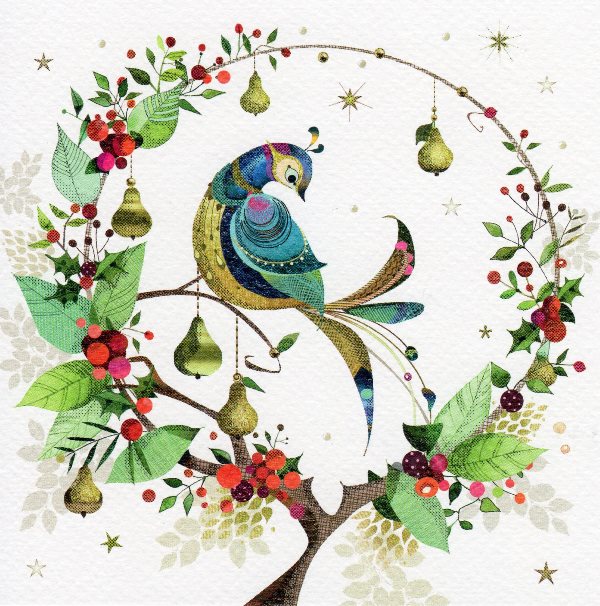
… and the partridge on the pear tree representing Christ upon the cross. Which leaves us with God as my true love, the giver of these fabulous gifts and me – or you or anyone who is open to receive the Christian faith.

How then did I or do I intend celebrating these twelve days of Christmas. Well, the first day was a good day to go to church and celebrate hearing the timeless story once again – then home for lunch, where we didn’t have partridge or pears but turkey followed by a delicious plum pudding. On the second day I got up early before everyone was up, and took the chance to spend a few moments reading my bible and watched the pair of pigeons, who nest in the fir tree next door, one of whom is very plump, and who love to strut up and down the fence, before getting back into the swing of the festivities.

By the third day I was already fed up with cold turkey and decided to have some scrambled eggs for breakfast before making plans on the fourth day to go and call on those members of the family that we didn’t have a chance to visit before Christmas. The fifth day was bound to be exciting as we had some wonderful news just before Christmas about a family engagement and it’s never too early to think about wedding plans. Then on the sixth day my husband, David and I took Molly, our Welsh terrier on a long walk down to the sea front where we recently saw a flock of Canadian geese gathering on the shoreline at dusk.

The seventh day is today – New Year’s Eve – and let’s hope my head won’t be swimming too much at the party we’re having with the family, still there’s always plenty of milk in the fridge to drink on the eighth day! Maybe on the ninth or tenth day it would be a good time to think about going to one of those Zumba classes, but I can’t see me persuading David to join one.

I note in my diary that we’ve arranged for our boiler and central heating pipes to be serviced on the eleventh day – tenuous I know – but not as much as the twelfth day, when the car goes in for its service and the brake drums need replacing!

Well, that’s a light-hearted look at what my twelve days of Christmas might look like and it does bring me nicely to the thirteenth day – Epiphany – the day when we celebrate the revelation of Christ through the gifts of Magi or Wise Men.  So I hope and pray that the many gifts and blessing you may have received during this Christmas season continue to be revealed to you, and in you, and by you in the coming year

Happy New Year and God bless

12-days-ornaments

Go back

Your message has been sent

Warning
Warning
Warning

Warning.


A Glimpse of Heaven’s Glory

the-heavens-are-telling-the-glory-of-god

Based on the following readings: Luke 2:1-14 and Isaiah 9:2-7

Another Christmas and what a wonderful time this Advent and lead up to Christmas has been this year. Over the last few weeks at St James’ we have shared the nativity story with various groups of pre-school children; carolled our way through several nursing homes; taken part in a sheep-filled Knitivity before the culmination of Christmas Eve Crib and Christingle services and the pinnacle of Midnight Mass. It was my privilege to be able to preach at this first service of Christmas on what was a very special night…

Make I speak and may you hear through the grace of the Lord; Father, Son and Holy Spirit

How’s everyone’s Christmas going? Got everything prepared?  –  I hope so, because you know gentlemen, I think even the late night petrol stations are closed now… But, of course you’re all prepared, and what better way to begin our Christmas Day celebrations [looking at watch] – well it’s not quite morning yet but it will be by the time I stop talking – than to gather here together to hear again the timeless story of Jesus’ birth. And there is something rather special about being here, at this time and in this place, and you must admit that the church does look rather wonderful, full of light and mystery.

However busy we’ve been, all the rushing around trying to find the perfect presents; making sure we’ve stocked up on plenty of food and drink; and those little treats we can indulge ourselves with; despite all of that, something calls to us to take a moment, this moment, to remember what Christmas is really all about. We hear the story of a young teenage woman about to give birth; the reluctant fiancé whose done the right thing; the outcasts and rejected members of society in the persons of the shepherds privileged to hear the good news first… of a baby born in an animal shed, yet destined to change the world… all heralded by angelic messengers descending – to bring heaven so tantalising close to earth.

Tonight we’ve come together in what I believe the Celts would have called ‘a thin place’. They had a saying that ‘heaven and earth are only three feet apart, but in the thin places that distance is even smaller’. A thin place is where the veil that separates heaven and earth is lifted and one is able to receive a glimpse of the glory of God. Perhaps that’s why we’re here tonight, hoping to catch a glimpse of heaven’s glory

Indeed, there’s something about that story that seems to call to something deep within us, to draw us in so that just for a while we believe that all will be well with the world. A story that speaks of things so long ago and so far away and what wouldn’t we give for it to be happening right now; maybe like me you sometimes, just sometimes, wonder why it  doesn’t appear to be doing so nowadays. After all it’s good news of great joy for all people.

“”I am bringing you good news of great joy for all the people”

What then was that good news that the angels spoke of to the shepherds, and how is it good news for us today?  Because let’s be honest, the news that’s beamed into our homes and phones and splashed across the newspapers doesn’t exactly fill us with confidence and hope that humanity has a common goal of seeking respect, harmony and love.

Respect, harmony and love, three key element of Jesus’ message for the world into which he was born…  and the world in which we live today; a message that is good news for us but also requires us to be good news to others; a message that allows us to glimpse heaven’s glory.

For Mary and Joseph their lives had been turned upside down and the baby that was now sleeping in the manger brought them joy as any new-born child would, despite the distance they had travelled from Nazareth to Bethlehem and the circumstances they found themselves in. Yet the fact is within two years they would be fleeing for their lives, trying to keep one step ahead of Herod’s henchman who would indiscriminately slaughter thousands of innocent children and bring misery to countless families; families who likes Joseph’s were valuable member of society, and who now had to rely on the country to which they fled to offer them security and compassion, to recognise and respect who they were.

Sounds a bit like a scenario that’s been happening around the world more and more lately? That even today there are people having to flee from their homes, seeking that same sort of asylum, escaping from violence and conflict. Do we recognised their value and treat them with respect? How do we welcome the stranger and alien in our land or into our homes? Do they hear good news from us?

So tonight, on this special night, it would be good to remember all those who are far from the country of their birth, who are missing the comfort of their own home and their families, and pray that with our help they too can envisage a future that allows them and us to catch a glimpse of heaven’s glory

We hear too in the story that the birth of Jesus was a herald of peace on earth and our reading from Isaiah confirms that the one who was coming would be known as the Prince of Peace. It was a peace that would come about not only through meekness and tolerance but through seeking justice and reconciliation in a land dominated by a foreign power and then through the ultimate sacrifice.

“Wonderful Counsellor, Mighty God,
    Everlasting Father, Prince of Peace”

Most recently I believe we too are weary of a world in which violence and hatred seems to dominate, where mistrust and selfish power struggles offers discord rather than harmony, where acts of violence leave men, women and children in fear for their lives. How it jars with Jesus’ message of peace and how we so often feel powerless to do anything to bring about that peace?

Surely though it just needs to start with us, to be at peace with ourselves, our families and our neighbours, to reject hatred and discrimination and to stamp on injustice. So tonight, on this special night, let us be resolved to seek everything that speaks of harmony rather than conflict, not just in words, but in actions, so that we and the whole world might catch a glimpse of heaven’s glory.

Back to the story then; those shepherds were just the first example of Jesus’ determination that every single person would be valued, respected and loved. Throughout his ministry he actively sought out the poor, the homeless, the excluded – those rejected by a society that saw them as failures, inconveniences, worthless. He didn’t treat them as charity cases or patronise them in order to make himself feel better – he genuinely loved them. And he calls us to do the same.

Not just to love those who are lovable but those whom we consider unlovable. It’s too easy to create exclusive groups around us rather than to love inclusively. Perhaps though tonight, on this special night we can determine to open our hearts to love, to receive love and to give love so that all may catch a glimpse of heaven’s glory

As I said earlier, tonight we hear again in the Christmas story those three key elements of Jesus’ message for the world – respect, harmony and love, but there’s one more important thing that Jesus’ birth has to offer us – his death. It wasn’t until just over 300 year after his death that Christians began to remember and celebrate his birth. Up until then the good news had centred on the message of the cross.

A message of forgiveness, redemption and salvation for the world as a whole and for us as individuals; but we do recognise that as part of the Christmas message as well. When, later on we come to sing ‘Hark the Herald Angels Sing’ the last verse has these words, “Born that man no more may die, born to raise the sons (and daughters of cause) of earth, born to give them second birth”. So tonight, on this special night, we can believe that heaven really has come close to give us a glimpse of heaven’s glory.

“…born to give them second birth”


But the truth is we can’t just leave it there – the Christmas story cannot be just that, a story in history. You may have come this evening because it’s simply part of a family tradition, or maybe you’ve been coming for years, or perhaps you haven’t been for a while – and that’s okay, all are welcome here… or maybe something stirs deep within and calls to a discovery that his story is also your story, my story, our story.


Isaiah prophesied all those years ago that ‘the people who walked in darkness have seen a great light; those who lived in a land of deep darkness— on them light has shined.’ Tonight, on this special night, we can be certain that that light still shines brightly, dispelling the darkness and allowing us all a glimpse of heaven’s glory.


Love came down at Christmas, and may that same love come down and enter our hearts both tonight, this morning and for evermore. Amen

love-came-down


Go back

Your message has been sent

Warning
Warning

Warning.


Brea(d)th of Forgiveness

Breath Window

Breath – Nave window at the Church of the Holy Spirit, Lebanon, New Jersey*

The gospel reading for the 2nd Sunday of Easter, as often happens, included in part the reading that was given for Easter Sunday’s evening prayer service. This morning we heard the additional story of Doubting Thomas and thought about how we too can doubt, but that how we are more blessed when we have come to believe rather than have the concrete proof that Jesus offered to Thomas.

Last Sunday, when I preached at evensong, my thoughts were more on the breadth of forgiveness that Jesus offered in coming to and appearing to his disciples, who had hidden themselves away from the world. In return this reflects the breadth of forgiveness offered and how we should receive it.

Reading: John 20:19-23

“To err is human, to forgive divine” Alexander Pope, poet (1688-1744)

In our build up to Easter we have taken a great deal of time to reflect on the pain and the suffering that Jesus was to endure through the cross. An instrument of torture, it has, as of this morning, become a symbol of God’s transformative and life-giving power through its emptiness, echoed with the discovery of the empty tomb by two of Jesus’ disciples. This new life is offered to us as a result of Jesus taking on himself our sins in order that we could be completely forgiven, not just for our sending him to die in the first place, echoed in his words from the cross, ‘Father forgive them for they know not what they do’ but as part of our response to do the same from thereon in.

Yet, one of the most difficult things we ever do is forgive another. We know we should forgive, because it’s the right thing to do; it’s the Christian thing to do and we know it’s what Jesus would do. But it’s always easier to see another through the lens of their behaviour and its effect on us than it is to see them as God sees them.

How often have we recited the Lord’s prayer in which we ask for forgiveness for our sins as we forgive others? But if our forgiveness to others is given begrudgingly then perhaps we might suspect that our own forgiveness might be begrudged. Even more difficult than forgiving another is to forgive ourselves, to set ourselves free to return to the likeness of God.

What the disciples were to receive on that first day of the week as they came to terms with the amazing turn of events was the life-giving gift of the Spirit as Jesus breathed it onto them, with its resonance to God’s creation of Adam at the beginning of Genesis.

The Spirit is given and the disciples are now called to take up Jesus’ mission, and its immediate effect will be to send them out, to take responsibility for the world. The Christian mission starts in the knowledge of our own need. It’s what the gift of the Holy Spirit to the church is for. It is not designed to fill us with pious emotions, or give us unwavering certainty, or overawe others with our power, or even to build us into the church, though it may do all of these things. The gift is given principally to the disciples and to us to do what Jesus told us to, which is to be his witnesses ‘in Jerusalem, in all Judea and Samaria, and to the ends of the earth.

 Throughout John’s gospel, the way in which people react to Jesus signals whether they will accept or reject God’s forgiveness offered through him. Now the same thing is happening to the disciples. Their mission, too, is to do with forgiveness and judgement  and while it might sound as if Jesus is giving the disciples a blank cheque when he says they now have the power to forgive sins or retain sins, the important thing to remember  is to whom this charge is given, and in what circumstances.

This is a group of people who, only a few days previously, had betrayed and deserted their leader and now they have locked themselves in an upstairs room, fearing for their own lives. When Jesus comes to them and shows them the marks of the nails, it is not just so that they can be truly certain who he really is, but in order that the tremendous mission he  is about to entrust to them can be grounded in the reality of who they are too. These disciples know how much they have been forgiven. They are not going to take the power they are being given over sin lightly.

The temptation is to treat the gift of the Spirit as something for insiders, something to be enjoyed and guarded jealously. Instead we need to long for the Spirit to fall down on all of God’s people; a longing that all should share in the forgiveness and new life that God has given to us. We receive in awed gratitude, and share because we know that God has given us what we do not deserve. Shouldn’t we then in our own levels of forgiveness ensure we are as ungrudging as God?

 Amen

Forgive

*This beautiful interpretation in glass of John 20:21 is one of a series of windows in the Episcopal Church of the Holy Spirit, Lebanon, New Jersey. To see some of the others please follow this link

Called to Love

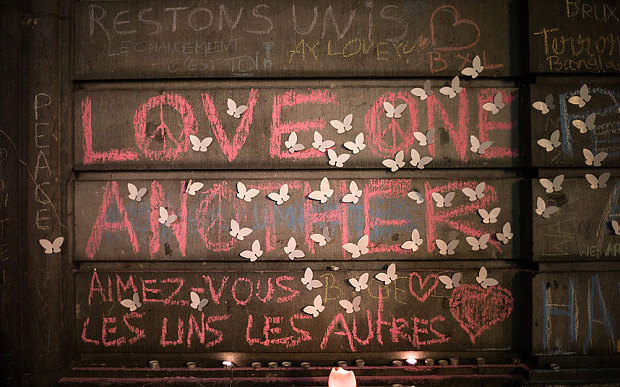
Brussels_Love One Another

Love One Another, As I Have Loved You

 On Maundy Thursday we are explicitly called to love one another. Sometimes though it’s not as easy as you think. This reflection was preached as a sermon at St James’ Church at the Maundy Thursday evening service and is shared with you now.

Readings: 1 Corinthians 11:23-26 and John 13:1-17, 31b-35

‘That you love one another. Just as I have loved you, you also should love one another’

This week has for me been a week of great sorrow. In a week when we are following in the footsteps of Jesus to the cross, his words to his disciples have a great poignancy. A week in which we have once again witnessed the total disregard for the value of human life.

‘That you love one another’

On Monday we heard of the devastating effect that one person can have on one family, the Philip’s family, we heard of the anger and hatred that is justifiably felt as raw emotions are still very much on the surface.  Then on Tuesday, the indiscriminate attack on innocent victims in Brussels, as they went about their ordinary business; treated not as individual human beings but an in-distinguishable mass target.Still each of those who died or were wounded will be connected in a myriad of ways to others: wives, husbands, fathers, mothers , sons, daughters, friends. Connected to people who love them.

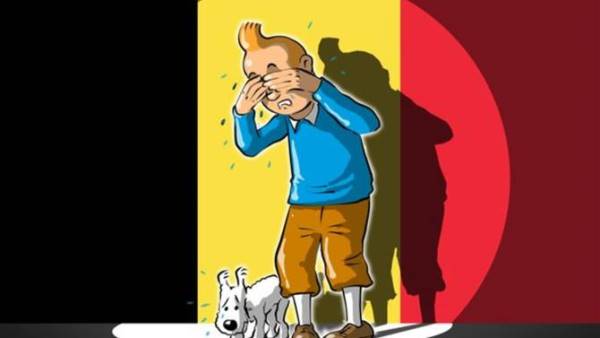
Brussels - Tintin

Herge’s Tintin weeps for Belgium

Far too frequently we think of ourselves as just individuals, separated from one another by race, culture and faith, yet we share a common humanity. Desmond Tutu and Nelson Mandela, when having to deal with the aftermath of apartheid in South Africa, choose to walk the way of love rather than retaliation. Tutu explained that one of the sayings in his country is Ubuntu – the essence of being human, and that it speaks particularly about the fact that you can’t exist as a human being in isolation. It speaks about our interconnectedness. You can’t be human all by yourself, and when you have this quality – Ubuntu – you are known for your generosity.

Our common connection means that what we do as individuals affects the whole world. When we love each other and recognise that common humanity and things go well, it spreads out and shows what the power of love can do; but when we disregard it we act in fear, creating hatred and violence.

 ‘That you love one another’

 That you love one another. Just as I have loved you’

If we want to know what that love should look like then we only have to look at Jesus. Love is never straightforward but he managed to show us the different sorts of love that are needed to unite us rather than divide us.

Love can be tough – we only have to think of the rich young man who when told that he had to give up all that he owned went away grieved.. Yet Jesus didn’t give him a get out clause. He looked at him and he loved him even though he knew how hard that would be

Love enables forgiveness as well as  demanding a change of heart. Like the woman caught in adultery, who was judged and condemned by those who were blinded to their own sinful natures. ‘Do not judge, and you will not be judged; do not condemn, and you will not be condemned. Forgive, and you will be forgiven. She was sent away with the instruction to sin no more, knowing that love enables us to forgive.

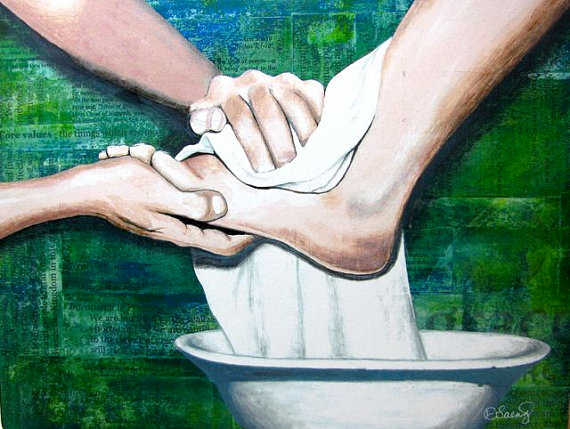
Love gives us a servant heart. What better demonstration of Jesus’ love for us that he stoops to wash our feet, not as master but as a servant and asks us to do the same. Amongst his disciple he was aware that one was going to hand him over, to be part of his inevitable death and yet he still washed his feet.

And that brings us to the greatest love of all, that he would offer up his own life in order to give us ours. A love that we celebrate each time we come to share at the communion table, and taste the bread and wine.  A sacrificial love that didn’t distinguish between the worthy and the unworthy but was poured out to encompass all of humanity.

Just as I have loved you, you also should love one another’

You also should love one another’

There is one more love that he calls us to emulate – to love our enemies. Jesus tells us that if we only love those who love us back then love has no real value. But to try and love those who perpetrate violence, surely this is the hardest love of all.

This isn’t to say that we shouldn’t hate the crime and that punishment must follow according to the agreed judicial system, and let’s be clear that in the case of the ISIS attacks in Belgium this has nothing to do with the Muslim faith in general, but is caused by a perverted religion of hate.

Even so we are called to show mercy and offer grace. We are called to look at each individual and imagine what has happened in their lives to make them turn to such hatred, to make them so blind that they forget their common humanity with their victims, to espouse causes that deny the power of love, and despite this to love them­­­­­­. How hard that is.

‘By this everyone will know that you are my disciples’

What has also been demonstrated, is that evil and hatred were not allowed to get the upper hand in Brussels, as Christian throughout the city offered practical help and prayers and the Belgian people rallied defiantly in the an open square to write chalk messages of love and hope.

The Archbishop of Brussels, Josef de Kesel, also announced that he had received messages from around the world, as signs of fraternity, and which he said, ‘let us feel how we are united in faith and humanity. He added that “We must stay faithful to our message of peace and go on promoting a discourse which appeals for acceptance, unity and coexistence’

So, as we continue to commemorate the passion, death, and resurrection of our Lord Jesus Christ this Holy Week, let us all remember that God is the source of love and life, and ask him to bring peace to our troubled world.

Amen

Servanthood image

© ‘Servanthood’ by Debbie Saenz.

How Far Can We Trust God?

Trust blog

How far can we trust God?

Our readings for Evensong on the second Sunday in Advent bring us the story of Zechariah, the father of John the Baptist, and his encounter with Gabriel in the Temple sanctuary. It gives us Luke’s introduction of how God’s divine plan is about to unfold…

Readings: Isaiah 40:1-11Luke 1:1-25

May I speak and may you hear in the name of God; Father, Son and Holy Spirit.

This evening our gospel reading leads us further into our Advent preparations and on this second Sunday of Advent we are reminded of the work of the prophets, and in particular we remember John the Baptist who stands as a link between the Old and New Testament. However, this evening it is not directly about John, but his parents, especially his father’s pre-conceptual reaction to the news of his divinely ordained fatherhood.

It is with this story that Luke begins his gospel and being the historian he is he is at pains to include in his dedication the care he is taking to make sure that we have an orderly and accurate account. He doesn’t set out Jesus’ ancestral claims like Matthew does; or the symbolic prose of John, or even start with John, the adult baptiser, appearing in the wilderness to fulfil Isaiah’s prophecy as in Mark’s gospel. No, Luke wants to start with a story of how people reacted to God’s preparations for the gift of his Son to the world. So, what does it tell us and how might we learn about our reactions from it?

We are introduced to Zechariah and Elizabeth, chosen by God to play an important role in Jesus’ story. I think we can safely say that neither of them were lukewarm nominal believers. Their credentials meant that they were righteous in the sight of God. Zechariah serving as a priest in the order of Abijah, which can be translated as ‘my Father is Yahweh’, and Elizabeth claiming descendancy from Aaron, God’s original high priest at the time of the Exodus. They walked blamelessly and observed all the commandments. In other words, they were obedient servants of God. Yet, for Zechariah there was an area in his life that resulted in some trust issues.

We can imagine that for a long time they had tried hard to conceive a child and had prayed to God about it, but no doubt as they grew older they had given up hope that it was likely to happen. So it is fairly reasonable that when Zechariah, alone in the sanctuary and terrified at the sudden appearance of an angel, is told that not only is he going to be a father, but that his child will play a pivotal role in proclaiming the arrival of the Messiah, that his first response is, ‘Are you sure? What proof can you offer for this?’

‘How will I know that this is so? For I am an old man, and my wife is getting on in years.’
Luke 1:18

He was confronted with a situation that required faith and trust. The faith bit he had in abundance but the trust was not so easy. Very often we too can face a lack of trust where God is concerned. It seems that we are happy to accept that love underpins our motivation to seek God and to follow his example but trust is harder to pin down. Often this difficulty has to do with our past experiences and our present situations. As humans our fall-back position is to initiate our self-reliance mode. It’s a primitive response to protect ourselves from perceived harm, thinking that we only have ourselves to rely on to get out of trouble

It can also be difficult to imagine stepping out of our comfort zones, but we have to remember that nothing is impossible with God, not even in areas where we have experienced nothing but failure, disappointments and frustration. We have to trust he is there to catch us when we fall and to uphold us as we move forward. It may be that we are holding back that trust because we are happy and comfortable to stay exactly where we are; but this can lead to stagnation; our faith never gets an opportunity to mature, or for our relationship with God to grow stronger as we grow closer to him.

God knows all things; he knows our hearts, our desire to be committed to him and sometimes our desire to be rebellious. But we have to be prepared to take the first necessary step to trust him in each area of our life. Take that step, then another and then the next one. This is the way to grow our faith in God, one step at a time… and how much easier is it as well to take those steps in the company of others, to be encouraged and to encourage each other. Because the more we hand over our lives to God and trust in him the more we can be freer to become the people that God is calling us to be.

With regard to Zechariah’s enforced silence following his lack of trust, I would not see this as a punishment for a lack of faith rather an opportunity for Zechariah to have space for reflection. If we fast forward to his son’s birth, we know that he had become reconciled to leaving things in God’s hands, for his first actions on having his speech restored to him was to speak in praise of God and to leave people amazed at just what his son was to become

We know he was to be ‘The voice of one crying out in the wilderness: “Prepare the way of the Lord, make his paths straight.’ but we also know that we too can be responsible to make this happen in our own lives. From Proverbs 3 ‘Trust in the Lord with all your heart, and do not rely on your own insight. In all your ways acknowledge him, and he will make straight your paths.’

So, this Advent let us all be prepared to step away from self-reliance and instead step forward in faith and trust.

Amen

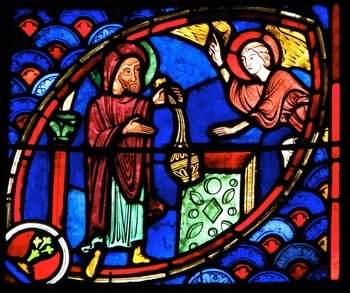
zechariah window

Zechariah and Gabriel at the incense altar in the Temple

Go back

Your message has been sent

Warning
Warning
Warning
Warning

Warning.

Hail To Christ, The King

Hail to Christ, the King

Hail to Christ, the King

On Sunday we came to the last Sunday of the church’s year. It goes out with a bang, celebrating Christ as King. The evening brought a quieter more reflective time when we could think about just what sort of king Jesus is.

Using some of the liturgy from Liturgies for High Days by Dorothy McRae-McMahon, we thought about a different kind of royalty, one bereft of privilege and wealth, whose power lies in truth, faithfulness and grace for all people. We also remembered Jesus’ faithfulness to his calling, entering into the pain of our lives and yet able to leap free of all its bondages.

The cross that frees us from bondage

The cross that frees us from bondage

Our reading for the evening was one of those ones that lends itself naturally into a meditative retelling. Here is my version of Luke 23:32-43:

The journey through the streets had been tortuous, the crowd pressing in on either side. The sounds of jeering and weeping had mingled together to form a cacophony that heralded their progress. Now they had left the city gate and slowly climbed the skull-shaped hill called Golgotha. Three condemned men, each bearing the burden of a death sentence, brought out to this seemingly god-forsaken place to be nailed to a cross and hoisted high so that all might see that justice had been done.

Few people had made the effort to ascend the incline; there was a perfectly good view from the shaded city walls, and they were even more grateful for that distance as the midday sun rose to its zenith, its heat intensifying the stench of decay that hung in the sultry air over the place.

Jesus’ thoughts, however, were not for his own physical discomfort but that God might show mercy to those who had condemned him, and he cried aloud, ‘Father, forgive them; for they do not realise what they are doing’. Some of those who heard these words felt a pang of guilt sweep over them and turned away, ashamed.

Are there times when we too turn away in shame?…

But beneath the crosses the guards, who had seen it all before, bickered over who should have his redundant clothing before drawing straws; the winner triumphant that he had obtained such a seamless tunic so cheaply. Whilst the representatives of the Jewish leaders, perhaps sensing the remorseful sentiments of the woman who had gathered there, tried to add justification of their part in the proceedings by scoffing at Jesus, pointing out that this man who claimed to be the chosen Messiah of God seemed incapable of saving himself despite his claim to have saved others. Hearing this, the soldiers joined in, offering a toast to the ‘King of the Jews’ with a sponge soaked in sour wine. Even so, they could see no glorious death of a king in battle, no pomp and ceremony, and soon grew tired of mocking this inaptly titled monarch.

When might our desire for ritual and symbols blind us from the simple truth?…

One of the criminals, hearing these things, turned and spoke in derisory tones to the man who hung beside him in silent sufferance, ‘Are you not the Messiah? Save yourself and us!’ His thoughts were, that if this was the hope of Israel then surely he could save not only himself from this punishment but them also, however unlikely that was… and it was a slim hope that he would not die today.

However, the other rebuked him harshly; pointing out that self-preservation was not necessarily the main reason to call on God in these circumstances, particularly when they were both there for being condemned justly for their actions. It was clear to him that Jesus was a victim of a miscarriage of justice; what’s more he had recognised the holiness of this innocent man. Perhaps, he told the other, they should fear God’s ultimate punishment more.

Where does it leave us if we only call on God in times of crisis?

Turning to Jesus, an honest and heartfelt plea came to his lips, ‘Jesus, remember me when you come into your kingdom.’ As the figure at his side turned to look at him with a full gaze, he saw not a broken and bloodied man but a saviour in all his resplendent majesty who spoke immeasurable words of reassurance, ‘Truly I tell you, today you will be with me in Paradise.’

IMG_5817

Back to the service then, as we sang ‘Jesus remember me, when you come into your kingdom’ as a prayerful chant and thought about our ‘king’ who calls us to have a more generous love for the world; to bravely dream of the future where we might be a new hope for better things to come and to remain steadfast in our faith in the possibility of Christ’s reign of love.

Hail to Christ, the King,
ruler who lays down the power to destroy,
leader who treads through the costly journey
and into the shadow places of life,
that we might find the rising of life before us:

Hail to Christ, the King,
born to be first witness to God’s truth,
whose might lies in mercy,
whose throne is placed in the midst of humble people.

Hail to Christ, the King

Go back

Your message has been sent

Warning
Warning
Warning
Warning

Warning.

Some material has been reproduced from Liturgies for High Days, Dorothy McRae-McMahon ©SPCK. The meditation is my own.

The purple stole used in the service as a focal point was created by Deborah Ireland. See here for more information about her work