Tag Archives: Jesus

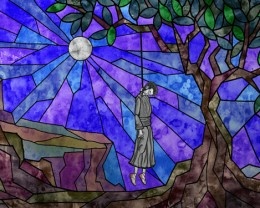
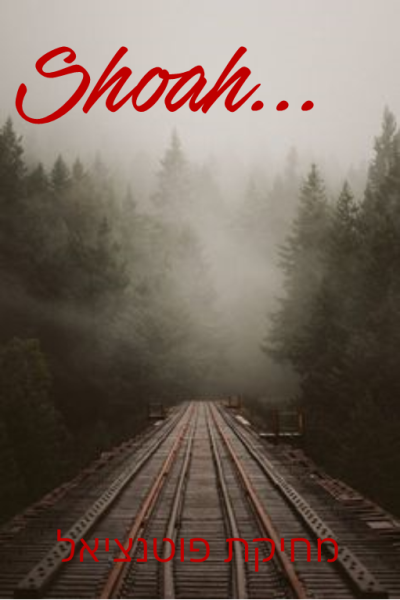
Shoah…An Obliteration of Potential

Shoah - an obliteration of potential

Shoah – an obliteration of potential

A sermon preached on Candlemas, honouring Holocaust Memorial Day 2018, based on Luke 2:22-40

May I speak and may you hear, through the Grace of our Lord, Father, Son and Holy Spirit. Amen

A Jewish family… mother, father and precious new born baby son… entering the temple in Jerusalem, some 33 to 40 days after his birth, to fulfil a rite of passage required under the law of Moses; the purification of his mother with a simple offering, for those without wealth or status, of a pair of turtle doves or young pigeons.

Three people learning what it means to be a family, with little or no inkling of what life lies ahead of them, but filled with dreams and aspirations of what their son may grow up to be. Maybe for Joseph, a son to follow in the family tradition, to become a skilled carpenter working alongside him, and for Mary, a child who will grow up strong and healthy, perhaps achieving far greater things than his parents had by becoming a rabbi or priest.

We have to remember that this was taking place quite some time before three strangers from the East would turn up on their doorstep, with their unusual gifts, and a warning in a dream that would cause the family to flee across the border into Egypt. And yet the season of Epiphany draws to a close today with this story of Simeon revealing the poignant potential Jesus is destined to fulfil.

A potential that was to bring salvation for those who believe in him, both to Jews and Gentiles at the expense of those who would oppose him, , ‘I came that they may have life, and have it abundantly’. A potential that is offered to each and every one of us, to every child that is born. A potential that is to be nurtured and encouraged whatever shape or form it may take. A potential that can be torn away, stamped on and destroyed.

I came that they may have life, and have it abundantly
John 10:10

Yesterday was Holocaust Memorial Day, a day set aside from our November Remembrance Day; when we remember those who fought and gave their lives not only in the 1st World War but also in the 2nd World War, where they stood up aside the evil tyranny of the Nazi regime. Holocaust Memorial Day is a special day to remember the six million Jews as well as other victims, who were murdered simply because of their religion, race, disability, or sexual orientation, bringing the total nearer to eleven million lives.

As a dry statistic, eleven million people is probably unimaginable, but imagine that you drove to the outskirts of London and suddenly the roads, houses and buildings were empty, deserted, every single place, right into the centre of the city. Everyone had disappeared, leaving behind most of their possessions, gone without a trace. Not a single living person remaining.

For the Jews living in Nazi occupied countries, these disappearances were happening in every city, town and village. The streets were falling silent, no one rushing about their daily business, no children playing in streets or shouting and laughing in parks and playgrounds. For among those six million almost a quarter of them were children, 1.5 million lives. Children who never got the chance to grow up and fulfil their potential or their dreams for the future.

Those six million people who were not born as victims, but who had their hopes and dreams brutally stripped away because of an ideology that condemned them to death just because they were Jewish.

Some of you will know that late last year I undertook a ten day seminar at Yad Vashem in Jerusalem, where they not only educate people about the events and the peoples of the Holocaust or Shoah, as they prefer to call it, but also strive to preserve the memories and stories of the victims. Their photographic archive contains hundreds of photographs of Jewish people; people who smiled, danced, took part in sports and musical events, got married and enjoyed holidays and family occasions; with no awareness of the fate that awaited them; each now frozen in time for posterity, as the camera captured their everyday lives.
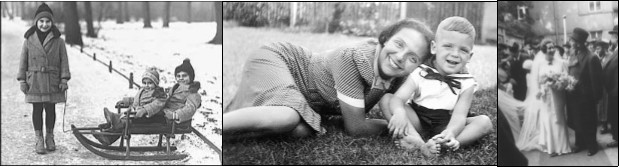
Pre-War Jewish Life

There are also photos of beloved children, dressed up and posed in their Sabbath best, no different I doubt to the snapshots we have, brought out years later to embarrass our offspring, except these children would face no future embarrassment.

This recognition of unfulfilled hope is echoed in another part of the site, where the Children’s Memorial has been created by hollowing out an under underground cavern, which has its own symbolism. It is entered by a descent that funnels you into a darkened room. In the gloom the images of several unnamed children stare out from photographs, as the sound of a mournful lament softly plays.

Then further down, feeling your way into the darkness, you enter what appears to be a room filled with stars. The effect is created by just five candles, which are replaced each day, reflected by mirrors to produce an infinity of tiny lights. In this twilight we listened to just a few of the names of some 1800 of the children, their ages and where they were from; a representation of stolen lives. It is very moving and I immediately thought of my own children

But it is the photographs that haunt me because it makes these children more tangible, and despite not knowing their names, they are no longer anonymous. In your service sheet is a slip of paper with some photographs on it, take a look at it now [see below].
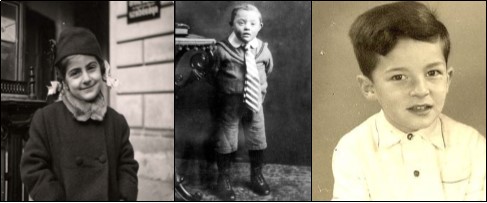
Shoah Children Victims

Florika Liebmann, Unknown and Raphael Altmann

On the left is Florika Liebmann. She was born in 1934 in Szeged, Hungary to Bela and Szenka Liebmann. Bela was a Jewish photographer and businessman who ran an optical and photographic supply store, as well as doing photography in local theatres. During World War Two, he was conscripted into the Hungarian labour service. Szenka and Florika were deported, and in April 1945 were killed along with 38 other victims, in the village of Weissenbach by retreating SS soldiers.

On the right is Raphael Altmann. He was born in 1937 in Wilmersdorf, Germany to Kurt and Grietje Altmann. He was the oldest of four children, including his brothers Martijn and Fred. During the German occupation, the family was expelled to Zeist, in the Netherlands, from where they went into hiding in late 1942. When they could no longer stay together, the parents gave their two older children to a children’s house in Zeist. The house had an escape procedure, but in real time things went wrong. The headmistress was arrested with the children and sent to the Westerbork camp. The children were sent from this camp on to Auschwitz, where they perished on 26 March 1944. Kurt and Grietje, however, hid in four different places with their youngest son Fred and managed to survive. Raphael and Martijn never got to meet their sister Sophia, who was born in 1949

And the picture in the middle, what do you see there? A disabled child? A child with Downs Syndrome? Or a child who was lovingly dressed in his smart sailor’s suit, with polished, laced up boots and no doubt one of his daddy’s ties. I couldn’t find a name or a history for this young man, but he is known to have been victim of the Holocaust and he is representative of one of at least 5,000 disabled children who were murdered under the Nazi regime.

The Nazis falsely believed that some human beings were superior to others and they aimed to develop and preserve a pure Aryan master race. To do this they strove to select those they believed to be the most ‘perfect’ human beings and to deliberately remove from society those considered ‘undesirable’, including the disabled.

German midwives and doctors were ordered to report any child known to them who was born deaf or blind, with paralysis or with a neurological disorder such as Down’s Syndrome, and these children were systematically removed from institutions and families, although not without some reluctance on the parents’ part, from whom the final euthanasia was hidden.

Hitler and his regime justified this by endorsing opinions as expressed by Madison Grant, the author of The Passing of the Great Race, who said, “Mistaken regard for what are believed to be divine laws and a sentimental belief in the sanctity of human life, tend to prevent […] the elimination of defective infants … The laws of nature require the obliteration of the unfit, and human life is valuable only when it is of use to the community or race.”

Nazi Propaganda Against the Disabled

Translation: 60,000 Reichsmark is what this person suffering with a hereditary defect costs the People’s community during his lifetime. Fellow citizen that is your money too.

The Nazis took Darwin’s ideas of natural selection, in particular the idea of survival of the fittest in the animal kingdom, and applied them to the human world and society, however, the valuable of human life doesn’t just rely on its usefulness to others, but more importantly its capacity to love and be loved, and God places in each and every one of us an overriding potential for love.

Not just then, but nowadays, there is also a danger that we stifle this potential even before a child is born. A recent warning by the Church of England was that the future existence of people with Down’s Syndrome is ‘under question’ with the introduction of a new Non-Invasive Prenatal blood test to test for the condition, that the Church is concerned will lead to more terminations because of people’s fears and concerns about their ability to raise a disabled child and misconceptions about the condition itself.

I believe there are compelling and justifiable reasons why a pregnancy might be terminated, particularly if it is for the health and mental wellbeing of the woman or of the unborn child, but not for a sense of seeking ‘perfection’. Some woman reportedly, when they were told that the child they were carrying had Down’s Syndrome were presented with this information as ‘bad news’.

Actress and screenwriter, Sally Phillips, whose son Olly has Down’s, recently addressed this in the BBC documentary ‘A World without Down’s Syndrome’ revealed that when he was born, the doctor said, ‘I’m sorry, I’m so sorry’, the nurse on duty wept, and nothing positive was expressed. She discovered however, that far from being a tragedy their lives have been transformed by Olly, who is now twelve and attending a mainstream secondary school.

As she says, ‘Having Olly in my life has changed me and my family for the better. He has slightly worse impulse control which means he often says exactly what everyone is thinking but is too shy to say and he is also incredibly caring and gifted emotionally, really focussing on how others are feeling by noticing when people are upset when I don’t.’

And we do well to remember that discriminating against the disabled, disables us and diminishes us. There is no perfect human being, not me or you, nor anyone else apart from the person of Jesus, and no-one should be robbed of their potential for a full and meaningful life.

Simeon, when he looked at the baby that was in his arms, rejoiced that he was being given this opportunity to see for himself the person sent to bring about God’s plan of salvation for all, ‘the light for revelation to the Gentiles and for glory to your people Israel’; and we know that Jesus was able to fulfil his potential by making the ultimate sacrifice of dying on the cross. It was part of God’s all-encompassing plan of his will being done on earth, but it was also Jesus’ choice and decision to go through with it, no one else’s.

Definitely ‘good news’, however, this still didn’t negate the sorrow that would be felt by Mary his mother. The sword that would pierce her soul, should also prick our own conscience so that we don’t forget those millions of innocent lives that ended so abruptly and so brutally. Children who never got the chance to grow up and fulfil their potential.

Holocaust Memorial Day is a time to remember the millions of people who were murdered, not just as an anonymous mass, but having looked into the eyes of the people in these photographs realising that they were people, just as we are. We don’t know everyone’s name but we can pause to reflect on their suffering and remember their ‘untold stories’. We can also make a clear promise to speak out against discrimination which judges some lives to be of less value than others today

In that way all may grow strong, be filled with wisdom and know that the favour of God rests on them.

Amen
HMD 2018

← Back

Thank you for your response. ✨


A Voice Crying in the Wilderness

A voice a calling out

A sermon for the third Sunday in Advent recalling John the Baptist as the ‘one calling out in the wilderness’, and the call to be that voice today.

Reading: John 1:6-8, 19-28

May I speak and may you hear through the grace of our Lord; Father, Son and Holy Spirit. Amen.

I wonder how many of you will admit to watching ‘I’m A Celebrity, Get Me Out of Here’? Not that I’m saying there’s anything wrong if you do. I think we all have a natural curiosity to watch people who for one reason or another are deemed famous, doing things that are strange or unusual. I must admit that if I hear in the news that someone is proving to be a real character, I might flick over and catch part of an episode to see what all the fuss is about.

Of course it’s easy for us nowadays, with satellite TV and catch up, to bring things that are happening ‘live’ into the comfort of our living rooms or on our mobile devices to satisfy our curiosity, but in Jesus’ day any apparent fame was broadcast by word of mouth and only those who were serious about finding our more would make the effort to travel long distances on the testimony of a friend or neighbour; and yet, we hear in Luke’s gospel that ‘the crowds’ were coming out to see John the Baptist; and today in John’s gospel we catch a sense that the strict traditionalists, the Pharisee’s, had got wind of a strange and curious man doing things that were unsettling and causing ripples in their neat and tidy well-ordered lives. Who was this man?

Obviously, not concerned enough to distance themselves from undertaking their strict religious observances in the temple in Jerusalem, but enough to send a contingent of representatives to find out more, just in case. What then did they find as they journeyed out into the wilderness around the River Jordan? The gospel writer tells us that the place they found John was at Bethany – not the village just east of Jerusalem, near the Mount of Olives, that was the home of Mary, Martha and Lazarus. No this Bethany, although nowadays not officially known, would have had to have been about 50 miles to the North of Jerusalem, in Jordan, and is thought to be modern day Al-Maghtas, an Arabic word for a site of baptism or immersion and which has been venerated as such since the Byzantine period.

That’s the place but what about the man? John, even by biblical standards, would have presented an eccentric appearance, dressed in camel hair clothing secured with a leather belt and a physique that was sculpted by a diet of locusts and wild honey, one can imagine his wild hair and austere demeanour were not the things that were attracting the people to him. He probably looked like an ancient prophet, if not smelt like an ancient prophet and his words echoed the prophecies of those Old Testament prophets who had gone before him. Perhaps his disregard for his own personal appearance confirmed his humble and self-effacing nature, but let’s be under no doubt, John was no shy wallflower, he knew what his role was and he was certain about the mission he was undertaking.

In answer to their attempts to guess his identify, he wasn’t the Messiah and he wasn’t the re-embodiment of the prophet Elijah, but he was the messenger that the prophet Isaiah had said would appear as a herald to prepare the way for the Messiah’s appearance; to make straight the paths, to smooth the way, to give people a chance to re-order their lives before it was too late. Yet Isaiah had mentioned nothing about the need to be baptised in order to repent of your sins and certainly this form of baptism was not something that the Jewish people would have seen as normal. Ritualistic washing, however had been practised since the time of Moses, through the Leviticus laws when a person needed to be cleansed and purified in order to be able to make sacrifices in the Temple.

This ritual was later expanded to taking a dip in a ‘mikveh’ or immersion pool, with steps leading down on one side and then up on the other, having passed through the pool of water; think of the pools of Siloam and Bethsaida, that were used for high days and holidays at the Temple site. And as with a lot of Jewish ritual law there are six different options that satisfy the requirements starting with pits, to cisterns refreshed by rainwater, custom-built ritual baths, then fountains, then flowing waters. But natural lakes and rivers were considered to be the best, so the ‘living waters’ of the River Jordan were definitely ideal.

But as John says this is only the preliminaries, water would give way to immersion in the Holy Spirit, and he was very, very clear of his unworthiness to carry out this form of baptism. There was another coming after him. Curiosity satisfied then for the Pharisees’ researchers, they would no doubt return to their leaders with more food for thought than reassurances. But that still leaves us with the question of why so many people were attracted to the message that John was voicing and what that means for us today. What was this baptism of repentance that he offered?

Like ourselves this Advent, the people had been watching and waiting, in fact they had been waiting for over 400 years. This period of seemingly divine silence is the name given to the period of time between the last of the Old Testament prophets and the arrival of Jesus in the New Testament. It had begun with Malachi’s prediction of Elijah’s return, ‘I will send you the prophet Elijah before the great and terrible day of the Lord comes,’ hence the Pharisee’s question and was now to end with its fulfilment in the coming of John the Baptist.

Silence however didn’t mean that the people had been living in limbo, because despite the lack of Scripture detailing this period, a great deal happened. The Jewish homeland had first of all been taken over from the Persians by the Greek Empire followed by an Egyptian occupation. Then halfway through the Syrians overtook Jerusalem, followed by the Greek king, Antiochus Epiphanes’ desecration of the Holy of Holies within the temple which led to a revolt, led by the Maccabee brothers to retake control of the Jerusalem, only to be conquered by the Roman Empire, the state the people found themselves in now.

You can understand, therefore, when the strange and unusual figure of John appeared in the wilderness, calling people to repent, to turn back to God , then they were ready and curious enough to seek him out. There were some, like the Pharisees, who came to the Jordan to observe John’s ministry but who had no desire to step into the water themselves. However, even those who did wade into the river, it wasn’t enough to be ritually purified, John’s baptism was more than that – it was a symbolic representation of changing one’s mind and going a new direction – a direction that pointed toward Jesus. His was the voice calling as we are called to be that voice.

On a personal level, I have always been reminded that this task has been passed on to us each time I say out loud the Benedictus during Morning Prayer. The second half of the canticle is an address by Zechariah to his own son, John the Baptist,

You, my child, shall be called the prophet of the Most High; for you will go before the Lord to prepare his way, to give his people knowledge of salvation by the forgiveness of their sins.

You, my child… that you is directed at each and everyone one of us to be the voice, offering the knowledge that points people toward Christ. With John’s baptism, a person repented of sin, acknowledged their need for salvation, and was therefore ready to place their faith in Jesus Christ. It foreshadowed what Jesus would, did and still does accomplish, as the Benedictus goes on to say

In the tender compassion of our God the dawn from on high shall break upon us, to shine on those who dwell in darkness and the shadow of death, and to guide our feet into the way of peace.

John the Baptist wasn’t a B-list celebrity in the jungle or wilderness, someone you think you’ve heard of but you’re not sure you recognise them – he was definitely A-list, but he wasn’t the main attraction. His baptism was a purification ceremony meant to ready the peoples’ hearts to receive their Saviour. In this season of Advent we too are watching and waiting to receive once again with joy our Saviour. It’s an event worth calling out about…

Amen

John_The_Baptist

← Back

Thank you for your response. ✨

Challenging Hatred and Prejudice

Crumbs blog

‘Even the dogs are grateful for the crumbs from under the Master’s table’

It’s funny when certain things start to press into your consciousness and suddenly you see and hear it all around you. Over the last few weeks there has bubbled up so many events that have displayed hatred and prejudice among different groups of people and all of this fed into my wanting to say something. This week’s gospel of Jesus and his meeting with the Canaanite woman seemed to offer an opportunity to do so.

Based on Romans 11:1-2a, 29-32 and Matthew 15:21-28

May I speak and may you hear through the grace of our Lord; Father, Son and Holy Spirit. Amen

I was once asked by a bishop to think of a story where Jesus had had his mind changed… by a woman. At first my senses bristled slightly as the nuance that it might have been a more unusual moment because a woman had done so… but actually what I think he was trying to explore was my attitude to feminist theology.

Feminist theology, in case you’re wondering (and according to Wikipedia), includes goals of ‘increasing the role of women among the clergy and religious authorities; reinterpreting male-dominated imagery and language about God, determining women’s place in relation to career and motherhood, and studying images of women in the religion’s sacred texts and matriarchal religion.’

Feminists and women’s rights campaigners were very much part of the social history that surrounded me in my formative years – people like Germaine Greer, the Greenham common women protesters, being encourage to ‘burn your bra’ to make a stand for women’s rights. This was of course another stage on from the Suffragette movement and ranged from extreme hatred of anything masculine to fighting for equal opportunities in the workplace.

Alongside this were the big news stories of racial segregation, race riots in America, the assassination of Martin Luther King and apartheid in South Africa. Images and words that soak into your consciousness – to be absorbed and considered often subconsciously, but tempered with the opinion of your family and friends.

Nearer to home, and yet still not directly affecting my everyday life were the tensions in Northern Ireland, the segregation along faith lines – of roman catholic and protestant, the IRA bombing campaigns and the tragedies of Enniskillen and the killing of Airey Neave. Although no doubt my views were coloured to some extent by fear and shamefully a sense of annoyance,  when early on in our marriage my husband David was not able to openly wear his naval uniform outside of ship or barracks and had to have the subframe of his car checked with mirrors on sticks – just in case

Hate and prejudice between men and women… black and white… Christian and Christian… and they were just the big prejudice issues.

And this last week or so, that ugly prejudice has reared its head again in Charlottesville, USA. Where groups of people believed they were justified in chanting racial slogans and inciting violence against those who disagree with their points of view and lifestyle, a humourless parody of neo-nazism and white supremacy – a belief in one group of people being ‘the chosen ones’.

Charlottesville Riots 2017

Charlottesville, USA – where hatred and prejudice flared up

The shame is that these are often views that have been formulated and passed on using specific scriptures and texts to validate their attitudes – a real reminder to us that we should not cherry-pick individual verses and hold them up in isolation – better to see the bigger picture from Alpha to Omega

It’s true though that in the bible we can find it difficult to get away from the motif of certain people being ‘the chosen ones’. In the Old Testament how often do we hear of the Israelites being God’s own people, chosen and special, to the disadvantage of all other peoples. This week alone in readings from the lectionary, Ezekiel spelt out God’s wish that ‘no foreigner, uncircumcised in heart and flesh, of all the foreigners who are among the people of Israel, shall enter my sanctuary’ and Jesus himself in Matthew’s gospel, talking about reproving another who sins, used the phrase, ‘if the offender refuses to listen even to the church, let such a one be to you as a Gentile and a tax-collector.’

Even the verses that we don’t hear today in our New Testament reading, Paul talks to the Romans about the salvation of the gentiles only coming through the stumbling of God’s ‘own people’ and that although they have been ‘grafted in to the original branches and root’ they are not ‘to vaunt’ themselves over the branches’.

Subtle prejudice creeps in however hard we try and distance ourselves from it. I would count myself as very liberal-minded, open-hearted and very much against prejudice in all of its forms; willing to defend those views without compromising my faith, and yet I know that there are times when I can catch myself thinking of things I was taught and heard as a child, things that I spurn when I realise that it’s not appropriate or even Christian. The trouble is as a white, middle-class woman the only prejudice I have really suffered has been positive prejudice.

I can never feel what it must be like as a young black male driver being six times more likely to be pulled over by the police than my white contemporary; or a young male Muslim suffering discrimination because of the radicalisation of a small minority of my faith; or a young female Asian, subject to an arranged marriage, virtually imprisoned and sold as a chattel in twenty-first century Britain who doesn’t have a voice.

I could say ‘What do these things matter to me? They are not part of my life; these are not my experiences of prejudice’ – and yet it doesn’t stop me from empathising and feeling in my heart the injustice and wanting to speak out – to challenge those who hold these prejudicial viewpoints.

So what has that got to do with the gospel we heard this morning? Well, if you hadn’t already guessed this was the passage that the bishop wanted me to call to mind. A passage in which both the disciples and Jesus himself appear to display prejudice against both women and people of other races and faiths; and were challenged.

What of the Canaanite woman? The same story is told in Mark’s gospel, where she is called an Syrophoenician, and he very clearly identifies her as a Greek and a Gentile – a non-Jew. The place where she lived near Tyre and Sidon had traditionally been at the edge of the land of Canaan.  However, now this area was a prosperous Roman city port, but its people had already heard about the things that Jesus was doing and now he was coming to them. So when she comes running after him, she had already made up her mind that he was going to be the one who could help her.

A Gentile… a woman… begging insistently for him to help her, only for Jesus to turn around and tell her that he had only been sent to the lost sheep of the house of Israel – the Jews. You could almost imagine his friends nodding and exchanging superior glances. Then he adds possibly a rhetorical question, ‘Would it be fair to take food from the mouths of God’s chosen children and give it to anybody gathered around the table?’ Those with him were no doubt thinking, ‘No of course not – come on let’s move on and not waste any more time here’. She was dismissed!

Yet, she wasn’t going to be brushed aside and it must have taken a lot of courage speak out and challenge Jesus, and perhaps this was what he was waiting to hear. ‘Everyone who gathers around the Master’s table will be grateful, even if, like dogs, they only get the crumbs.’

No doubt there was a sharp intake of breath from Jesus’ followers, but Jesus would have looked at her and seen just much faith she really had because she believed in him. Was the Syrophoenician woman a Christian? Did it matter what she looked like? Did it matter where she came from?

When we believe in Jesus, when we believe in God, when we believe in the Holy Spirit, we confirm our faith……and it’s when we truly believe, that we begin to understand the importance of being ready to challenge prejudice and to be challenged.

Paul will go on to confirm to the Galatians that ‘there is no longer Jew or Greek, there is no longer slave or free, there is no longer male and female; for all of you are one in Christ Jesus. and last week, he confirmed that ‘the same Lord is Lord of all and is generous to all who call on him. For, ‘Everyone who calls on the name of the Lord shall be saved.’ We can therefore be very clear that at the heart of the gospel message, salvation and acceptance is open to all. Let me just emphasis that – to ALL. There is no room for hatred or prejudice of any kind

How great then is our faith?

Amen

The Syrophoenician Woman blog

‘Woman, great is your faith! Let it be done for you as you wish.’

← Back

Thank you for your response. ✨

Sermon preached on Sunday 20th August 2017


Not In Our Own Strength


The Promise of the Holy Spirit

An Advocate, a comforter, a helper, an assistant… the gift of the Holy Spirit means that we never have to rely solely on our own strength; and some days you need it more than others. After an exhausting few days, I explore this thought in my talk yesterday morning (6th Sunday of Easter John 14:15-21)

May I speak and may you hear through the grace of our Lord; Father, Son and Holy Spirit. Amen

The gospel passage we heard and read this morning is often subtitled the promise of the Holy Spirit. In this instance not as a rushing wind or tongues of flame that we will hear about in a couple of weeks, or the gentle dovelike descent that was seen at Jesus’ baptism; but a breath that we inhale and which resides deep within us.

Jesus is about to ascend from his earthly life and resurrection back to the Father. His disciples will doubtless be feeling even further bereft bearing in mind the great task that he is setting them up for. We could reason, and I’ve heard people say it, if only Jesus were here today he’d explain what we need to do – yet look at the time he did spend with his disciples and followers and how they themselves so often showed a complete lack of comprehension or understanding. But if we look closer at what he is saying he is not abandoning them or us; instead he is to send an advocate.

The word Advocate here is a translation of the Greek word parakletos or Paraclete which is often also translated as comforter or helper. For the disciples, and for us as well, the idea of a comforter is very apt. In the sense of bereavement or tragedy, which the disciples were facing, having someone with you and alongside you, giving you the odd hug or silent hand holding, gives strength to face the next moment – the death or tragedy is still a tragedy but having support and comfort enables you to cope with that moment.

Here though we have the word Advocate; a legalistic word as an advocate stands up in a court of law and explains to the judge or jury how things are from their clients perspective and pleads their case.  In the same way the Holy Spirit does this for us, but in ways that are more than just acting as an assistant, helper or comforter; more like bridging the gap between us and God.

As we get to know who Jesus is, so we find ourselves drawn into his life and love and sense of purpose – we are then able to see what needs doing and what resources we might need to do it – and to help us do this Jesus promises his own Spirit, his own breath, his own inner life – the Spirit of Truth.

You know him, because he abides with you, and he will be in you.
John 14:17

I must admit that I wrote this sermon yesterday when I was very tired. I’d been out on Friday evening with Southampton Street Pastors and hadn’t gone home until just before five o’clock on Saturday morning. By a quarter to ten I was out with the Love Harefield crew, including several others here, picking up litter around Harefield. By noon I was visiting my mum in Abbey House, Netley, where she is undergoing rehabilitation since having a fall in February when she broke her hip. By two o’clock I’d had a sandwich for lunch but knew that I still had this talk to write before I went out in the evening to hear my daughter, Lizzie, sing with the Singsational Voices choir at All Saints, Botley.

Now I don’t say all of that seeking sympathy or to be told that I’m over-stretching myself, because each of these things I felt were equally important to do. No doubt we’ve all had times when we’ve faced similar periods, when we feel that we’re running at full speed with our petrol gauges hovering over empty. Yet for all the physical tiredness there is joy to be discovered when we realise that we do not have to rely on our own strength or capabilities to engage in each task.

I can tell you at nine thirty on the Friday evening I could quite easily have remained sitting on the sofa and not got up and changed into my Street Pastor uniform and driven into Southampton. Yet the moment I did I began to feel energised as to what situations we might be called to during the patrol.

I could have stood back and simply poured out cups of hot chocolate to our homeless friends on the street, but then I wouldn’t have felt moved to bob down beside Mark, who told me his dyslexia was preventing him from filling out the necessary form in order for the council to provide accommodation for him, and having signposted him to a group that could help him with this, have him grasp my hand and bless me.

I could have hesitated to go over to assist a taxi driver who was dealing with a very drunk young man who had resolutely sat himself in his cab, despite having no money, and gently persuade him to dismount, very precariously I might add, so that we could sit him down on a wall and offer a bottle of water, sitting next to him and listening as he poured out his story of why he was in such a state, as he gradually sobered up enough to be able to start his long walk home instead

I could have ignored the high-heels-abandoned bare-footed girls, knowing that I’d already cleared up two areas of broken glass further down the road, instead of calling out whether they’d like some flip-flops and then explaining in response to their incredulity as to why we would be doing this in our own time and all for free

I could have stayed under the duvet instead of donning a hi-vis jacket and operating a pick-up stick, doing a menial task that would help bring the satisfaction of a job well done to improve our neighbourhood, and which was much appreciated by the people I spoke to as I walked around, and I would have missed the fun of working together and the doughnuts!

I could have been quite irritable with my mum, who nowadays asks me the same thing several times and whose memory means that a lot of the times we’ve shared in the past are often forgotten or denied. Rather than sitting and doing a crossword together and her telling me that she’ll know the answer as soon as I say it.

I could have missed the joy yesterday evening of being filled with the Spirit as I listened to nearly a hundred voices sing in harmony and rhythms that touched my innermost soul.

These are all things that I don’t always want to or feel comfortable doing in my own strength, but I am aware that it is the gift of the Holy Spirit that enables me to achieve so much more, to live for God and to witness to his love in the world, and it’s a gift that is offered to everyone.

Yet not everyone can receive it because they choose not to see or hear the message. There is a large part of the world that lives as if there were no God and a person who has eliminated God from their thoughts never listens for him. When we open ourselves up to receiving the Spirit we wait in expectation and prayer and in doing so will be joined to Jesus and God the Father by an unbreakable bond of love. We will recognise that Jesus never leaves us to struggle alone. As William Barclay puts it, ‘The Holy Spirit gate-crashes no-one’s heart – he waits to be received’

Jesus asks us to keep his commandments – a commandment that boils to down to just one thing – love one another as Jesus loves us. Jesus expressed his love in many different ways, the gospels show us his immense compassion for the suffering, his attentive listening presence, and his energetic celebration of the lives around him. He healed the sick, he fed the hungry, he released those held captive, he sought justice and invites us to do the same; all with the assistance of the Spirit that he sent in his place.

The Spirit that abides with us and in us. So maybe next time that we feel unsure, ill-prepared or uncertain of what we need to do or how we’re going to cope we can remember that invisible bridge bringing us closer into a relationship with Jesus and the Father so that they are revealed more clearly to us and in turn reveal God more clearly to others through us.

Amen


← Back

Thank you for your response. ✨

The Holy Family and the Mayfly

The Holy Family and the Mayfly by Albrecht Dürer

The month of May is with us and we continue to see signs of new growth and life all around. Not those first buds of spring, but the lush greenness of trees coming into full leaf, ferns unfurling themselves and the first swarm of midges over the pond in the early evening. Having celebrated Easter recently, the gift of new life is very much in our minds as we rejoice in the resurrection of Christ.

This new life we see around us never comes from nothing: the trees are producing new growth from existing branches; the bluebells filling the woods are from bulbs deep in the soil and even the bedding plants waiting to be nurtured for summer colour are from the seed of a plant that bloomed last year. As Jesus said ‘unless a grain of wheat falls into the earth and dies, it remains just a single grain; but if it dies, it bears much fruit’

This is true however brief that life is, and one of the briefest of lives is that of the mayfly, a primitive insect that the German engraver Albrecht Dürer included in his 1495 engraving sometimes known as ‘The Holy Family with the Mayfly’, suggesting a link between heaven and earth. However, Dürer may have intended it as a butterfly, a creature whose dramatically transformative life-cycle makes it a perfect symbol of resurrection and redemption. Whatever its identity, with inoperative mouthparts and digestive systems filled with air, this ephemeral creature, the mayfly, is destined to live only a few hours. It lives and dies purely in order to produce new life; a female typically laying between four hundred and three thousand eggs.  

Jesus’ life similarly could be considered all too brief, yet he tells us that he came that we ‘may have life, and have it abundantly’. We also recognise that the seasons change and all too soon spring will give way to summer with its abundant fruitfulness, before winter will see those fruits awaiting transformation. Through Jesus we are assured that for us this transformation will mean a new and everlasting life. His promise is not necessarily in longevity, but life in all its fullness – so let’s make the most of each and every day, finding in it God’s blessings and sharing them with those around us. 

Alleluia, Christ is risen!
He is risen indeed. Alleluia!

← Back

Thank you for your response. ✨


Walking The Emmaus Road

The Road to Emmaus by Daniel Bonnell

The story of the Road to Emmaus lends itself beautifully for us to think about our own journeys of faith; the processes we go through of discovering who Jesus is, wanting to know more  about him and when we have that moment of revelation, confessing him as our Lord and Saviour. Here is my sermon for the Third Sunday of Easter 2017, based on Luke 24:13-35

May I speak and may you hear through the grace of our Lord; Father, Son and Holy Spirit. Amen

The story of the Road to Emmaus, one of the most vivid and insightful accounts of Jesus’ resurrection appearances. So often there are stories in the gospels that make you really want to be a fly on the wall, or in this case a fly on the road.

We also need to understand that the journey to Emmaus is both a literal and a spiritual journey. On the one hand it recounts the journey of two of Jesus’ disciples who, after the crucifixion and resurrection of Jesus, walk seven miles from Jerusalem to the village of Emmaus. On the other hand it mirrors the journey that we all take from not knowing or recognising Jesus, to understanding what the bibles say about him, to recognising him for who he is and that he is the reason we are willing declare our faith and can call ourselves Christians.

It’s a journey that we are all on; all of us at different stages, independent of length of time or knowledge and understanding, but like today’s gospel story there are waypoints, crossroads, defining moments. A journey we’ll see that those disciples found didn’t end in the house in Emmaus but began a new voyage of life changing discovery.

Over the last few weeks it has been wonderful to journey with some of our young people and adults as we have explored what it means to be a Christian, the joy of the Gospel and prepared some of them for one of their own defining moments when they will confirm and recognise their faith at the upcoming Deanery Confirmation service. Each of them will have their own story to tell, their own unique journey they’ve travelled to get to that point, their own experience of a relationship with Christ. So what does the story tell us about both their and our own journeys?

Firstly it’s interesting to wonder who those two disciples might have been. Well we are told the name of one of them, Cleopas – a disciple whose name or variant of it some scholars claim has appeared before in other gospels. In John he is mentioned only by association with his wife Mary, one of the women standing at the cross with Jesus’ mother, Mary wife of Clopas. Secondly, it’s generally assumed, rightly or wrongly that the second unnamed disciple is a man. Perhaps it might make sense that Cleopas and Mary, husband and wife, both close disciples of Jesus, were making their way back home together

A bas relief on a church at Emmaus showing Jesus with a male and female companion

Of course nobody knows for sure, but it does lend itself to the inclusivity of Jesus’ message to all regardless of gender, race or sexuality. What we do know is that it is Jesus that seeks us in the first instance. On the road, Jesus himself ‘came near to them’ and although the disciples knew who Jesus was, they did not recognise him. They knew a lot about him, they had heard a lot about him and yet they were unable to recognise him when they met him. This could be said to be true for many people, even nowadays; they’ve heard of Jesus and even some of the things that he did, and yet they don’t recognise him or respond to him. They don’t engage in wanting to find out more, despite his presence.

We could also ask why the two disciples were prevented from recognising Jesus. Perhaps God had a purpose in blinding their eyes from reality. It’s not cruelty on God’s part, but by a gradual revelation of himself, Jesus allows them and us to learn that we can trust God’s promises. Remember that the disciples as a whole had been told about these events many times beforehand, but still they had not believed

Maybe it was because events had not happened as expected. Their preconceptions of who Jesus was and what he had come to do had been turned on its head; perhaps they dismissed the whole thing as misplaced hope and trust. When things turn out different to how we expect how often do we give up and admit defeat instead of trying to understand whether there is a reason for it.

It could be that they had too little faith – why didn’t they believe the reports of the women, even when they’d seen the empty tomb for themselves. Or the whole idea of a supernatural event of God raising Jesus from the dead was a concept they couldn’t grasp; had they even considered who Jesus was?

Is this a mistake that’s repeated today? Just because someone knows about Jesus, doesn’t mean they know him. They may have heard about him, read about him, use his name and many claim to know him. But knowing about him and knowing him are two different things

Along our journey there will be others who help us to know more about Jesus, but ultimately it will be Jesus that opens our eyes. For the two disciples on the road he used the things that they would already know about, the scriptures, and how if they believed what the scriptures said about him then they would understand why he came and why he had to suffer. We too today have scripture to help reveal who Jesus is, and we have the double advantage of not only having the Old Testament but the New as well.

When we read and come to know the scriptures better they help to build up our faith, they are a reliable witness to who Jesus really is, and the truth that they contain lead us to a personal faith in Jesus. A personal faith and a personal relationship with Jesus, but it mustn’t stop there. If we personalise Jesus too much he fast becomes God in our own image. The relationship we are called to have is one of fellowship and community. It is not coincidence that it is around a supper table that the disciple’s eyes are opened.

Think how many of the resurrection appearances are associated with table fellowship: the request for something to eat when he appears to all the disciples almost immediately after the two from Emmaus had told their story, or having breakfast on the beach. It was during the intimacy of a shared meal when Jesus broke bread and gave thanks, that the disciples recognised him

When he was at the table with them,
he took bread, blessed and broke it, and gave it to them.
Then their eyes were opened, and they recognized him
Luke 24:30-31

We too through our sharing of communion also come to recognise Christ in the memorial of the bread and wine shared at the supper, which goes on to prompt us to share with others our recognition of his presence. I can vividly remember my own first communion, a real sense of being filled with the Holy Spirit, as the bread was placed in my hands and the wine sipped from the cup. That was my moment of my ‘heart burning within me’ as I acknowledged who Jesus really was and the transformation he was bringing to my life. Like the disciples in Emmaus when we are moved with similar emotions then surely there is only one thing we can do and that is to testify in our lives, actions and words why we are followers of Christ and invite others to join us on that journey.

It would be lovely to see lots of us there at the Confirmation service, not only to support those who are declaring their recognition of Jesus as Lord and Saviour, perhaps publicly for the first time, but to remember that we too are either travelling on a journey toward that decision or recalling the time when we too made that declaration.

We are called to walk together in fellowship and the great thing is that we also have a Saviour who walks alongside us. So we can never walk alone, however hard or tough the journey. Sometimes we may try to run on ahead, at other times we trail behind, but somehow eventually we learn to walk at God’s speed, and God continues to give glimpses of himself across our lives; enough to sustain us and keep our faith strong on the journey.

Amen

← Back

Thank you for your response. ✨


From Alpha to Omega


Easter Sunday Evensong brought to a close an amazing day of celebrations and the end of the journey we had been on throughout Holy Week. From the highs of Palm Sunday, with it’s joyous branch waving, through the sharing of a Seder meal and watch on Maundy Thursday via the reflective solemnity of Good Friday to the bursting alleluias of Easter Sunday. Now in this more formal choral service there was room for one more talk,  and it took us to the very end of the story. Based on Revelation 1:12-18 here were my thoughts.

This morning we were at the very beginning of the amazing story of the resurrection of Christ and this evening we are taken to the end times through the apocalyptic writing of John, a ‘servant’ of Jesus.

Jewish apocalypses were generally written at times of crisis and we know that the early Christian church regularly faced persecution from the Roman authorities and that many Christians had already been martyred, and that the writer John had himself been imprisoned and exiled on the Greek island of Patmos, because he had been spreading the word about Jesus.

The first Christians lived in eager anticipation of Christ’s return, but some 60 years after his death it had still not occurred. They needed something to inspire them to stand firm; to remind them that God is in control, no matter how things may look and these revelations are trying to encourage the reader, both then and now, to look at the ‘big picture’ of human history.

It is as though a veil is being drawn aside and future events and scenes of heaven are ‘revealed’. Through Christ, God is bringing history to its climax and close, and the need to focus on the end of the world when God will reign supreme in justice and peace.  Christ speaks to his Church through John, to encourage and guide his people. He urges them to persevere through times of darkness and great stress, for after this life they will live with God in a glorious new world.

John describes his visions in the extraordinary picture language first used in the Book of Daniel. He has a vision of Jesus ‘like a Son of Man’. This had been Daniel’s vision – a human being who fully represents the human race, appearing in clouds and great glory, to be given God’s power and authority to reign over all things.  However, John’s vision has far more detail than that of Daniel’s. I tried to find an image that I could give you to look at whilst we though about this passage, but I couldn’t find an artistic interpretation that did justice to this extraordinary vision, you are going to have formulate your own picture in your head.

We can imagine his long robe is dazzling white and the golden sash reflects and bounces that light back to us. This Son of Man has the same pure white hair as Daniel’s God, the Ancient of Days, the bright white of pristine snow that glints in sunlight, almost too painful to look at.

We cannot tell what colour his eyes are because they are eyes that blaze with the fire of holiness, and his feet  glow with the strength of burnished bronze. His voice has the fluid melodious sound of rushing water and his mouth speaks truth with power and precision. His face is brilliant like the sun in a cloudless summer sky,

This glorious Christ stands among seven golden lampstands. These are his churches, which give his light to the world. He also holds in his hand seven stars – the angels that care for each local church. I wonder if we ever imagine our own church with its own guardian angel?

In the world, the churches are like lampstands, and Jesus gave the same picture to his disciples. They are not to hide the truth, like putting a light under a bowl. The are to lift it high, where it can give light to everyone. This then is our calling as a church and as individuals, to life the name of Jesus up so all may enter in the warmth and brightness of his presence. A presence that is fearsome but not frightening, as John found out when he fell at his feet as though dead. For Jesus is the first and the last, the alpha and omega. This morning and every morning our exclamation should be ‘Alleluiah, Christ is risen! Because as Jesus reveals to John ‘I am the living one, I was dead, and see, I am alive for ever and ever; and I have the keys of Death and of Hades’.

John is in exile, perhaps sentenced to hard labour; his body may be in prison but his spirit is free. Christ’s revelation of himself to his disciples, to the world and to us, means that we too are free and that our future is secure.

Alleluia, Christ is risen
He is risen indeed, Alleluia!

Amen.

← Back

Thank you for your response. ✨

Judas – Servant or Scapegoat


Judas HangingThe turning point for Jesus and Judas? My dissertation for my MA focused on the question of whether Judas Iscariot might be God’s scapegoat. This sermon preached on Maundy Thursday 2017 is based on John 13:1-11, 31b-35 and suggests that there may be more to his actions than the traditional view of Judas the unrepentant, egotistical betrayer of Christ

May I speak and may you hear through the grace of our Lord, Father, Son and Holy Spirit

This evening we hear one of the pivotal stories of what it means to be a Christian. John, declines to provide us with an account of the breaking of bread and sharing of wine, the origin of our Holy Communion, but instead gives us an account of Jesus washing his disciples feet as mark of servanthood which models for them a life of mutual acceptance and forgiveness which must be the mark of his followers for all time.

Apart from Peter, who, with his usual bluster and enthusiasm, misinterprets Jesus’ actions, our attention is focused on Judas; Judas Iscariot, the betrayer of Christ. Of all the gospel writers, John focuses on the persistent presence of the devil; for all those who come to believe in Jesus, particularly the Jewish converts, are changed into Children of God rather than children of the devil.

We are also not given an account of the temptation of Jesus in the desert by John, but it is useful to remember Luke’s account, where at the end of his failure to persuade Jesus to have anything to do with his enticements, the devil leaves him ‘until an opportune time’. This then is that opportune time and Judas is to enter centre stage for his brief but eternal moment of fame.

Here then might be his story:

‘The past few weeks and days have been very unsettling. For the last three years we’ve been travelling with Jesus, seeing him doing such miraculous things and managing to outsmart those who wish to do him harm. I’ve never been more certain of anything, that he truly is the one who has come to liberate not only our own people, but many others from the tyranny of brutal regimes… and yet so many are saying he’s gone too far, what he asks us to do is too hard a life to follow, that he must be demon possessed and so they are turning away. His talk of oneness with the Father, calling people to salvation and eternal life for some is an outrageous blasphemy and yet I’ve seen for myself the wonderful deeds he has and is doing.

Restoring sight to the blind, curing the sick and the lame, freeing people from injustices and teaching ways of love and peace above hatred and violence – why don’t the people get it. I’ve learned so much from him and he’s trusting me, as one of the twelve, to be part of his mission, to show others the power of God; and what better demonstration of that power than his bringing Lazarus back from the dead – there can surely be nothing more amazing or mind-blowing. Yet, even that has had the effect of dividing people and has added weight to the authorities case against him, that they are losing control of the crowds and fear an uprising. Certainly our latest arrival in Jerusalem shows that he has an incredibly popular appeal, but still for someone who claims that we should do all we can to support and uphold the poor, the way he allowed Mary to be so extravagant with that precious nard is at least questionable.

There have been moments lately when my mind seems foggy, my judgement clouded and I can’t think straight – what really is his purpose for me? Am I to abandon the faith of my father and forefathers; isn’t there a way that we can explore a way to move forward? What might it take to bring both sides together? Might it be best to talk to the authorities and hand the problem over to them? … Is that what he wants me to do?

Now though, as we sit here sharing a meal, he’s once again demonstrating his upside down thinking; the master who acts as a servant, by offering to wash our dusty feet. Look at Peter, who earlier protested so vehemently that he would allow him to do no such thing, suddenly eager that Jesus should bathe his whole body… and yet when he came and knelt before me, his gentle hands wiping away the dirt and grime, I couldn’t look him in the eye. Does he know what I’m thinking?

He must do, but it didn’t stop the feeling of cold panic that swept over me when he clearly stated that he knew at least one of us was not as innocent as they seem. Is that his way of telling me he knows what I’ve determined to do? Even so, we have broken bread together and his offering to me of the choicest morsel surely shows that he still loves me. Perhaps it is the right thing to do.

Judas leaves the circle of the disciples.

I seize a lull in our conversations to slip out, and the darkness of the night compared to the bright glow of the room I have left renders me temporarily blind. As I move quickly away, the sound of laughter and fellowship follows me through the still, cool air, however, my heart is heavy and mind whirling – do I sense the enormity of what I am about to do? May God forgive me if I’ve chosen the wrong path’

Judas made a choice, whether under the influence of the devil or not, but John makes it very clear that whilst Jesus was about to be betrayed, he would not be taken by surprise. He has not been deceived and his arrest, trial and crucifixion will not be a dreadful miscarriage of his plans, but their fulfilment. Instead the event will glorify Jesus and through him glorify God, not by being recognised, proclaimed and crowned as king, but by going obediently to disgraceful death on a cross.

Judas leaves the circle of the disciples before he can hear Jesus’ commandment that a mutual reciprocity of love is the best way to show others that they are one of his disciples. Love that is to be shown even to those who find themselves far away from God; those who cannot see or understand what purpose God might have for them; even those who seem unforgivable. God knows his plans for us, plans to prosper us and not to harm us, plans to give us hope and a future.

Amen

← Back

Thank you for your response. ✨

Come and See…


come-and-see

Come and see – John 1:29-42


How do we share good news? Do we rejoice that we have heard something wonderful but forget that others too might like to hear it? Do we ever think to invite them to come and hear it for themselves?

Questions that we all need to ask ourselves from time to time, and the Gospel on the second Sunday of Epiphany helps us to consider the importance of issuing that invitation.

Based on the readings: 1 Corinthians 1:1-9 and John 1:29-42

Last week I was asked give a talk to a Mothers’ Union group under the title ‘My Journey… So Far. it was actually a very useful exercise which enabled me to reflect on what had been turning points in my life; who had been part of those and what it was that brought me to where I am today.

I also liked the idea of ‘so far’, because it helped me to see that in spite of my advancing years there are times when I seem no closer to becoming a mature Christian than I was at the beginning. Also where was that beginning? At my birth? At my baptism? At my Confirmation, Ordination or Priesting? What I do know is that somewhere along that timeline I was invited to ‘come and see’. I wonder if you know the circumstance or people who said the same to you and what was it that we were being invited to see?

For me, despite a non-church background, it was the fact that when I wanted to arrange the baptism of my youngest daughter Ruth, the vicar who was preparing us – without a hint of contempt or disapproval – simply pointed out that neither parents nor godparents had been confirmed. It was a subtle nudge as if to say, you want to join this club, but you have no idea about its constitution, its purpose or its demands. Without using the exact words it was like he was saying why not ‘come and see’, perhaps then you’ll know what the attraction is.

So I did just that, I took myself off to church one Sunday, which was pretty scary when you’re on your own. I got to know the people there, both as fellow worshipper and through social events. They were friendly, helpful and I found their attitude to life, which reflected their faith, very attractive. I joined Lent groups; study groups; I read and discussed important life questions; I listened and learned. Not just from those up front, but talking to all different sorts of people, and not just those in the church but with friends who were not Christians. But then it wasn’t just about me.

He said to them, ‘Come and see.’
They came and saw where he was staying,
and they remained with him that day
John 1:39

One of the hardest points in my life was making a decision to talk openly about my faith with my work colleagues at the school I was working in. I can remember having to make a real conscious decision to do this. Not by telling them, ‘Jesus loves you and you need to believe in him to be saved’ – although technically that is true. Instead, I’d chat about what I’d been doing in church over the weekend, the church social events I’d attended and saying to them they’d have to come along next time as I’m sure they’d enjoy it. Amazingly, it was as if the floodgates had been opened and other Christians began to appear out of the woodwork so to speak, to join in the conversations. It became natural and easy-going, again an unspoken ‘come and see’; and John’s gospel reflects this process very clearly.

John’s gospel doesn’t give us Jesus’ baptism in real time, but a retrospective recount of this epiphany moment and an affirmation by John the Baptist that Jesus lives and moves in the power of God. No shrinking violet, John, he further witnesses to this fact by his exclamation to two of his disciples that this is the one they have been waiting for – the Messiah. He has whet their appetites and they are interested in finding out more. So they follow Jesus, who asks them what are they looking for. He doesn’t assume anything, he wants them to discover for themselves, so he invites them to come and spend some time with him, and we can only imagine the conversations and questions they must have had. What we also see is that Jesus is beginning to call a group of people together, to build a community that will be able to hold that knowledge for the world and share it. All through that simple response ‘come and see’.

Now, those two men could have just gone home and talked about an amazing afternoon they’d just spend, but at least one of them, Andrew, realised that what he had heard was ‘good news’, something to be shared and so he brought his brother, Simon, so that he could see for himself. I wonder when was the last time we invited one of our friends or neighbours to come and join us at church; when we invited them to come and see? We have to remember though, that come and see isn’t about saying come to church, sit through a service where everyone else seems to know exactly what they’re doing – standing up, sitting down, singing responses (and believe me that was exactly what it was like for me on my first visit to church). Where we’ll sign you up for a rota, get you on to a committee. It should be more about simply come… and see if the people are welcoming, see if what’s being talked about is being lived out, spend some time with us.


welcome_to_church

Extending a welcome to church


The trouble is, like me previously, we know that we have seen and heard something good, but for some reason we feel reluctant to share it. It’s great talking with your friends from church about your faith, but it takes a lot of courage to speak to other people. Maybe nowadays, when we are surrounded by so much that is secular and politically correct, we think people will somehow see us as strange, misguided fanatics; and we want to fit into our neighbourhoods.

Or maybe we pre-judge who we think might be interested; ‘they won’t want to come’, ‘I’ve never heard them talk about anything religious’. We need to realise that we are not looking for ‘perfect fit’ people, we are not the ones who decide whether or not a person is willing to hear or understand the message. After all when Andrew invites his brother Simon to come and see Jesus we could be forgiven, bearing in mind all we will come to discover about the latter’s character, that he might not be the sort of person that Jesus wants to be part of his community. Yet when Jesus looks at the volatile, unstable Simon he immediately renames him Cephas – which means Peter or ‘rock’, the very foundation of Christ’s followers – because Jesus sees the potential of the most unlikely people.

Christians are called to witness together, to learn from each other as well as from God. As Paul says in his letter to Corinthians, we are called to be saints – not some mystic holy supermen or women, not necessarily sophisticated or intellectual, but ordinary, just like everyone who calls on Jesus is equal. We just cant afford not to share our faith, not in these times of secular, self-determination. We can’t afford to keep quiet and hope that somehow our faith will be shared by some sort of telepathic osmosis. After all what Paul tell us in his letter to the Romans? ‘How can people have faith in the Lord and ask him to save them, if they have never heard about him? And how can they hear, unless someone tells them?’

How can they hear, unless someone tells them?
Romans 10:14

I don’t believe that I, personally, have ever brought anyone to Christ. That’s a job for God through the Holy Spirit to accomplish, but I have talked to people and invited people and encouraged people to come and discover for themselves why they might want to say yes to Jesus’ call, as I am sure we all have in different ways. As I said at the beginning, it’s worth reflecting on how Jesus reached out to us. It is isn’t always through a direct communication. Sometimes Jesus reaches out through other people, especially his followers. Sometimes it will be through us, his disciples in the world today, that others are able to learn about Jesus. Maybe it will be you who tells someone, ‘I have found the Messiah! Come with me and see for yourself!’

That then surely is our challenge, in the weeks, months, years ahead, that in order to offer the invitation to come and see we have to go and tell. To share our faith with others – what we’ve learned, what we know to be true, what we’ve experienced in our own life. To witness to him, not only with words, but in deeds of loving service; and as Paul reminded the Corinthians, we are enriched and strengthened  by God to be able to do this.

We have heard the good news, we have received the good news and if it’s good news for us then it’s good news for everyone – so let’s all extend that invitation to ‘Come and See!’

← Back

Thank you for your response. ✨


Annus Horribilis… Annus Mirabilis

life-and-death

I wonder, if like me, you found the reaction to what appeared to be a lot of ‘celebrity’ deaths in 2016 becoming a little bit wearisome. Don’t get me wrong – each person’s death was a cause for sorrow and the contributions that they made to our society as a whole was in many cases huge. No it wasn’t the deaths themselves, but the idea that somehow the year had become an annus horribilis because of them.

Our reaction to death is often based on the longevity of a person’s life. Maybe I noticed it more because as I become older there comes a time when many of the contemporaries that were so much a feature of my youth are reaching what could be considered ‘old-age’; although the biblical standard of three score years and ten has undoubtedly been superseded with the medical advances made over the last two or three millennia. In many cases, therefore, it was a case of mortality catching up.

The days of our life are seventy years,
    or perhaps eighty, if we are strong;
Psalm 90:10

Our frail and feeble frame of a human body, despite being a sophisticated machine that is full of intricate engineering, like any machine will eventually wear out. However, I am also aware that death occurs for many reasons not just age related. For some it is a case of genetic disposition or lifestyle choices. For others it is under tragic circumstance at the hands of another; a life snatched away.

Still, should we call any particularly year more dreadful than another? It’s true that many talented well-known people who contributed a lot very publicly to society did die in 2016, but there were an awful lot more people who died,  who in their own ways did exactly the same, however less publicly, and on smaller scales. In fact according to the World Health Organisation (WHO) in 2012 an estimated 56 million people died worldwide and that figure is similar to all other recent years.

Each of them were beloved mothers, fathers, sons, daughters, friends…… you fill in the blank… all of whom were equally important. They were people that we loved dearly; had built up strong relationship with, and who will be missed deeply as we realise that they are no longer part of our future.

Of course there are those that die, whose deaths we can find no apparent justification for and our faith is tested. Some people take the view that when God ‘calls’ it doesn’t matter what the circumstances are. However, death comes when it comes, and I am loath to believe in a God who would wish to do this ‘calling’ when it causes such pain and grief; instead thinking of it not as a ‘calling’ but as a ‘welcoming’ when death occurs.

As a Christian, I also believe that when we finally ‘shuffle off this mortal coil’ that the hope that we have through the death and resurrection of Jesus Christ means that we will be welcomed into life eternal, in a place called heaven, wherever and whatever that might be. Because life is not just an earthly life, but the life that Jesus came to give us in abundance.

I came that they may have life, and have it abundantly.
John 10:10

At that stage it will definitely not be an annus horribilis but indeed an annus mirabilis.

where-o-death-blog


← Back

Thank you for your response. ✨


The definition of annus horribilis means a disastrous or unfortunate year, and is complementary to annus mirabilis, which means a wonderful year