Category Archives: Ministry

The Empty Tomb

The Empty Cross

The Empty Cross

Alleluia! Christ is risen
He is risen indeed. Alleluia!

It was with this greeting and response; as we sat down to share our evening meal that a new term began at college. It was only two days beforehand that I had sat next to the Easter cross in my home church, celebrating Easter Sunday and here I was, back to my studies but with new tasks to complete and new challenges. It seemed the same, but then again it also seemed different

I suspect it was the like that for the women, who approached the tomb on the first day of the week. Yes, a dreadful thing had happened and yes, they were probably a bit disorientated and shaken, but they were coming to do what they would always have done if someone died – that at least was normal, but what happened next was very different

Each Gospel gives a slightly different version of accounts. In Mark there are several women together to who arrive to anoint the body, only to find that the stone sealing the tomb had been rolled back and inside was a young white-robed man telling them not to be afraid, but that the body wasn’t there. Despite his call for calm, they are terrified and flee from the tomb, too afraid to tell anyone what they have seen

In Matthew, it is two Marys who go to look at the tomb, only to experience an earthquake, caused by an angel’s descent from heaven; who puts the guards into a stupor and then shows them that Jesus is not in the tomb. He sends them fearfully, yet joyfully, to deliver a message to the disciples that they are to return to Galilee, only for them to meet Jesus himself who confirms what they must do.

In Luke we again hear about a group of women, who meet two dazzlingly dressed men and after being reminded of what Jesus had previously told them, return to the disciples only to be accused of idle talk until Peter runs to look for himself.

Finally, in John, it is Mary Magdalene who, on seeing that the stone has been removed, runs back to tell this to Simon Peter and the beloved disciple, who both then set off towards the tomb, the latter outrunning Peter to reach the tomb, but respectfully waiting for Peter to enter it first, only to be met by discarded linen wrappings. However, it is after this that Mary in a bitter-sweet moment encounters Jesus and can report this back to all the disciples.

All of these accounts add to the story of what happened, but the one fact that they all substantiate is that the tomb was empty.

‘Do not be afraid; I know that you are looking for Jesus who was crucified.
He is not here; for he has been raised, as he said.’ Matthew 28:5-6

I often wonder if it shouldn’t be the tomb that is used more as an image of Christ’s resurrection, a permanent reminder of the defeat of death – but equally it is the empty cross that is a powerful and iconic symbol of transformation to which we are drawn.

This is his blood which he shed for you

This is his blood which he shed for you

The truth is that in a way this transformation is what was happening on Sunday, as I watched people, coming forward to place a flower around the cross. The blooms themselves were fresh and vibrant, and everyone placed them as carefully as they could, trying not to bruise the petals. However, some found it difficult to push  them into the ‘ground’, while others knew exactly the spot they wanted in relation to the position of the cross. One flower in particular caught my attention – a beautiful cream tulip, streaked with red, that was placed right in the centre  at the very foot – which looked this morning as if its cup had opened up to catch the blood that would have fallen from Jesus’ body

Yet, as beautiful as this display had become, each single representative bloom was already dying; just as we are called to die to Christ in order to be transformed and given new life. This truly is the joy of the Easter message and yet not everyone chooses to respond to it. That, no doubt, is the greatest regret as far as God is concerned as he tries, in love, to reconcile all of his creation. However, it still doesn’t mean that we shouldn’t try and do our part by sharing the Good News

Alleluia! Christ is risen
He is risen indeed. Alleluia!

He is risen as he said

He is risen as he said

Go back

Your message has been sent

Warning
Warning
Warning
Warning

Warning.


Seeds of New Life

Seeds and Bread

Seeds and Bread

Except a grain of wheat falls into the ground and dies, 
it remains alone. But if it dies, it bears much fruit’
John 12:24

 On Monday in Holy Week our church holds an informal communion and this year we were reminded of the seeds of hope and the bread of life through the beautiful liturgy of Dorothy McRae-McMahon from her book Liturgies for the Journey of Life published by SPCK

This simple and reflective service allowed us space to offer our prayers where we believed we saw the signs of the seeds of new life, however small, by placing the single seeds we had been given at the beginning of the service onto Christ’s table, where seeds are turned into bread, as we named the sign we saw and the hope we have

Also to quietly listen to Psalm 42:1-9 and to hear the Gospel through a meditative reading I had prepared based on John 12:1-11.

 Seeds of New Life

It seems incredible that we’re all here together again. It fact it is far beyond incredible and yet I must somehow believe it. Look at them all – relaxing and enjoying the meal that Martha has prepared for us. My wonderful, hardworking sister Martha – not at all as bossy as she appears but kind-hearted and generous, and so very grateful to the man who is our guest of honour this evening.

An honoured guest indeed, and yet he has become one of the family, certainly no airs and graces, just a gentle and humble presence. As I catch his eye, he smiles at me, a look of genuine love – and yet just a few weeks ago it could have been so very different.

Silence

Then I was aware that my illness had taken such a grip on me that my family was beyond hope, and yet they still had faith that he would come. They had tried to hide their tears from me, but I still heard them sobbing as the night passed and I felt myself slipping away to death and to nothingness. ..

… That was until I heard his voice, telling me to come out; but out from where? Everything seemed muffled until I realised that my whole body had been wrapped in cloths for my grave, yet the insistence in his voice gave me a sense of urgency and so I stumbled into the bright light before falling at his feet.

As I said, beyond belief… and yet I do believe.

Silence

Many of his travelling companions are with him tonight. They’ve stopped here in Bethany on their way to Jerusalem for the Passover Festival. I can hear Peter, with his loud, gruff voice cheerfully retelling stories of what they’ve been up to since we last met, and Thomas – careful, thoughtful Thomas – listening intently, and occasionally interjecting to correct some small inaccuracy of what Peter is saying, which Peter takes in good humour.

On the other side of the room, I can see Judas, looking as if he’s brooding about something. I often wonder what it was that Jesus saw in him when he called him to be one of the disciples. They say he’s good at making the small amount of money they have stretch just that little bit further, although they often seem short of cash. Still God provides for them somehow.

Silence

And at least we’ve been able to provide some warm food and plenty to drink; and Martha hasn’t had to scold Mary too much to get her to help get things ready. I can see Mary now, sitting right in amongst those nearest to him. She been so excited since she knew he was coming, full of smiles as if keeping a secret but trying not to let it burst out.

Suddenly it’s as if the room has been transported to the middle of Solomon’s garden of delights; the air heavy with a strong fragrance, familiar and yet unfamiliar. Of course… it’s nard, that purest of perfumes and also one of the most expensive. That must have been what Mary was hiding and it must have cost her a great deal, at least 300 denarii – a most precious gift indeed.

Silence

A gift that she has broken open and is now using to anoint his feet; an act of pure devotion, yet one which I can see is making her sorrowful as tears roll down her cheeks and fall on his feet, and which she wipes away with her beautiful long hair, her own glory.

The smell has obviously reached Judas’ nostrils as well, and he seems incensed, querulously asking why so much money has been wasted; that she would have been better of giving it to help the poor or maybe he wanted it in the common purse for another purpose. My dear friend was having none of it, rebuking Judas and pointing out that regrettably there would always be poor people among us, and what she has done was simply what she would do on the day of this burial. Instead we should be more worried that we might not always have him.

Silence

I wonder what he means. Perhaps he’ll soon be moving on again. Things have undoubtedly become a little more difficult. Ever since he miraculously restored me to life I have noticed that people are very confused, several of them shy away, ducking into doorways and crossing over when I walk along the streets. Still more though want to see for themselves and vast crowds of people are starting to visit our village. They too are discovering how incredible the things that he does are. It’s certainly rattling the chief priests; they don’t like to see their authority threatened.

Perhaps it’s best then that he goes away, and Mary can save the rest of the perfume till much later… Cheer up Judas, your teacher knows what he’s doing.

Go back

Your message has been sent

Warning
Warning
Warning
Warning

Warning.


Bearing the Cross

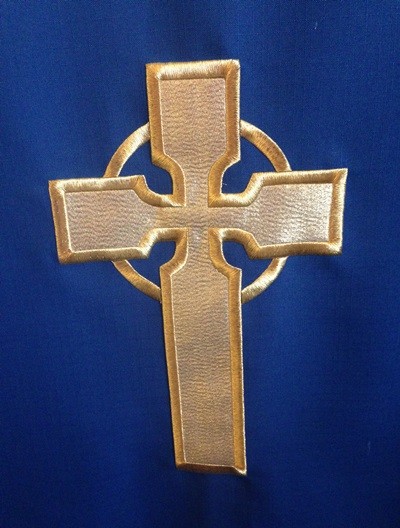
Embroidered cross on altar frontal, St Peter's, Dyrham

Embroidered cross on altar frontal, St Peter’s, Dyrham

As a man of sorrow and acquainted with grief
your only Son was lifted up
that he might draw the whole world to himself.
May we walk this day in the way of the cross
and always be ready to share its weight,
declaring your love for all the world.

The above forms part of a prayer of thanksgiving for Morning Prayer during Passiontide, and as we move into Holy Week and having this morning been given a palm cross,  my thoughts have moved towards just exactly what it might mean for each of us to bear our cross… or even crosses.

If we are incredibly lucky, we might feel that our lives are pretty carefree, we have everything to meet our basic needs; food, water, shelter. Our emotional needs are also met through our families and friends  and we may even have a sense of financial security – a bit of spare cash to indulge in treats from time to time. Our crosses, although apparently light, are still with us however.  Outward crosses that carry responsibility to everyone around us. How can we not declare our love to the world?

Often, as well, we carry internal crosses. The things that we choose to bear alone; things that we are ashamed of doing and saying; things that might diminish us in other people’s eyes; things that are not hidden away from God, and who alone knows the sorrow in our hearts and our desire for repentance. How can we not allow ourselves to be uplifted?

For many people though, the cross they have to bear, like Jesus’, is an enormous weight of worries, hurts and strains. Often it is borne in situations that are not of their making or problems from which they can see no way of escape. Daily life is a struggle and at times unbearable. How can we not offer to share their load?

For Jesus the way of the cross was one that he decided to take willingly. Yet even as he made his way up to Calvary, his human frailty caused him to stumble, allowing another, Simon of Cyrene to join him in bearing the great physical weight of the wooden cross. What was even more incredible was the immeasurable weight of the world’s wrongdoings, sorrows, grief and hatred that he also chose to bear. How can we not be grateful?

We adore you, O Christ, and we bless you;
by your holy cross, you have redeemed the world

The Way Of The Cross To Calvary - embroidered panel by Sue Symons. One of 35 panels that form the Bath Abbey Diptychs

The Way Of The Cross To Calvary – an embroidered panel by Sue Symons from her exhibition “One Man’s Journey To Heaven”, one of 35 panels that form the Bath Abbey Diptychs*

*Sue Symons explains that the large black circle depicts the weight of the cross and the white circle is Christ, diminished in size as he bears its horrendous weight. http://www.bathabbey.org/whats-on/events/bath-abbey-diptychs

Go back

Your message has been sent

Warning
Warning
Warning
Warning

Warning.


Coming Into The Presence of God

Out of the Window blog2

Coming into the presence of God

Another weekend at Cuddesdon brings new insights and experiences. Whilst not my first choice, the title of the workshop ‘Embodied Prayer in Orthodox Spirituality’ filled me with a sense of intrigue.

I would class my churchmanship as neither high nor low, but rather open to a smorgasbord of traditions. I therefore, was quite receptive to finding out more about what some might class as the high end of the church where orthodoxy is concerned.

In fact where orthodoxy is concerned the Western church is somewhat of an upstart according to the Syriac Orthodox Church of Antioch, which claims to use the oldest surviving liturgy in Christianity. However, I digress…

Our main purpose of the day would be to explore contemplative or noetic prayer as well as embodiment prayer – the former both involves silence and stillness (hesychia) and monologistic prayer (i.e. repeating a word or phrase such as the Jesus Prayer) – whilst the latter included prostration and the sign of the cross.

Standing to pray

Standing to pray

As the latter was more unfamiliar to me I will mention that first. Embodiment prayer, as the name suggests involves using the body in prayer and there are many ways of doing this – whether standing or kneeling or prostrating yourself – all the while offering prayer either using a set form of words or your own words. Some of which postures may seem unfamiliar practices to your average Anglican!

The Sign of the Cross

The Sign of the Cross

When it comes to making the sign of the cross during worship, it is a gesture that very often gives an immediate clue as to people’s Anglican tradition – that is those of an Anglo-Catholic persuasion. Again, this was something that I was not used to doing either in worship or prayer. Nevertheless, when it was explained using an illustration of an icon based on the baptism of Christ I was able to better appreciate its meaning.

The Baptism of Christ

The Baptism of Christ hand written by Tamara Rigishvili *

This beautiful icon [which is written not painted] shows the Trinity as a straight line from the heights of heaven to the depths of the waters – we can therefore image our bodies when we are standing upright representing that line. Our heads are warm because of the activity of our brains, from which flows creative energy (the Father), our stomachs are the watery region (the Son submerged at his baptism) and our lungs breathing air in and out (the life giving Holy Spirit or Holy Ghost)

Imagine if you will then, your thumb and first two fingers, held together as a trinitarian symbol, tracing a line from your head to your stomach up to your right shoulder then across to your left and then resting in the middle by your heart – ‘In the name of the Father, of the Son and of the Holy Ghost, Amen.’ – its symbolism becomes clearer and more affective.

However, it was the practical session on contemplative prayer that was to prove the most rewarding. Noetic prayer, as it is also known, uses a form of silent prayer (hesychia) in which the body is stilled, the ‘chattering mind’ silenced, thus creating a space where you are open to receive God. Of course it’s never that easy to just switch off your thoughts, but it allows an awareness of both intrusions and physical discomforts and lets them be by bringing yourself back to the awareness of the sense of stillness within your whole body. External noises also become absorbed so that they don’t become a distraction. It is into this space that prayer subconsciously occurs.

Psalm 46:10

Psalm 46:10

There is plenty of biblical evidence of being called to stillness in order to hear God’s voice… within many of the Psalms for example – ‘Be still and know that I am God’ (Psalm 46:10) or ‘For God alone my soul waits in silence‘ (Psalm 62:1) – and Jesus takes time to be alone with his Father, no doubt in silence as well… whether in the desert or drawing apart from his followers on occasions.

Of course, I would not, after only a couple of sessions, claim in any way to be an expert, but the technique is basically to find a comfortable place to sit, with both your feet on the ground and to work your way up your body, recognising the sensations in each part as you still yourself, drawing back to your feet, your knees, your hands, etc., should thoughts intrude; all the while becoming aware of your breathing and its natural rhythm……

What was the prayer that formed inside me during this time? Well it actually turned out to be a piece of poetry… from out of the stillness and the silence by which I came into the presence of God

Coming Into the Presence of God

Warmth suffuses the window pane,
As sunshine splashes, in gold and yellow rays
on the cushioned sill;
Sharp shadows are softened and shimmer.
I draw my knees closer
and sink into silent stillness.
The world is on pause.

Invisible neurons continue to fire;
exposed in intermittent patches of tingling energy
through soles of feet and top of scalp.
Pain ebbs and flows,
absorbed in gentle eddies;
while breath synchronises
with the ticking of the mantel clock
and thus fades as if time is motionless…

Even so the heartbeat of the earth
still pulses in sounds it offers;
received in encoded messages,
yet unencrypted to the keen ear.
A solitary bird, unseen, chirrups its joy,
and wood pigeons coo in rhythmic metre,
unfazed by passing traffic’s intrusion.

A creak, a sigh,
the door and I hold our breath;
but the inevitable slam is muted;
fading away, as calmness interrupts
and a sense of presence grows.
Like a glimmer through closed eyelids;
which open as a breeze brushes my skin

Outside, the tender branches of the trees,
laden with buds and burgeoning leaves
ripple and vibrate, echoing the silent force
of life and spirit.
Springtime flowers bend to the earth,
then dip and bob like cheery marionettes;
all proclaiming divine mystery

Recalled back into the room
by gentle chink of plate and cup,
a signal of beckoning refreshment,
and congenial chatter….
Still hold the moment a little longer
to remember another meal
and revelation in broken bread,
gone and yet forever present

The day’s workshops were led by the Reverend Jim Barlow, presently the Assistant Curate at St Peters, Burnham, Buckinghamshire and previously a student at Ripon College, Cuddesdon

*Tamara very kindly gave me permission to use her beautiful artwork in this piece. To find out more about her work please look on her website http://www.tamarapaint.com/

Go back

Your message has been sent

Warning
Warning
Warning
Warning

Warning.

The Body of Christ

We are the body of Christ

We are the body of Christ

The New Testament module I have just completed was interesting in many ways. Its main focus was on several of the Pauline letters, including the epistles to the Galatians, Romans and Corinthians. New insights were gained into the background, setting and context of these letters as well as the character of Paul himself. This was particularly challenging as my natural tendency is to regard Paul with a small measure of annoyance and a gritting of teeth.

Don’t get me wrong, I have learned to love and admire St Paul; for his sheer hard work and determination in setting up the early churches, his zealousness for spreading the message of Christ and his genuineness in his beliefs. It’s just that sometimes I wonder, ‘Is that really what you meant Paul?’

One passage though, in which he explained the metaphor of ‘the body of Christ’ brooks no argument from me and we were asked to prepare a sermon on it as part of the course. Here then is a copy of that sermon, intended with my own church congregation in mind, but here delivered hopefully to an equally receptive, varied and open online congregation.

The passage it relates to is 1 Corinthians 12:12-26

As the writing on the barn wall stated, “All animals are equal…” This declaration by the animals in George Orwell’s novel Animal Farm laid down a rule which many democratic societies have upheld as a basic principle. However, if we are all equal doesn’t that mean that we all have to be the same? Not physically the same but doing the same thing, thinking the same thoughts, making everything neat and uniform, because in this way we will surely achieve unity. Won’t we? And isn’t uniformity the thing that we as a church strive for in our liturgy, church management and doctrine?

Well equality is not the same as uniformity and uniformity is actually not really helpful to true unity. As the animals later discovered when they added a codicil to the rule – “All animals are equal, but some are more equal than others.” There is something more that needs to happen and Paul points to it in one of his clearest and least controversial statements in his first letter to the church in Corinth, when he identifies what it means to be the body of Christ

We could so easily just look at the analogy of each of the members of the church being represented as different body parts. We all have different roles to play which could equate to a particular limb or organ within a body – the choir representing the harmonious vocal chords; the sidespeople as helpful hands; ‘Jonathan’ [in my own church], who likes to disagree with every sermon, as the grumbling appendix!… Each of us creating a complete and unified metaphorical human being that is wonderfully made, but which can occasionally stumble and fall, but invariably picks itself up again.

 Still is this what Paul really means and is this the only way we can think of being one body?

For a start we are all different, and that’s great; because it would be an odd shaped body if we were all the same part. After all, like a body, we need the unique gifts offered by all of the various members. These various gifts provide diversity, a diversity that is God-given; and coming as they do from such a source they need to be used for the good of all. Paul recognises that the thing that unites us is the Holy Spirit and it is through the work of the Holy Spirit that believers become bound together into one body.

However, our diversity needs to be based on interdependency rather than independence… Just as we use different parts of our bodies to perform different tasks, we all have particular talents which make us very good at the jobs we choose to do; and sometimes we can jealously guard those jobs that we like doing, thereby preventing others from a chance of receiving equal recognition. In addition, if we perceive that these are highly skilled tasks we can begin to give them a superior status, which often leads to pride. Yet the work we perform in God’s name cannot be based on a belief of self-sufficiency – our successes are built on the grace of God and the shoulders of those that support us –this sermon would be pretty pointless if the church and its people weren’t present – and a lot has happened in the past and behind the scenes to bring everybody to this particular point in time. Just take a moment to think why and how it is you are here today?

Moreover, who are we to judge the worthiness of each role played within the church? Just as our limbs depend on muscles, and tendons; nerves and microscopic synapses to function efficiently, and would be useless without them, so we have to ensure that every role a person has is equally valued. Furthermore, we need to realise that if we are working towards a common purpose – a united body – then we have to recognise that there will be some within that ‘body’ who may be vulnerable and therefore need to be nurtured and cared for.

Often, living in a society that prizes outward signs of power and achievement, we can despise weakness and vulnerability, but Paul turns this on its head, so that as Christians we should honour those ‘less respectable members’ and instead afford them mutual respect. It could be anyone of us that fluffs their lines in the readings, or takes a long time to get up to the altar rail or forgets the milk for refreshments…If we learn to be more accepting then the church will truly function as the body of Christ

Of course there are going to be time when we do disagree with each other, but it will be how we deal with this that counts. If our disagreements are forever aired publicly, rather than quietly and with concern for the other person, then we run the risk that we lower the respect that we need to have for each other as well as the respect that others have for us. We devalue the whole

What then should the shape of the whole look like? Well, in a world that is forever dieting and primping to maintain the body beautiful, we need to put that image aside. Our body should be fluid and growing, accepting new members so that every part of the body can grow stronger. We shouldn’t pick and choose what sort of parts or people we might need more of, or reject what might be to some insignificant or worthless. We have to allow people to be what they are; love each other unconditionally and rejoice in our unity – because if we don’t then we not acting as the body of Christ; and In the words of a song by the music group Casting Crowns – “Jesus paid much too high a price for us to pick and choose who should come… and we are the body of Christ”

Amen

Lyrics from If We Are The Body – Casting Crowns

It’s crowded in worship today
As she slips in trying to fade into the faces.
The girls’ teasing laughter is carrying farther than they know
Farther than they know

A traveller is far away from home
He sheds his coat and quietly sinks into the back row.
The weight of their judgemental glances
Tells him that his chances are better out on the road

But if we are the body
Why aren’t his arms reaching?
Why aren’t his hands healing?
Why aren’t his words teaching?
And if we are the body
Why aren’t his feet going?
Why is His love not showing them there is a way?
There is a way

Jesus paid much too high a price
For us to pick and choose who should come
And we are the body of Christ

Jesus is the way

© Casting Crowns 2003
https://www.castingcrowns.com/music/lyrics/if-we-are-body

Go back

Your message has been sent

Warning
Warning
Warning
Warning

Warning.

Disclaimer: Any names mentioned within this sermon have been changed to protect people’s anonymity and because I would still like to worship there. They know who they might be!

A State Of Flux

State of Flux

State of Flux

Why are you so full of heaviness, O my soul, • and why are you so disquieted within me?
Psalm 42:6

Just lately I have been feeling really unsettled and I just can’t put my finger on it. On the surface nothing has obviously happened that might cause this feeling of unrest; in fact things have been falling into place and my self-confidence has been gradually increasing – but still there is a feeling of general unease.

Obviously, looking back there are many changes that have taken place in my life over the last few months; the excitement and nervousness about starting college; learning how to split my week between study and wanting to continue to serve my home church; as well as pulling back on some of my voluntary commitments. Alongside these, in my personal life, I have been rediscovering what it means to be part of a married couple, now that the girls have left home and are more or less independent.

These are all definite changes, and as I’ve written about before, change is not something to be concerned about, but is necessary for us to grow as people and in our faith. So I don’t think it’s that. Perhaps it’s more about transformation

You might say that change is actually only the events or things that we either choose or have thrust upon us, which will have an effect on us in some way. What comes out of those changes is transformation, because we will never be the same and we can never go back to being the person we were before.

This can apply to so many life events, but a vivid example, where this is clearly apparent is where death and loss are concerned. Mags Blackie in a recent post, spoke about Kay Warren, an American pastor’s wife and her family’s emotional journey through grief, following the suicide of her son. There was an expectation from people around them, that life would eventually get back to ‘normal’. However, Kay’s observation was that her true friends recognised that this wasn’t going to happen, ‘they don’t pressure their friend to be the old familiar person they’re used to; they’re willing to accept that things are different’. 

Clearly this and similar events involve huge and uncomfortable changes and where our faith is concerned, those changes might not on the surface be so obvious. If we were to look to biblical times, there are many more examples where ordinary people have come into contact with God and the changes that that entailed transformed them and their lives forever. We can think of Peter, who after meeting Jesus, was transformed from a humble fisherman to a leader of Christ’s church; or Mary Magdalene, a woman with a troubled past, but who’s devotion to Jesus transformed her into the one who was trusted to reveal his resurrection to the other apostles.

Yet none of these things happened overnight, it was something that occurred gradually, and whilst it was emerging there would often be a period when they were in a state of flux – uncertain of what was to be done but aware that it preceded a new direction for their lives.

What I am certain of is that no-one once they have come into contact with God, as creator, redeemer or sustainer can remain unchanged. So if you too are seeing changes in your lives and are feeling uncomfortable or unsure about it – just hold on in there, for all will eventually be revealed.

Perhaps for me this period of unrest is just one of those moments, when I am beginning to realise that things are irrevocably changing and that life is not going to ever be the same again. In that case, I’m going to take a deep breath and say, ‘Let the transformation continue…’

O put your trust in God; • for I will yet give him thanks,
who is the help of my countenance, and my God.
Psalm 42:7

Go back

Your message has been sent

Warning
Warning
Warning
Warning

Warning.

Lenten Days

God Breathed Speck of Dust

God Breathed Speck of Dust

From dust you came, and to dust you shall return. Turn from sin and be faithful to Christ.

Ash Wednesday marks the beginning of Lent – a period of 40 days, when time is taken to take a long hard look at ourselves; to strip away all that overindulges our minds and bodies and to focus on the days ahead which lead to the joyfulness of Easter. However you chose to mark this Lenten season I pray that it will be a worthwhile time of reflection and renewal.

Lenten Days

A God-breathed speck of dust –
the cosmos expanded to fullness,
then contracted its atoms
moulded and shaped,
quickened by the Spirit.
Alpha – the beginning…

Burnt palms, transformed to carbon silk,
mixed with Holy oil
to anoint the faithful.
A smear of dirt; bisecting lines
not brushed aside, but fade;
absorbed in mental flesh

The Paschal mystery re-centres our thoughts
on the pain and suffering;
and the human world reaches out
with eager hands to grasp
the nettle of contradiction
seen in purple packaged symbols

Self-control required; temptation fought,
leads to a time of reflection and reckoning;
to draw nearer, only to discover
how far there is still to go.
Casting off of habits that cloy appetites,
to cleanse palates and souls
in sparse Lenten days

An anticipation of joy, subdued;
made lean by abstinence
and sharpened senses attuned
to rhythms of restraint.
While lengthening days bring light,
and hope springs in bud and blossom;
announcing promise to the earth
of new life to come

Go back

Your message has been sent

Warning
Warning
Warning
Warning

Warning.

The Power of Prayer

Focussing our prayers

Focusing our prayers

I have been thinking a lot about prayer recently, and about what a powerful tool it is for our faith lives. It is both the simplest and at the same time the most difficult thing we are asked to do

Prayer in its simplest form is often an immediate unrehearsed plea for help – dashing off our requests, pleading for a solution to a problem, dutifully reciting some well-worn words. The basics are that we start up a conversation with God – but so often it can seem a one-sided conversation with awkward pauses amidst feelings that – I’m pretty sure I’m not doing this right – I actually don’t know what words I’m supposed to say – what if I’m just talking to myself?

The good news is that you definitely will not be talking to yourself, the bad news is that what you hear might not necessarily be in an audible language

It often helps if we have can have some point of focus and set time aside each day to spend time in prayer, whether it’s in formal worship such as Morning and Evening Prayer or simply lighting a candle and being still in God’s presence. It is in these times of stillness that prayer often just naturally happens. We start off in one direction and as our thoughts whirl and settle we find ourselves focused on a particular person or situation.

The fact is we tend to forget that we are actually bringing nothing new to God’s attention; and while we may frequently offer intercessions for people  we will never know or meet and situations we will never be a part of, what it does do is emphasis our concerns, so that we come alongside God, who is already aware of what needs to happen

Praying for others

Praying for others

This sense that our prayers will only be answered according to God’s will, can be hard to accept, especially when we are praying for people and situations known to us and if that will seems to be contrary to our desires; but that doesn’t mean that our prayers will not have any effect. 

I have often found that when I come across situations that need prayer, one of the most valuable outcomes is the comfort it gives to those for whom prayer is offered. Moreover, when there is nothing physical or practical that can be done about the situation, it is often the ONLY thing you can offer

The knowledge that people are upholding you in prayer has been a particularly encouraging aspect of my ordination training;  not only from my sending church or as part of my college group, but more specifically the smaller OMC prayer group. The beautiful prayer beads (above right) that slip over a finger and nestle in the palm of your hand, were a  gift from one of the members of this group. Each strand represents one of the five members, including myself; which helps us focus our prayers for each other as well as reminding us to pray for ourselves, something we often fail to do.

In whatever manner you choose to pray – whether as a congregation or as an individual; whether for yourself or for others; whether you know that your prayer has been answered or  if you’re still waiting to find out what that answer will be – do be aware of the potential power your prayer might release. In the meantime may the words of a traditional Celtic blessing sustain you on your journey with God

May the road rise up to meet you.
May the wind be always at your back.
May the sun shine warm upon your face;
the rains fall soft upon your fields
and until we meet again,
may God hold you in the palm of His hand.

May God hold you in the palm of his hand

May God hold you in the palm of his hand

Go back

Your message has been sent

Warning
Warning
Warning
Warning

Warning.

Coming Out… Into The Light

Does God weep over his creation?

Does God weep over his creation?

Recently, after much prayerful thought I have reached what I believe is a clarity in thinking with regard to something that I have often struggled to express. That is what my stance is, as a Christian and future Minister, towards those, including fellow Christians, who identify themselves as lesbian, gay, bisexual and transgender men and women

I have often not expressed what my inner heart was telling me, but instead have prevaricated, choosing to be cautious with my public expressions and feeling deeply hypocritical for not speaking out

However, events, both recently within the Church of England and in our world as a whole, have left me with a sense of both shame and despair.

I have struggled to reconcile what I understand to be the most basic tenet of my faith, namely love, and the many interpretations of what that should look like in respect of people whose sexuality differs from my own.

The love that we are called to is quite simple – we are to love God and we are to love each other. For this love to be genuine is indubitable, but in both cases, we have to be wary of discriminating and categorising exactly what this love should look like; how it might be expressed and who may partake of it, whether in long-term relationships, through marriage or through celibacy

I am aware that there are many who look to Scripture and yet only use isolated and often disjointed biblical passages to justify their position and I would affirm that Scripture as a whole contains all truths; but I would have to wonder whether we only worship a God who remains firmly in Old Testament attitudes and early Judaeo-Christian life-styles or a God that lives and is part of the 21st century, with all its challenges, changes and nuances. Has God not accompanied humanity in the last two millennia? Has he not wept and rejoiced, listened and guided? Does he not know what is happening?

Others speak of alternative sexuality as sinful and unforgivable; and again I would be loath to apply this label to what could be considered part of the human condition. Particularly as this is not helpful, especially in light of the message of open-ended grace and forgiveness for all, regardless of any measure of rebellious sinfulness. Who is to say what God does and does not see in us as a whole person – did David (murderer and adulterer) or Jacob (lier and cheat) not receive God’s grace for their devotion to God rather than for what other people judged them by? It is surely our faith that makes the difference

As a professed heterosexual, I cannot begin to say I know what it feels like to have your faith questioned or to be regarded as less worthy because of your sexuality – to know that despite being created in God’s image, that others consider it a tarnished reflection – to have to settle for something less because someone has decided you don’t meet all the ‘criteria’. Yet, I do recognise that the pain and hurt must sometimes be unbearable and for that I willingly offer my support in prayer and in love

And the Lord’s servant must not be quarrelsome
but kindly to everyone, an apt teacher,
patient, correcting opponents with gentleness.
God may perhaps grant that they will repent
and come to know the truth
2 Timothy 2:24-25

I know that on reading this, despite my heartfelt attempt to show sensitivity for all concerned, that some Christians will regard what I say as wrong, that they may even regard me in a different light. There will be those who have already made their mind up, who will reject these and other valid arguments completely; and whilst I must respect that decision, whether made on a personal level or as a church directive, at the same time I will be hoping that they too, like many others will be open to a similar journey as mine. When they find that they can no longer sit on the fence or through prayer and soul-searching be ready to admit that when we are called to love as God loves us then we should do so completely and honestly and be ready to treat all equally

Until then may God bless all who love the Lord our God with all their heart, and with all their soul, and with all their strength, and with all their mind; and also their neighbour as themselves. Amen

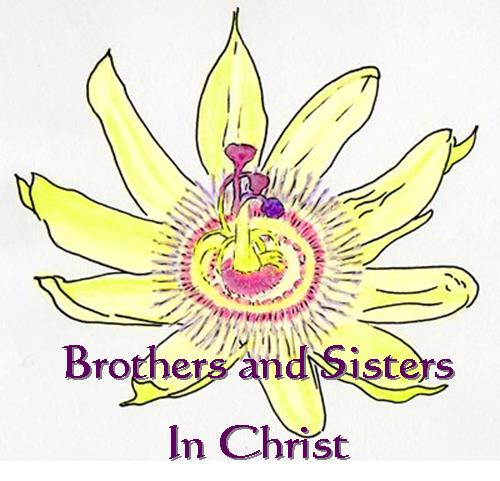
Brothers and Sisters in Christ

Go back

Your message has been sent

Warning
Warning
Warning
Warning

Warning.

Can You See Him?

Can You See Him?

Can You See Him?

Following on from last week’s post about all-seeing eyes, I thought it might be appropriate to post a meditation I wrote about spiritual blindness and people’s attitudes, based on John 9.

The man answered, ‘Here is an astonishing thing! You do not know where he comes from, and yet he opened my eyes.
John 9:30

Follow the link here to read the meditation Can You See Him?