Category Archives: Ministry

Roman Reflections – Supersize Faith

The Altar Canopy or Baldacchino, St Peter's Basilica, Rome

The Altar Canopy or Baldacchino, St Peter’s Basilica, Rome

The first of a series of reflections following a visit to Rome to discover its links with the early Christian church and the church as it is today

As an ecumenical advocate it would be hypocritical of me to censure the joy and devotion inspired in fellow Christians and others when visiting holy landmarks. A visit to the Vatican and in particular St Peter’s Basilica in Rome, however, has led me to reflect on how I would wish to express my own idea of reverence and faith.

As humans we are drawn to those places where the people who are part of our history actually walked and talked and left their mark on the landscape. As part of our veneration of their lives we erect memorials so that future generations will know the exact spot where they too might draw closer to these colossi of faith

Yet the hustle and bustle of thousands of pilgrims rushing from one grandiose monument to another without pause to look at what they are actually snapping through their camera lenses; the papal catacombs in which the human remains of the former bishops of Rome repose amidst the splendour of carved marble reliquaries; and being continuously funneled around those holy objects that offer the best ‘selfie’ opportunities, somehow left me cold and wanting to shout ‘Let’s clear the temple!’
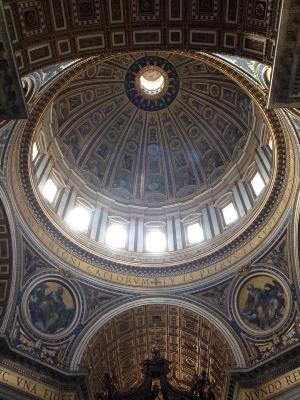
From sky to grave - St Peter's Basilca, Rome

From sky to grave – St Peter’s Basilica, Rome

The Lord is high above all nations and his glory above the heavens – Psalm 113:4

Yet, the visit hadn’t started like that. It had actually begun deep underground in the Roman Necropolis directly under the Basilica. Here in the ancient cemetery, originally without the city walls, the brick-built mausoleums, designed to hold the remains of Roman households spoke of reverence. Places where families might occasionally climb up onto the rooves to have a picnic whilst they remembered their departed relatives and loved ones.

Even so, we were still among the glory of the Roman empire, whose prosperity could afford to erect these monuments, whilst the poor and persecuted were buried in pauper’s graves.

Simon Peter was one such as these. After he had met his gruesome death in the Circus of Nero c64AD, his body was laid in the ground and discretely memorialised by the early Christians, many of whom chose to be buried close by. A small ‘trophy’ or physical shrine was erected to mark the grave by the theologian Gaius around the end of the 2nd century and at the beginning of the 4th century the newly converted Emperor Constantine marked the spot with a white marble sarcophagus over which the altar of the basilica was to be built. Now, as then, the open dome of the basilica provides a direct connection from the skies or heavens above, through the baroque grandeur to the simple grave of Christ’s rock and foundation of his church

The dead do not praise the Lord, nor those gone down into silence
Psalm 115:17

I have to admit, that without Pope Pius XI’s desire to be buried as close as was possible to the tomb of St Peter, then these things may have remained undiscovered and maybe they should have. For Simon Peter, the simple fisherman, would surely be turning in his grave, that is if he wasn’t already in heaven, at the way that people have put all their energies into immortalising the saints in stone and precious materials whilst failing to grasp the irony of their riches.

A papal audience with Pope Francis

A papal audience with Pope Francis

Perhaps the latest Bishop of Rome, will continue to lead by example as he sets aside some of this pomp and ceremony and tries to live out his life and ministry close to the people he serves. I do hope and pray so, for all our sakes.

← Back

Thank you for your response. ✨


A Life In Books

A life in books

A life in books

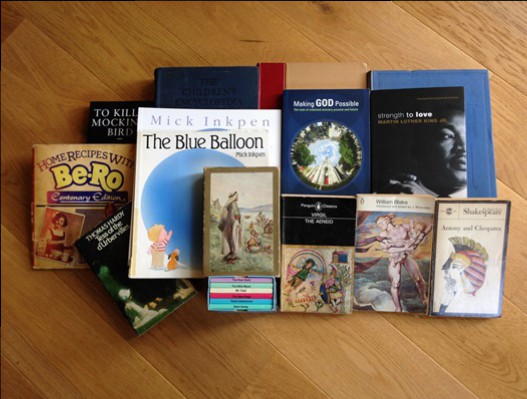
I was recently asked to list ten book that had had an influence on my life. It’s not as easy as you might think, in fact rather than simply being able to dash off a list each one I chose needed to be balanced against another book, another memory, another situation or point in my life. For each one you discard another three or four could easily take its place.

The final ten are therefore not finite and may not necessarily signify every stage of my life in which a book has featured or even the most important; but they are a representation and compiling the list itself was an exercise in discovering how important literature and reading is in my life and no doubt in many other lives as well.

So here is my list, in no particular order, with a brief explanation as to why it made the final ten.

The Classics

The Classics

Here are the classics, the books I studied at school for my English A Level, but also the ones that I continue to read today

1. Aeneid – Virgil
The legendary epic poem telling the story of Aeneas as he travels from Troy to Rome. It appealed to my sense of adventure and love of history, myths and legends.

2. Selected Poetry of William Blake (and John Keats)
Blake’s poetry and artwork really entered my soul and spoke volumes to me, in particular his Songs of Innocence and Experience, but I had to cheat with the addition of John Keats as his was the first poetry that I wanted to memorise.

3. Anthony and Cleopatra/Macbeth – William Shakespeare
These two Shakespeare plays have become for me just two examples of how words, when beautifully written and composed can be understood by any age. A project to study, create and produce a filmed version of Macbeth using the original language with a bunch of 9 year olds proved that.

Reading as children

Reading as children

First reading books certainly can claim an influence on your life. I could so easily have include the Janet and John books which were my first readers; and the memorable time of being on holiday as a five-year old, sharing the same story with a young fellow vacationer – ‘Look, John, look. See tha’ boats’.

Still it is children’s books that appeal to adults as well that remain timeless.

4. Wind in the Willows – Kenneth Grahame
The world of Mole, Ratty, Badger and the irascible Toad spoke of an idyllic vision of the countryside, punctuated by ill-tempered weasels and the disastrous adventures of an annoying amphibian. This descriptive way of writing was only equalled later by Laurie Lee’s ‘Cider with Rosie’,

5. The Blue Balloon – Mick Inkpen
The well-worn copy of this book is testament to just how loved it was by my children. At two and half, my daughter Lizzie could ‘read’ it from cover to cover; every word perfect, every nuance expressed. It was a sharing book and just one of the reasons that I ordered a new copy so that it may be shared with future generations as well

Love of knowledge

Love of knowledge

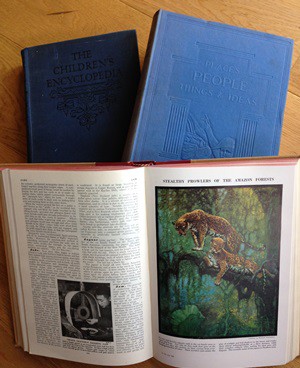
6. Encyclopaedias
My thirst for knowledge was slaked by the two sets of encyclopedias we owned. One was a series of volumes printed sometime in the early part of the 20th century – the other set from the 50’s. However, both were put to full use, prior to the invention of Encarta and the internet.

Their use nowadays is somewhat limited, but where else could you find Jade, Jam and Jaguars all on the same page!

Strengthening faith

Strengthening faith

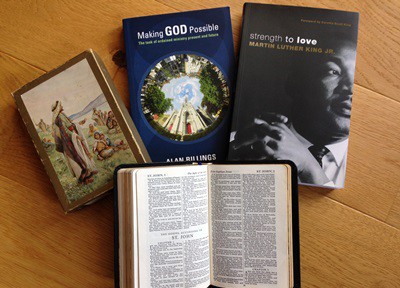
My studies have provided me with enough reading material to keep me busy for many a year to come. Whole new bookshelves have had to be created to hold it all, but the basis for it all is found in just one book – The Bible and in particular my 7th choice

7. The Four Gospels
Matthew, Mark, Luke and John have become essential authors as I follow my vocation, but many years ago they also inspired me to help form my character and outlook on life.

Your word is a lamp to my feet and a light to my path.
Psalm 119:105

8. Making God Possible – Alan Billings
Theology books don’t often make me excited, but it was whilst I was exploring what my vocation might be that I read this book. I suspect is it a bit of specialist, niche book, but it made me want to say – ‘Yes, that’s it, that’s what it’s all about.’

9. The Strength to Love – Martin Luther King Jr
Combine the history and struggle of black, African slaves and 20th century segregation with the teachings of a non-violent pastor and you get insights into a world which I can only imagine and yet have a huge amount of empathy with. These were the subjects of my thoughts about justice and equality as I grew up. MLK’s writings are world-famous, and yet they still speak into so many situations that we still face today

Bero Cookbook blog10. The Be-Ro Cookbook
My final book is actually the 3rd edition of the book I have owned. Despite its dubious sexist cover photos; its dog-eared and bespattered pages tell the story of several decades of cooking favourite recipes. It is also a fact that in spite of those decades, I still need to refer to it each time when making scones for the exact quantities. Why is that I wonder?

So that is the ten that made the list – no mention of Jane Austen, Charles Dickens, Geoffrey Chaucer, Gerard Manley Hopkins, Thomas Hardy, Harper Lee, Homer…..

Just outside the list

Or the many others that fill my bookcase…

Bookcase blog

Why not have a go yourself and see what your list might contain?

← Back

Thank you for your response. ✨

On A Midnight Train From Georgia

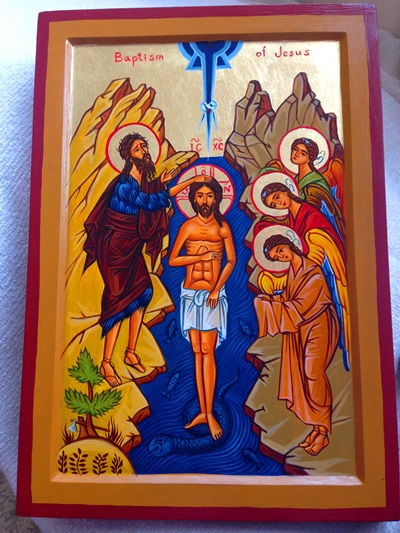
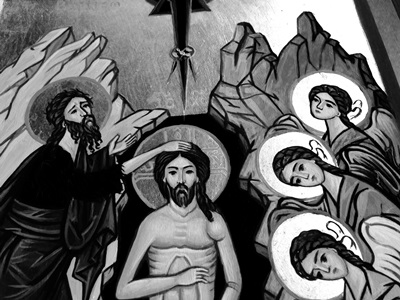
Baptism of Christ Icon - written by Tamara Rigishvili

Baptism of Christ Icon – written by Tamara Rigishvili

To be honest I don’t know if it really was put on the midnight train, or any train for that matter. Maybe it came by plane or postal van, but however it travelled, it arrived safely at my door last week.

The truth though is that it did come from Georgia – Tbilisi, Georgia to be exact – some 2,653 miles to the east of my home, where the very talented artist Tamara Rigishvili lives and works. However, the creation of this beautiful icon came about in what was for me an unusual series of events, which culminated in owning what has become to me a very important representation of the story of Jesus’ baptism.

In April of 2014, I wrote about using this icon to explain the actions performed while making the sign of the cross in Coming Into The Presence of God. Wanting to upload an image of the icon that has been used on that day, I googled several images and came up with one that was taken from Tamara’s website. However, I felt that I needed to get authority to do that, and so I e-mailed her and sought permission, asking her to check out the contents of my blog and with the promise of a link to her site.

Christ submerged in the water of the Jordan

Christ submerged in the water of the Jordan

Thus a correspondence was begun between two people, thousands of miles apart, who did not know each other, did not necessarily speak the same language (although Tamara’s English is excellent, whilst my schoolgirl Russian is yet to be tested); connected by their common faith, and which resulted in my asking if she would ‘write’ a copy of the icon for me. True to her word, she completed the icon over a three month period and it was then carefully packaged and despatched…

… In the meanwhile, as part of my spiritual direction at college, it was suggested that I meditate on Matthew 3:13-17. This description of Jesus’ baptism is just one of the bible’s explicit passages where the Trinity appear together.

And when Jesus had been baptised, just as he came up from the water, suddenly the heavens were opened to him and he saw the Spirit of God descending like a dove and alighting on him. And a voice from heaven said, ‘This is my Son, the Beloved, with whom I am well pleased.’
Matthew 3:16-17

As a Trinitarian at heart, I have always found that the three-fold nature of God; Father, Son and Holy Spirit has both fascinated and frustrated me. On the one hand each has its own separate identity and characteristics, on the other they are all one and the same. I do not argue against this nor do I find it easy to explain – although traditionally in the Church of England, as a curate it usually falls to their lot to preach on Trinity Sunday each year – so I better get my thoughts in some order by then!

The passage itself presents a beautiful image of being submerged beneath water, and then a figure rising in a sparkling cascade to see the sky above suffused with a pure light that is concentrated in a shaft centred on their head and a clear voice filling the air with a confirmation of their worthiness. What, it was suggested, if that figure were you?

So often we can feel unworthy, and could not imagine such a thing, but we are invited to do so by God as he offers us his love and grace. ‘This is my daughter… this is Linda… this is [insert your name here]’.

I don’t believe that God arranges for these things to come together without a purpose, so as I spend time contemplating that passage alongside my beautiful icon, I hope and pray that you too will accept that grace, knowing that you ARE worthy to receive it.

Matthew 3:13-17

Matthew 3:13-17

For more details of Tamara Rigishvili artwork, please do visit her website

← Back

Thank you for your response. ✨

Of Being Challenged

We are challenged to look beyond what we know

We are challenged to look beyond what we think we already know

The last few days have been particularly challenging, both in terms of my personal response to events that have happened and reflections on the responses of others to these situations. On the whole the outcome has been positive and hopeful, but this has been at the expense of other’s sorrow and suffering.

Harrowing pictures of the brutal treatment of Christians and Yazidis as they are persecuted for their faith, left me sobbing for the sheer inhumanity of the perpetrators of these violences. The incomprehension that once again genocide rears its ugly head in the name of religious intolerance and I feel powerless…

Yet, the response of many has been to speak out and simply say ‘It’s not right” and that we will do something about it. Whilst I am not in a position to honestly know whether military intervention is part of a solution; I do know that humanitarian airdrops of food and water were the correct immediate response to alleviate some of the suffering. I also know that the emergency appeals by charities such as Christian Aid for donations enable us all to ‘do’ something towards long-term solutions; and of course there is always prayer.

The outpouring of sorrow for all of the unknown and nameless victims of these atrocities has been matched this week by the sorrow and sadness of the passing of one whom we felt we really did know, the actor Robin Williams. His death has brought to our attention the devastating and often silent suffering of those for whom depression is the ‘black dog’ that they have to live with on a daily basis.

Social media sites and newspapers have been full of messages of condolences and self-identification and some, in their genuine sadness and sense of mourning have inadvertently used phrases and ideologies in their expressions of sympathy, that although well-meaning have highlighted a lack of understanding of suicide and depression. I have personally been humbled to reflect on things that are helpful to say and things that are not, and have learned immensely from those who have challenged these unintentional faux pas.

The fact is that sometimes we all need to challenge what isn’t right, and this Sunday I will be preaching on the story of the Syrophoenician woman who dared to speak out and challenge Jesus because she knew in her heart of hearts that he was the one who could heal her child whether she was Jew or a Gentile, simply because of her faith in him

Then Jesus said to her,“O woman, your faith is great – Matthew 15:28

So I will continue to hold all of these situations in my prayers and whenever possible look for ways to challenge both mine and other people’s assumptions, but hopefully to do so in love.

Have faith that all will be well

Have faith that all will be well

If you are living with depression or care for someone who does you may find this helpful – I Had A Black Dog

← Back

Thank you for your response. ✨

Shining Through The Glass


Detail of the Transfiguration Window at St John the Evangelist, Hedge End

Detail of the Transfiguration Window at St John the Evangelist, Hedge End

One of the most beautiful and interesting crafts is that of creating stained glass. Over the years I have visited a great many cathedrals in which this art form has been displayed in the incredible and intricate windows that allow light to enter in a myriad of rainbow hues; but I’ve never really been able to capture with my simple ordinary camera, the extraordinary details and colours that my eyes can discern, of those high and lofty kaleidoscopes.

Even small country churches have their own special windows, and closer to home the church at St John the Evangelist, Hedge End has several, including a series of six tableaux of the life of Christ in the curved apse at its East end. In other windows around the church, these Victorian masterpieces in glass work also tell the stories of the saints whose names are lent to the church building.

St John the Evangelist Window with close up details of the serpent in the chalice

St John the Evangelist with details of the serpent in the chalice

However, as intricate and as detailed as the windows are, it is not really this aspect that fascinates me, but rather the effect they produce as light shines through them; when it falls on white walls and altar linen, the pools of colours shimmering in mirror image

Stained glass reflections

Stained glass reflections

But it is also most effective when everyday objects  such as flower stands,

Flower Shadows blog

Flower shadows

and an aumbry holder…

In the shadow of the aumbry light

In the shadow of the aumbry light

…create ethereal shadows that are wreathed in colour and patches of light.

Even when that light is blocked in some way, what appears to be an ordinary clear glass window reveals its secrets. The imperfections of each pane revealing its own beauty

Imperfections reveal their own beauty

Beauty revealed in imperfection

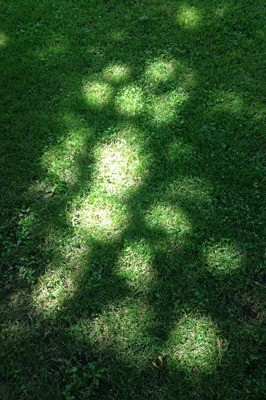
Perhaps though, the most beautiful example of nature’s own stained glass windows was the one that I glimpsed when I walked in the arboretum at Wolvesey Palace in Winchester the other day…… This then is the light of nature and creation flooding into the church.

Light from nature's stained glass window

Nature’s stained glass window

Still we must be careful not to just allow ourselves to simply bathe in that light, soaking ourselves in its warmth and colour; but instead to remember that before it gets to stream in through those windows into our eyes and hearts, it has already shone on all those outside; where Christ is waiting to for us to join him in helping to build up the kingdom of heaven; and where we can all become living stained glass windows that reflect the rainbow colours of God

A man that looks on glasse,
On it may stay his eye;
Or if he pleaseth, through it passe,
And then the heav’n espie.

The Elixir from The Temple (1633) by George Herbert

← Back

Thank you for your response. ✨

When Is A Toilet Not A Toilet?

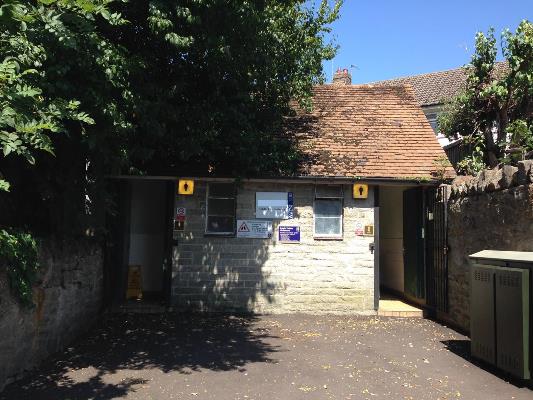
Can all members of the public use the Public Conveniences?

Can all members of the public use the Public Conveniences?

You may well be asking what has a question about toilets got to do with ordination training? Yet it has turned out recently to be the most basic and essential necessity of finding a toilet that really brought it home to me how we so often both intentionally and unintentionally exclude a large group of people within society

One of my fellow ordinands, Helena, is a former lawyer and is a passionate advocate and fierce protector of people’s rights. She also has Multiple Sclerosis and uses a mobility scooter and therefore knows first-hand what the world looks like to a disabled person. She, like the majority of disabled people, doesn’t just want and need to be as independent as possible, but believes that each and every one of us has to become much more aware of what needs to be done to create a naturally inclusive society; which brings me back to toilets!

We’ve all heard the stories of inconsiderate able-bodied car drivers who blatantly park in a disabled parking space thus denying any genuine blue badge holders from doing so; but what about all those who deliberately use the designated disabled toilets, because they are the closest, which on becoming blocked force the person in the wheelchair to have no facilities at all?

That is just one specific instance, but what about when a community in which disabled people live shows too little consideration or awareness of their needs? A case in point is when we went on a field trip to a neighbouring village to the college. Firstly, I have to say that I am not singling out this particular community, as regretfully it is not unique, and it should be acknowledged that the organisers of the trip should have completed a health and safety assessment prior to the visit. However, if what happened, on the surface appears laughable, it is also deeply thought provoking

Everybody needs to go to the toilet – fact. Everybody is aware that not all buildings they visit will have toilet facilities – fact. Everybody knows that where public toilets are provided they can use them…………

The church we were visiting did not have a toilet, which was reasonable enough given its age and listed-building status; the vicarage did have toilets (as you would expect) except the vicarage itself was inaccessible to a person in a wheelchair. Where then was Helena, who not unreasonably had reached the point when she wished to avail herself of these facilities, to go? The public conveniences were about 200 yards from the vicarage but on arriving at them we saw that there was no designated disabled toilet, in fact there were steps to get into both the ladies and gents (see picture above)

Where else could we try? Fifty yards down the road, the Catholic church was situated in a lovely new building with signposted disabled parking and push button entry access to presumably up to date toilet facilities – but the building was locked and empty. Around the corner there was a public house, and calling through the open back door we asked if we were able to use their toilets. We may, but whilst we could get into the pub, the toilets had a step down to them. Retracing our steps, we were advised that a key had been found for the village hall, this was some 500 yards in the opposite direction. Here there was a small disabled toilet, barely large enough to allow Helena to enter with her scooter and hopelessly maintained so that the clutch rail would not stay upright. We spend several minutes with the two of us trying manoeuvre ourselves, one holding up the rail, the other trying to fit into the cubicle, before I could step outside and she was finally able to relieve herself – so much for self-esteem and independence!

All in all this farce lasted about 40 minutes, and I jokingly said to Helena that it was good job she could hold on. To my dismay she told me that for many disabled people this was not the case – it’s called ‘social incontinence’, where lack of disabled facilities force otherwise continent people to resort to incontinence products simply to be able to go out into the world for any length of time. One more example of the removal of a person’s dignity.

Helena was just one person in that place at that time, but how many more people have come up time and again against the same problems and instead of feeling welcomed and able to play their full part in their communities have felt excluded and devalued.

What good is it, dear brothers and sisters,
if you say you have faith but don’t show it by your actions?
James 2:14

It is a hundred years since people and governments became more aware of the need to make provision for the disabled, following the many thousands of men who returned incapacitated from the First World War, either blind or limbless. One hundred years in which we have come a long way to recognise the equality of all in society and yet we still exclude and marginalise the disabled through not consulting or considering fully their needs, so that they can just BE

Maybe it’s time to look around the places you live and work in, remembering that it’s not just toilets but other things like ramps and rails; and when you spot something that needs changing, then do what needs to be done to make that change happen, including asking the people for whom you are doing it  what it is they really need.

Helena, endures much in the way that she has to adapt in order to undertake her studies and she shouldn’t have to. As I walk alongside her she has made me more and more aware of issues that should change and transform how we think and act as individuals, as a society and as Christians. This sort of teaching, in my mind, will always be more valuable than anything that an academic text book has to say.

An inclusive society means no-one should feel excluded

An inclusive society means no-one should be excluded

This piece has been written with the full permission of my friend and fellow Ordinand, Helena 

← Back

Thank you for your response. ✨

One Year And Counting

For we walk by faith, not by sight. 2 Corinthians 5:7

For we walk by faith, not by sight. 2 Corinthians 5:7

I received a notification last week to congratulate me on the one year anniversary of my blog. One whole year of sharing a journey with those who have graciously chosen to follow the blog; those who have commented on my posts; and all those who have clicked onto the site and may have lingered a while to read something.

As it happens I have actually published 52 posts – thus hitting my hopeful target of writing something once a week. If you know me as my family does you will realise that this is something of an achievement, as I am usually the type of person, who on receiving a brand new diary on the 1st of January and with all good intention, barely manage to complete the first week or two before popping it away in the drawer with those other almost pristine earlier versions [they’ve stopped buying me diaries now!]

Some of the posts have been very popular, perhaps talking into a current situation or speaking to others about something in their own lives. For myself, I know that doing this has been an invaluable exercise; helping me to chart my own journey and progress as I prepare for ministry and ordination. Thank you, therefore, for being a part of that.

God bless

Linda

My top five most popular posts by viewing stats – just in case you missed them

1. Coming Out Into the Light

2. A State of Flux

3. V is for Vulnerable

4. Pivotal Moments and the Parable of the Lobster

5= Holy Hogwarts!… An Induction!
5= Children Should be Seen and Not Heard

← Back

Thank you for your response. ✨

Let Them Eat Cake!

The Opulence of Versaille

The Opulence of Versaille

I suspect that most of us have heard the phrase ‘Let them eat cake’ and would hazard a good guess that we know who is supposed to have uttered those words. They have become famously attributed to Marie Antoinette, the Queen consort to Louis XVI, although the original French phrase ‘Qu’ils mangent de la brioche’†, refers to brioche, an enriched bread made with flour, butter and eggs – but let’s not get into an argument about pastries!

A portrait of Marie Antoinette at VersailleIn the late 1700’s, Louis and Marie Antoinette lived in great opulence in the Palace of Versailles, just outside of Paris, whilst millions of ordinary Parisians, like the great majority of their countrymen at that time, were starving and destitute, and itching for revolution. The phrase has come to portray the ruling classes as insensitive, ill-informed and ignorant of just how dangerous it would be to hold on to attitudes such as these.

Whether Marie Antoinette actually had any sympathy for her unfortunate people – and it would appear she might have from a comment she DID make, “It is quite certain that in seeing the people who treat us so well despite their own misfortune, we are more obliged than ever to work hard for their happiness” – the French revolutionaries and history did not treat her so kindly and she felt the sharp bite of the guillotine blade in 1793.

Some 200 years later, and the poor and the destitute still roam the streets of Paris and still look for succour and relief from the more affluent.  On the Champs Elysees, one of Europe’s wealthiest shopping streets, the glittering facades of Mercedes Benz, Louis Vuitton and the House of Guerlain entice you to browse and exclaim at the prices. While just around the corner in the Avenue Montaigne and Rue Faubourg Saint-Honoré the fashion houses such as Christian Dior, Chanel and Versace have no need to display price tags – because if you need to ask, ‘How much?’ you can’t afford it!

In amongst all of this showy extravagance, there are people who sit silently, holding up a paper cup in which there are a few small coins; their clothes more shabby chic than haute couture; or else they prostrate themselves, remaining motionless, their faces hidden. Yet they somehow blend into the scene,  almost invisible to the thousands of shoppers and tourists who manage to skillfully sidestep them without looking or pausing.

In 2011, these ‘delinquents’, as described by the French authorities, were controversially banned from approaching and ‘pestering’ people in several of the cities high profile areas but on a recent visit to the city, it was obvious that this was either being ignored or circumvented, and  I was presented with a moral dilemma that I hadn’t anticipated – to give or not to give?

Begging on the streets of Paris

Begging on the streets of Paris*

My initial reaction was that here were people in need, but at the same time I was aware of the stories of ‘professional beggars’ who made a good living scamming tourists. Indeed, the woman who dropped a ‘gold’ ring at my husband’s feet as we crossed a bridge over the Seine and exclaimed that it was our lucky day and perhaps we could reward her for pointing it out, got short shrift, especially when we observed her and her partner waiting to pull off the same trick on the next hapless tourist. There were also the youngsters, who thrust a clipboard under my nose near the Louvre on which there was a unnamed charitable petition sheet, which they urged me to sign and to donate €10 or €20 to help deaf-mute children, but which I regretfully declined,

At the same time there seemed to be so many that might legitimately be in need of assistance to simply afford their next meal while others might simply slip away at the end of the day and drive back home to their families in the suburbs – how was I to know which was which without being judgemental?

In the middle of these deliberations two bible verses came to mind,

Give to the one who begs from you, and do not refuse the one who would borrow from you.
Matthew 5:42

and,

Each one must give as he has decided in his heart, not reluctantly or under compulsion, for God loves a cheerful giver.
2 Corinthians 9:7

It would of course be easy to not make any judgement at all and to give to each and every one, but realistically this wasn’t possible. Or to give to nobody, thus avoiding fear of discrimination, and also making me a miserable non-giver! In the end I came to a compromise, which wasn’t wholly satisfactory, but which I hoped meant that at least there was a fair chance that it benefited some – that is, I would keep the coins that we had gathered over the week in my pocket, and without checking would drop a handful into the proffered cups as they appeared, until my pocket was empty… as I said, an unsatisfactory compromise, because I knew I would be unable to use the coins once home, but it was a the option I went with

I am curious, therefore, as to what others feel or do in these situations. Perhaps you could let me know?

On a similar note, because unfortunately it is often the appearance of the person that goes towards our decision-making as to who we might help, this experiment, filmed on the streets of Paris reveals some interesting but not unsurprising attitudes. Please be aware that some of the comments made on this YouTube video are quite forthright: Les Poids des Apparences/The Importance of Appearances Experiment

← Back

Thank you for your response. ✨

† The phrase was actually recorded by Jean-Jacques Rousseau in Book 6 of his autobiography ‘Confessions’, which was written around 1765-67 when Marie Antoinette was nine or eleven years of age. The biographer, Lady Antonia Fraser believes it relates to Maria Theresa the wife of Louis XIV, but who the ‘great princess’ was, “who, on being informed that the country people had no bread, replied, “Then let them eat pastry!” no-one can be absolutely sure.

*Neither of these photographs were taken by myself but are of genuine people in need on the streets

V Is For Vulnerable

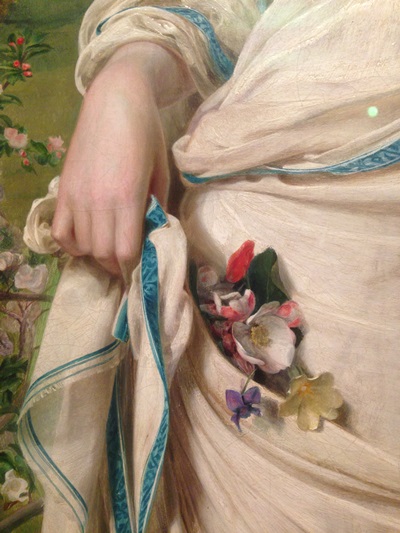
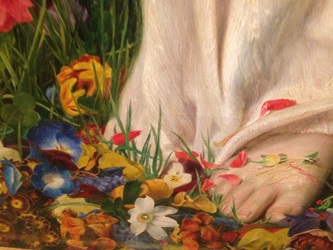
Detail from Gentle Spring by Frederick Sandys (1829-1904)

Detail from Gentle Spring by Frederick Sandys (1829-1904)

For someone who keeps a lot of their deepest emotions well hidden, I hesitate to write this. Yet, whilst I don’t believe it is my nature to be completely self-indulgent, I have a feeling that my experiences are not in any way unique, but that they may resonate with others and therefore be of some help.

It’s really hard when you’ve done your very best and it turns out that it’s not actually good enough. Some of which is down to your level of understanding and some of which is not having been given the proper blueprint and tools to complete the task in the first place.

When we set out to do something new we will have many things at our disposal. We will have some previous generic knowledge as to how we might approach the task; to which we will add new learning, from books or instructions and if possible from other people. We will take all of this and try to form it into a cohesive understanding of what we need to do and then attempt the task. Add into this a willingness and desire to do our very best and we open ourselves up to the vulnerability of being tested and tried and sometimes found wanting.

This is the most painful part of the whole process. It’s the tears at a drop of a hat time; when you feel vulnerable to any sense of judgement or act of kindness; when you want to withdraw even deeper into your shell….

Detail from Gentle Spring by Frederick Sandys (1829-1904)

Detail from Gentle Spring by Frederick Sandys (1829-1904)

… and it’s easy to stay there, and bemoan the situation, scrutinising your discomfort internally or if you’re lucky sharing it with your closest confidantes; and if this stage is the most painful, then the next stage is often the hardest.

It will come inevitably to a point though when you can no longer disguise what you’re feeling on the inside and then the dam will burst and you will find that all of your anxieties and fears are laid bare. In some ways your worst nightmare and in others a blessed relief.

For this is where the healing process can begin. Not some overnight miracle, but a gradual reflection on why what has happened has happened and how you can move forward from it. You will need to be honest with yourself and recognise what part your own desires and expectations have played in the situation; where things might have been done differently, both on yours and others parts.

You also have to be prepared to accept that the advice and encouragement you are being offered is genuine and that you are worthy to receive it; because we don’t always recognise ourselves when seen through the eyes of others, but they are so often the mirrors to our souls.

We can then be ready to move on. A little stronger, a little wiser

The Lord is close to the broken hearted and saves those who are crushed in spirit (Psalm 34:18)

Life itself is never easy, and our trials may be incomparable, even trivial, to those faced by others on a daily basis. Our greatest comfort though is knowing that if we can hold on to our faith then the bigger picture for us is already known by God, and that he will be beside us as we travel over the rough and the smooth paths to get there

So I would encourage you to be prepared to allow yourself to be vulnerable from time to time, to open yourself up emotionally and honestly; because in that way you may just find out where your strengths lay.

Detail from Gentle Spring by Frederick Sandys (1829-1904)

Detail from Gentle Spring by Frederick Sandys (1829-1904)

← Back

Thank you for your response. ✨

The pictures that accompany this blog are details from the painting Gentle Spring by Frederick Sandys (1829-1904), a Victorian Pre-Raphaelite painter; which hangs in the Ashmolean museum in Oxford. It’s relevance is simply no more than that it is such a beautiful painting that draws my attention on each visit, and each time makes my heart soar.

Consolation and Desolation

Light and Shadow together

Light and Shadow together

Consolation and Desolation… two words that I came across during a Spirituality Day recently held in college. In relation to Ignatian Spirituality they are used to help us discern which direction our life is taking us – is it toward God (consolation) or away from him (desolation).

Consolation also brings us closer to people, so that we are aware of their joys and sorrows and shows us where God is active, both in our life and theirs. It charges us with energy, so that we become more creative and our focus is away from ourselves. Whereas desolation, cuts us off from people, so that we turn in on ourselves. We are bombarded by negative feelings and become withdrawn, totally drained of energy and unable to sustain an interest in those things that previously had meaning for us.

It’s deeper than just being aware of the things that make us happy and trying to do more of them and avoiding the things that make us sad.  It’s more about having an understanding that there will be both moments of consolation and desolation in our lives; but that in wishing to draw closer to God, even if negative doubts seem overwhelming, God’s will for us ensures that our hearts, both God’s and our own, continue to beat in harmony.

It is also possible that these moments will occur simultaneously. This fact was brought home to me as we listened to a piece of music. The choir were singing a psalm and the different voices oscillated between the clear high notes of the trebles and resonant, low tones of the baritones and basses as they exchanged verses. Yet even as the one range sang, the other did not remain silent, but was still audible if muted

As this thought occurred my eye was also caught by one of the trees outside, its leaves filling the frame of the window, as the wind shook them and light and shadow danced together. On a sunlit day this produced a feeling of warmth and happiness as the large leaves absorbed and reflected the light, but I could also imagine on a wet, winter day, the dark bare branches would be oppressive and shadowy. Yet in both scenarios neither light nor dark was completely absent

The light shines in the darkness, and the darkness did not overcome it
John 1:5

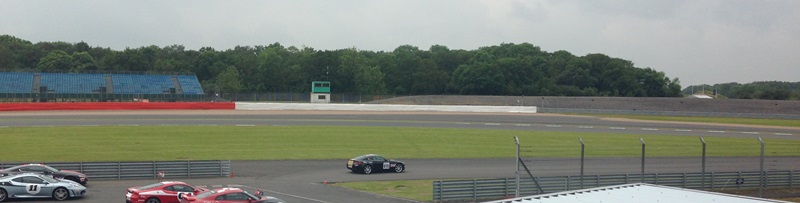
My mind then raced to think of other examples where the presence of ‘good’ and ‘bad’ might not only be present, but might be necessary for us to appreciate the need for both to exist concurrently. Things such as batteries, where positive and negative terminals have to be present in order for power to flow through it. Or when racing a car on a track, where the exhilaration of driving at high speeds needs to be tempered by a fear of the consequences of crashing and so teaches us to develop braking and manoeuvring skills. Of maybe even a margarita cocktail where the combination of saltiness and sourness adds to the whole experience!

The thrills of racing

The thrills of racing tempered by the need for safety

We only need to think of the disciples at Easter. Theirs was utter desolation as they abandoned Christ in the Garden of Gethsemane and had to deal with their fear and response to what they had done; yet just like Peter, they kept their focus on God,  so that their and our consolation came through the cross.

Yet even as we acknowledge that there will be consolation and desolation in our own lives, if we continue to maintain our focus on looking toward God then our consolation should never remain self-centred – there are many other directions in which God is trying to catch our eye!

Oh Master, grant that I may never seek,
So much to be consoled as to console,
To be understood, as to understand,
To be loved, as to love with all my soul

Make Me A Channel of Your Peace – Temple
© Copyright 1967 OCP Publications

← Back

Thank you for your response. ✨