Tag Archives: God

Walking The Emmaus Road

The Road to Emmaus by Daniel Bonnell

The story of the Road to Emmaus lends itself beautifully for us to think about our own journeys of faith; the processes we go through of discovering who Jesus is, wanting to know more  about him and when we have that moment of revelation, confessing him as our Lord and Saviour. Here is my sermon for the Third Sunday of Easter 2017, based on Luke 24:13-35

May I speak and may you hear through the grace of our Lord; Father, Son and Holy Spirit. Amen

The story of the Road to Emmaus, one of the most vivid and insightful accounts of Jesus’ resurrection appearances. So often there are stories in the gospels that make you really want to be a fly on the wall, or in this case a fly on the road.

We also need to understand that the journey to Emmaus is both a literal and a spiritual journey. On the one hand it recounts the journey of two of Jesus’ disciples who, after the crucifixion and resurrection of Jesus, walk seven miles from Jerusalem to the village of Emmaus. On the other hand it mirrors the journey that we all take from not knowing or recognising Jesus, to understanding what the bibles say about him, to recognising him for who he is and that he is the reason we are willing declare our faith and can call ourselves Christians.

It’s a journey that we are all on; all of us at different stages, independent of length of time or knowledge and understanding, but like today’s gospel story there are waypoints, crossroads, defining moments. A journey we’ll see that those disciples found didn’t end in the house in Emmaus but began a new voyage of life changing discovery.

Over the last few weeks it has been wonderful to journey with some of our young people and adults as we have explored what it means to be a Christian, the joy of the Gospel and prepared some of them for one of their own defining moments when they will confirm and recognise their faith at the upcoming Deanery Confirmation service. Each of them will have their own story to tell, their own unique journey they’ve travelled to get to that point, their own experience of a relationship with Christ. So what does the story tell us about both their and our own journeys?

Firstly it’s interesting to wonder who those two disciples might have been. Well we are told the name of one of them, Cleopas – a disciple whose name or variant of it some scholars claim has appeared before in other gospels. In John he is mentioned only by association with his wife Mary, one of the women standing at the cross with Jesus’ mother, Mary wife of Clopas. Secondly, it’s generally assumed, rightly or wrongly that the second unnamed disciple is a man. Perhaps it might make sense that Cleopas and Mary, husband and wife, both close disciples of Jesus, were making their way back home together

A bas relief on a church at Emmaus showing Jesus with a male and female companion

Of course nobody knows for sure, but it does lend itself to the inclusivity of Jesus’ message to all regardless of gender, race or sexuality. What we do know is that it is Jesus that seeks us in the first instance. On the road, Jesus himself ‘came near to them’ and although the disciples knew who Jesus was, they did not recognise him. They knew a lot about him, they had heard a lot about him and yet they were unable to recognise him when they met him. This could be said to be true for many people, even nowadays; they’ve heard of Jesus and even some of the things that he did, and yet they don’t recognise him or respond to him. They don’t engage in wanting to find out more, despite his presence.

We could also ask why the two disciples were prevented from recognising Jesus. Perhaps God had a purpose in blinding their eyes from reality. It’s not cruelty on God’s part, but by a gradual revelation of himself, Jesus allows them and us to learn that we can trust God’s promises. Remember that the disciples as a whole had been told about these events many times beforehand, but still they had not believed

Maybe it was because events had not happened as expected. Their preconceptions of who Jesus was and what he had come to do had been turned on its head; perhaps they dismissed the whole thing as misplaced hope and trust. When things turn out different to how we expect how often do we give up and admit defeat instead of trying to understand whether there is a reason for it.

It could be that they had too little faith – why didn’t they believe the reports of the women, even when they’d seen the empty tomb for themselves. Or the whole idea of a supernatural event of God raising Jesus from the dead was a concept they couldn’t grasp; had they even considered who Jesus was?

Is this a mistake that’s repeated today? Just because someone knows about Jesus, doesn’t mean they know him. They may have heard about him, read about him, use his name and many claim to know him. But knowing about him and knowing him are two different things

Along our journey there will be others who help us to know more about Jesus, but ultimately it will be Jesus that opens our eyes. For the two disciples on the road he used the things that they would already know about, the scriptures, and how if they believed what the scriptures said about him then they would understand why he came and why he had to suffer. We too today have scripture to help reveal who Jesus is, and we have the double advantage of not only having the Old Testament but the New as well.

When we read and come to know the scriptures better they help to build up our faith, they are a reliable witness to who Jesus really is, and the truth that they contain lead us to a personal faith in Jesus. A personal faith and a personal relationship with Jesus, but it mustn’t stop there. If we personalise Jesus too much he fast becomes God in our own image. The relationship we are called to have is one of fellowship and community. It is not coincidence that it is around a supper table that the disciple’s eyes are opened.

Think how many of the resurrection appearances are associated with table fellowship: the request for something to eat when he appears to all the disciples almost immediately after the two from Emmaus had told their story, or having breakfast on the beach. It was during the intimacy of a shared meal when Jesus broke bread and gave thanks, that the disciples recognised him

When he was at the table with them,
he took bread, blessed and broke it, and gave it to them.
Then their eyes were opened, and they recognized him
Luke 24:30-31

We too through our sharing of communion also come to recognise Christ in the memorial of the bread and wine shared at the supper, which goes on to prompt us to share with others our recognition of his presence. I can vividly remember my own first communion, a real sense of being filled with the Holy Spirit, as the bread was placed in my hands and the wine sipped from the cup. That was my moment of my ‘heart burning within me’ as I acknowledged who Jesus really was and the transformation he was bringing to my life. Like the disciples in Emmaus when we are moved with similar emotions then surely there is only one thing we can do and that is to testify in our lives, actions and words why we are followers of Christ and invite others to join us on that journey.

It would be lovely to see lots of us there at the Confirmation service, not only to support those who are declaring their recognition of Jesus as Lord and Saviour, perhaps publicly for the first time, but to remember that we too are either travelling on a journey toward that decision or recalling the time when we too made that declaration.

We are called to walk together in fellowship and the great thing is that we also have a Saviour who walks alongside us. So we can never walk alone, however hard or tough the journey. Sometimes we may try to run on ahead, at other times we trail behind, but somehow eventually we learn to walk at God’s speed, and God continues to give glimpses of himself across our lives; enough to sustain us and keep our faith strong on the journey.

Amen

Go back

Your message has been sent

Warning
Warning
Warning

Warning.


From Alpha to Omega


Easter Sunday Evensong brought to a close an amazing day of celebrations and the end of the journey we had been on throughout Holy Week. From the highs of Palm Sunday, with it’s joyous branch waving, through the sharing of a Seder meal and watch on Maundy Thursday via the reflective solemnity of Good Friday to the bursting alleluias of Easter Sunday. Now in this more formal choral service there was room for one more talk,  and it took us to the very end of the story. Based on Revelation 1:12-18 here were my thoughts.

This morning we were at the very beginning of the amazing story of the resurrection of Christ and this evening we are taken to the end times through the apocalyptic writing of John, a ‘servant’ of Jesus.

Jewish apocalypses were generally written at times of crisis and we know that the early Christian church regularly faced persecution from the Roman authorities and that many Christians had already been martyred, and that the writer John had himself been imprisoned and exiled on the Greek island of Patmos, because he had been spreading the word about Jesus.

The first Christians lived in eager anticipation of Christ’s return, but some 60 years after his death it had still not occurred. They needed something to inspire them to stand firm; to remind them that God is in control, no matter how things may look and these revelations are trying to encourage the reader, both then and now, to look at the ‘big picture’ of human history.

It is as though a veil is being drawn aside and future events and scenes of heaven are ‘revealed’. Through Christ, God is bringing history to its climax and close, and the need to focus on the end of the world when God will reign supreme in justice and peace.  Christ speaks to his Church through John, to encourage and guide his people. He urges them to persevere through times of darkness and great stress, for after this life they will live with God in a glorious new world.

John describes his visions in the extraordinary picture language first used in the Book of Daniel. He has a vision of Jesus ‘like a Son of Man’. This had been Daniel’s vision – a human being who fully represents the human race, appearing in clouds and great glory, to be given God’s power and authority to reign over all things.  However, John’s vision has far more detail than that of Daniel’s. I tried to find an image that I could give you to look at whilst we though about this passage, but I couldn’t find an artistic interpretation that did justice to this extraordinary vision, you are going to have formulate your own picture in your head.

We can imagine his long robe is dazzling white and the golden sash reflects and bounces that light back to us. This Son of Man has the same pure white hair as Daniel’s God, the Ancient of Days, the bright white of pristine snow that glints in sunlight, almost too painful to look at.

We cannot tell what colour his eyes are because they are eyes that blaze with the fire of holiness, and his feet  glow with the strength of burnished bronze. His voice has the fluid melodious sound of rushing water and his mouth speaks truth with power and precision. His face is brilliant like the sun in a cloudless summer sky,

This glorious Christ stands among seven golden lampstands. These are his churches, which give his light to the world. He also holds in his hand seven stars – the angels that care for each local church. I wonder if we ever imagine our own church with its own guardian angel?

In the world, the churches are like lampstands, and Jesus gave the same picture to his disciples. They are not to hide the truth, like putting a light under a bowl. The are to lift it high, where it can give light to everyone. This then is our calling as a church and as individuals, to life the name of Jesus up so all may enter in the warmth and brightness of his presence. A presence that is fearsome but not frightening, as John found out when he fell at his feet as though dead. For Jesus is the first and the last, the alpha and omega. This morning and every morning our exclamation should be ‘Alleluiah, Christ is risen! Because as Jesus reveals to John ‘I am the living one, I was dead, and see, I am alive for ever and ever; and I have the keys of Death and of Hades’.

John is in exile, perhaps sentenced to hard labour; his body may be in prison but his spirit is free. Christ’s revelation of himself to his disciples, to the world and to us, means that we too are free and that our future is secure.

Alleluia, Christ is risen
He is risen indeed, Alleluia!

Amen.

Go back

Your message has been sent

Warning
Warning
Warning

Warning.

Come and See…


come-and-see

Come and see – John 1:29-42


How do we share good news? Do we rejoice that we have heard something wonderful but forget that others too might like to hear it? Do we ever think to invite them to come and hear it for themselves?

Questions that we all need to ask ourselves from time to time, and the Gospel on the second Sunday of Epiphany helps us to consider the importance of issuing that invitation.

Based on the readings: 1 Corinthians 1:1-9 and John 1:29-42

Last week I was asked give a talk to a Mothers’ Union group under the title ‘My Journey… So Far. it was actually a very useful exercise which enabled me to reflect on what had been turning points in my life; who had been part of those and what it was that brought me to where I am today.

I also liked the idea of ‘so far’, because it helped me to see that in spite of my advancing years there are times when I seem no closer to becoming a mature Christian than I was at the beginning. Also where was that beginning? At my birth? At my baptism? At my Confirmation, Ordination or Priesting? What I do know is that somewhere along that timeline I was invited to ‘come and see’. I wonder if you know the circumstance or people who said the same to you and what was it that we were being invited to see?

For me, despite a non-church background, it was the fact that when I wanted to arrange the baptism of my youngest daughter Ruth, the vicar who was preparing us – without a hint of contempt or disapproval – simply pointed out that neither parents nor godparents had been confirmed. It was a subtle nudge as if to say, you want to join this club, but you have no idea about its constitution, its purpose or its demands. Without using the exact words it was like he was saying why not ‘come and see’, perhaps then you’ll know what the attraction is.

So I did just that, I took myself off to church one Sunday, which was pretty scary when you’re on your own. I got to know the people there, both as fellow worshipper and through social events. They were friendly, helpful and I found their attitude to life, which reflected their faith, very attractive. I joined Lent groups; study groups; I read and discussed important life questions; I listened and learned. Not just from those up front, but talking to all different sorts of people, and not just those in the church but with friends who were not Christians. But then it wasn’t just about me.

He said to them, ‘Come and see.’
They came and saw where he was staying,
and they remained with him that day
John 1:39

One of the hardest points in my life was making a decision to talk openly about my faith with my work colleagues at the school I was working in. I can remember having to make a real conscious decision to do this. Not by telling them, ‘Jesus loves you and you need to believe in him to be saved’ – although technically that is true. Instead, I’d chat about what I’d been doing in church over the weekend, the church social events I’d attended and saying to them they’d have to come along next time as I’m sure they’d enjoy it. Amazingly, it was as if the floodgates had been opened and other Christians began to appear out of the woodwork so to speak, to join in the conversations. It became natural and easy-going, again an unspoken ‘come and see’; and John’s gospel reflects this process very clearly.

John’s gospel doesn’t give us Jesus’ baptism in real time, but a retrospective recount of this epiphany moment and an affirmation by John the Baptist that Jesus lives and moves in the power of God. No shrinking violet, John, he further witnesses to this fact by his exclamation to two of his disciples that this is the one they have been waiting for – the Messiah. He has whet their appetites and they are interested in finding out more. So they follow Jesus, who asks them what are they looking for. He doesn’t assume anything, he wants them to discover for themselves, so he invites them to come and spend some time with him, and we can only imagine the conversations and questions they must have had. What we also see is that Jesus is beginning to call a group of people together, to build a community that will be able to hold that knowledge for the world and share it. All through that simple response ‘come and see’.

Now, those two men could have just gone home and talked about an amazing afternoon they’d just spend, but at least one of them, Andrew, realised that what he had heard was ‘good news’, something to be shared and so he brought his brother, Simon, so that he could see for himself. I wonder when was the last time we invited one of our friends or neighbours to come and join us at church; when we invited them to come and see? We have to remember though, that come and see isn’t about saying come to church, sit through a service where everyone else seems to know exactly what they’re doing – standing up, sitting down, singing responses (and believe me that was exactly what it was like for me on my first visit to church). Where we’ll sign you up for a rota, get you on to a committee. It should be more about simply come… and see if the people are welcoming, see if what’s being talked about is being lived out, spend some time with us.


welcome_to_church

Extending a welcome to church


The trouble is, like me previously, we know that we have seen and heard something good, but for some reason we feel reluctant to share it. It’s great talking with your friends from church about your faith, but it takes a lot of courage to speak to other people. Maybe nowadays, when we are surrounded by so much that is secular and politically correct, we think people will somehow see us as strange, misguided fanatics; and we want to fit into our neighbourhoods.

Or maybe we pre-judge who we think might be interested; ‘they won’t want to come’, ‘I’ve never heard them talk about anything religious’. We need to realise that we are not looking for ‘perfect fit’ people, we are not the ones who decide whether or not a person is willing to hear or understand the message. After all when Andrew invites his brother Simon to come and see Jesus we could be forgiven, bearing in mind all we will come to discover about the latter’s character, that he might not be the sort of person that Jesus wants to be part of his community. Yet when Jesus looks at the volatile, unstable Simon he immediately renames him Cephas – which means Peter or ‘rock’, the very foundation of Christ’s followers – because Jesus sees the potential of the most unlikely people.

Christians are called to witness together, to learn from each other as well as from God. As Paul says in his letter to Corinthians, we are called to be saints – not some mystic holy supermen or women, not necessarily sophisticated or intellectual, but ordinary, just like everyone who calls on Jesus is equal. We just cant afford not to share our faith, not in these times of secular, self-determination. We can’t afford to keep quiet and hope that somehow our faith will be shared by some sort of telepathic osmosis. After all what Paul tell us in his letter to the Romans? ‘How can people have faith in the Lord and ask him to save them, if they have never heard about him? And how can they hear, unless someone tells them?’

How can they hear, unless someone tells them?
Romans 10:14

I don’t believe that I, personally, have ever brought anyone to Christ. That’s a job for God through the Holy Spirit to accomplish, but I have talked to people and invited people and encouraged people to come and discover for themselves why they might want to say yes to Jesus’ call, as I am sure we all have in different ways. As I said at the beginning, it’s worth reflecting on how Jesus reached out to us. It is isn’t always through a direct communication. Sometimes Jesus reaches out through other people, especially his followers. Sometimes it will be through us, his disciples in the world today, that others are able to learn about Jesus. Maybe it will be you who tells someone, ‘I have found the Messiah! Come with me and see for yourself!’

That then surely is our challenge, in the weeks, months, years ahead, that in order to offer the invitation to come and see we have to go and tell. To share our faith with others – what we’ve learned, what we know to be true, what we’ve experienced in our own life. To witness to him, not only with words, but in deeds of loving service; and as Paul reminded the Corinthians, we are enriched and strengthened  by God to be able to do this.

We have heard the good news, we have received the good news and if it’s good news for us then it’s good news for everyone – so let’s all extend that invitation to ‘Come and See!’

Go back

Your message has been sent

Warning
Warning
Warning

Warning.


Annus Horribilis… Annus Mirabilis

life-and-death

I wonder, if like me, you found the reaction to what appeared to be a lot of ‘celebrity’ deaths in 2016 becoming a little bit wearisome. Don’t get me wrong – each person’s death was a cause for sorrow and the contributions that they made to our society as a whole was in many cases huge. No it wasn’t the deaths themselves, but the idea that somehow the year had become an annus horribilis because of them.

Our reaction to death is often based on the longevity of a person’s life. Maybe I noticed it more because as I become older there comes a time when many of the contemporaries that were so much a feature of my youth are reaching what could be considered ‘old-age’; although the biblical standard of three score years and ten has undoubtedly been superseded with the medical advances made over the last two or three millennia. In many cases, therefore, it was a case of mortality catching up.

The days of our life are seventy years,
    or perhaps eighty, if we are strong;
Psalm 90:10

Our frail and feeble frame of a human body, despite being a sophisticated machine that is full of intricate engineering, like any machine will eventually wear out. However, I am also aware that death occurs for many reasons not just age related. For some it is a case of genetic disposition or lifestyle choices. For others it is under tragic circumstance at the hands of another; a life snatched away.

Still, should we call any particularly year more dreadful than another? It’s true that many talented well-known people who contributed a lot very publicly to society did die in 2016, but there were an awful lot more people who died,  who in their own ways did exactly the same, however less publicly, and on smaller scales. In fact according to the World Health Organisation (WHO) in 2012 an estimated 56 million people died worldwide and that figure is similar to all other recent years.

Each of them were beloved mothers, fathers, sons, daughters, friends…… you fill in the blank… all of whom were equally important. They were people that we loved dearly; had built up strong relationship with, and who will be missed deeply as we realise that they are no longer part of our future.

Of course there are those that die, whose deaths we can find no apparent justification for and our faith is tested. Some people take the view that when God ‘calls’ it doesn’t matter what the circumstances are. However, death comes when it comes, and I am loath to believe in a God who would wish to do this ‘calling’ when it causes such pain and grief; instead thinking of it not as a ‘calling’ but as a ‘welcoming’ when death occurs.

As a Christian, I also believe that when we finally ‘shuffle off this mortal coil’ that the hope that we have through the death and resurrection of Jesus Christ means that we will be welcomed into life eternal, in a place called heaven, wherever and whatever that might be. Because life is not just an earthly life, but the life that Jesus came to give us in abundance.

I came that they may have life, and have it abundantly.
John 10:10

At that stage it will definitely not be an annus horribilis but indeed an annus mirabilis.

where-o-death-blog


Go back

Your message has been sent

Warning
Warning
Warning

Warning.


The definition of annus horribilis means a disastrous or unfortunate year, and is complementary to annus mirabilis, which means a wonderful year

Brea(d)th of Forgiveness

Breath Window

Breath – Nave window at the Church of the Holy Spirit, Lebanon, New Jersey*

The gospel reading for the 2nd Sunday of Easter, as often happens, included in part the reading that was given for Easter Sunday’s evening prayer service. This morning we heard the additional story of Doubting Thomas and thought about how we too can doubt, but that how we are more blessed when we have come to believe rather than have the concrete proof that Jesus offered to Thomas.

Last Sunday, when I preached at evensong, my thoughts were more on the breadth of forgiveness that Jesus offered in coming to and appearing to his disciples, who had hidden themselves away from the world. In return this reflects the breadth of forgiveness offered and how we should receive it.

Reading: John 20:19-23

“To err is human, to forgive divine” Alexander Pope, poet (1688-1744)

In our build up to Easter we have taken a great deal of time to reflect on the pain and the suffering that Jesus was to endure through the cross. An instrument of torture, it has, as of this morning, become a symbol of God’s transformative and life-giving power through its emptiness, echoed with the discovery of the empty tomb by two of Jesus’ disciples. This new life is offered to us as a result of Jesus taking on himself our sins in order that we could be completely forgiven, not just for our sending him to die in the first place, echoed in his words from the cross, ‘Father forgive them for they know not what they do’ but as part of our response to do the same from thereon in.

Yet, one of the most difficult things we ever do is forgive another. We know we should forgive, because it’s the right thing to do; it’s the Christian thing to do and we know it’s what Jesus would do. But it’s always easier to see another through the lens of their behaviour and its effect on us than it is to see them as God sees them.

How often have we recited the Lord’s prayer in which we ask for forgiveness for our sins as we forgive others? But if our forgiveness to others is given begrudgingly then perhaps we might suspect that our own forgiveness might be begrudged. Even more difficult than forgiving another is to forgive ourselves, to set ourselves free to return to the likeness of God.

What the disciples were to receive on that first day of the week as they came to terms with the amazing turn of events was the life-giving gift of the Spirit as Jesus breathed it onto them, with its resonance to God’s creation of Adam at the beginning of Genesis.

The Spirit is given and the disciples are now called to take up Jesus’ mission, and its immediate effect will be to send them out, to take responsibility for the world. The Christian mission starts in the knowledge of our own need. It’s what the gift of the Holy Spirit to the church is for. It is not designed to fill us with pious emotions, or give us unwavering certainty, or overawe others with our power, or even to build us into the church, though it may do all of these things. The gift is given principally to the disciples and to us to do what Jesus told us to, which is to be his witnesses ‘in Jerusalem, in all Judea and Samaria, and to the ends of the earth.

 Throughout John’s gospel, the way in which people react to Jesus signals whether they will accept or reject God’s forgiveness offered through him. Now the same thing is happening to the disciples. Their mission, too, is to do with forgiveness and judgement  and while it might sound as if Jesus is giving the disciples a blank cheque when he says they now have the power to forgive sins or retain sins, the important thing to remember  is to whom this charge is given, and in what circumstances.

This is a group of people who, only a few days previously, had betrayed and deserted their leader and now they have locked themselves in an upstairs room, fearing for their own lives. When Jesus comes to them and shows them the marks of the nails, it is not just so that they can be truly certain who he really is, but in order that the tremendous mission he  is about to entrust to them can be grounded in the reality of who they are too. These disciples know how much they have been forgiven. They are not going to take the power they are being given over sin lightly.

The temptation is to treat the gift of the Spirit as something for insiders, something to be enjoyed and guarded jealously. Instead we need to long for the Spirit to fall down on all of God’s people; a longing that all should share in the forgiveness and new life that God has given to us. We receive in awed gratitude, and share because we know that God has given us what we do not deserve. Shouldn’t we then in our own levels of forgiveness ensure we are as ungrudging as God?

 Amen

Forgive

*This beautiful interpretation in glass of John 20:21 is one of a series of windows in the Episcopal Church of the Holy Spirit, Lebanon, New Jersey. To see some of the others please follow this link

Called to Love

Brussels_Love One Another

Love One Another, As I Have Loved You

 On Maundy Thursday we are explicitly called to love one another. Sometimes though it’s not as easy as you think. This reflection was preached as a sermon at St James’ Church at the Maundy Thursday evening service and is shared with you now.

Readings: 1 Corinthians 11:23-26 and John 13:1-17, 31b-35

‘That you love one another. Just as I have loved you, you also should love one another’

This week has for me been a week of great sorrow. In a week when we are following in the footsteps of Jesus to the cross, his words to his disciples have a great poignancy. A week in which we have once again witnessed the total disregard for the value of human life.

‘That you love one another’

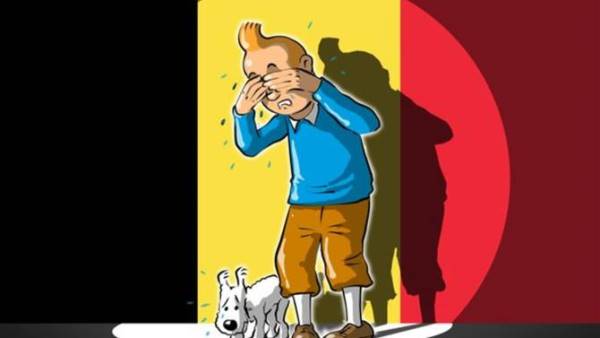
On Monday we heard of the devastating effect that one person can have on one family, the Philip’s family, we heard of the anger and hatred that is justifiably felt as raw emotions are still very much on the surface.  Then on Tuesday, the indiscriminate attack on innocent victims in Brussels, as they went about their ordinary business; treated not as individual human beings but an in-distinguishable mass target.Still each of those who died or were wounded will be connected in a myriad of ways to others: wives, husbands, fathers, mothers , sons, daughters, friends. Connected to people who love them.

Brussels - Tintin

Herge’s Tintin weeps for Belgium

Far too frequently we think of ourselves as just individuals, separated from one another by race, culture and faith, yet we share a common humanity. Desmond Tutu and Nelson Mandela, when having to deal with the aftermath of apartheid in South Africa, choose to walk the way of love rather than retaliation. Tutu explained that one of the sayings in his country is Ubuntu – the essence of being human, and that it speaks particularly about the fact that you can’t exist as a human being in isolation. It speaks about our interconnectedness. You can’t be human all by yourself, and when you have this quality – Ubuntu – you are known for your generosity.

Our common connection means that what we do as individuals affects the whole world. When we love each other and recognise that common humanity and things go well, it spreads out and shows what the power of love can do; but when we disregard it we act in fear, creating hatred and violence.

 ‘That you love one another’

 That you love one another. Just as I have loved you’

If we want to know what that love should look like then we only have to look at Jesus. Love is never straightforward but he managed to show us the different sorts of love that are needed to unite us rather than divide us.

Love can be tough – we only have to think of the rich young man who when told that he had to give up all that he owned went away grieved.. Yet Jesus didn’t give him a get out clause. He looked at him and he loved him even though he knew how hard that would be

Love enables forgiveness as well as  demanding a change of heart. Like the woman caught in adultery, who was judged and condemned by those who were blinded to their own sinful natures. ‘Do not judge, and you will not be judged; do not condemn, and you will not be condemned. Forgive, and you will be forgiven. She was sent away with the instruction to sin no more, knowing that love enables us to forgive.

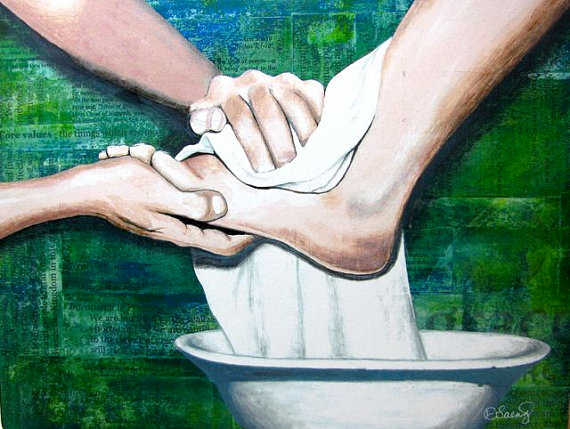
Love gives us a servant heart. What better demonstration of Jesus’ love for us that he stoops to wash our feet, not as master but as a servant and asks us to do the same. Amongst his disciple he was aware that one was going to hand him over, to be part of his inevitable death and yet he still washed his feet.

And that brings us to the greatest love of all, that he would offer up his own life in order to give us ours. A love that we celebrate each time we come to share at the communion table, and taste the bread and wine.  A sacrificial love that didn’t distinguish between the worthy and the unworthy but was poured out to encompass all of humanity.

Just as I have loved you, you also should love one another’

You also should love one another’

There is one more love that he calls us to emulate – to love our enemies. Jesus tells us that if we only love those who love us back then love has no real value. But to try and love those who perpetrate violence, surely this is the hardest love of all.

This isn’t to say that we shouldn’t hate the crime and that punishment must follow according to the agreed judicial system, and let’s be clear that in the case of the ISIS attacks in Belgium this has nothing to do with the Muslim faith in general, but is caused by a perverted religion of hate.

Even so we are called to show mercy and offer grace. We are called to look at each individual and imagine what has happened in their lives to make them turn to such hatred, to make them so blind that they forget their common humanity with their victims, to espouse causes that deny the power of love, and despite this to love them­­­­­­. How hard that is.

‘By this everyone will know that you are my disciples’

What has also been demonstrated, is that evil and hatred were not allowed to get the upper hand in Brussels, as Christian throughout the city offered practical help and prayers and the Belgian people rallied defiantly in the an open square to write chalk messages of love and hope.

The Archbishop of Brussels, Josef de Kesel, also announced that he had received messages from around the world, as signs of fraternity, and which he said, ‘let us feel how we are united in faith and humanity. He added that “We must stay faithful to our message of peace and go on promoting a discourse which appeals for acceptance, unity and coexistence’

So, as we continue to commemorate the passion, death, and resurrection of our Lord Jesus Christ this Holy Week, let us all remember that God is the source of love and life, and ask him to bring peace to our troubled world.

Amen

Servanthood image

© ‘Servanthood’ by Debbie Saenz.

How Far Can We Trust God?

Trust blog

How far can we trust God?

Our readings for Evensong on the second Sunday in Advent bring us the story of Zechariah, the father of John the Baptist, and his encounter with Gabriel in the Temple sanctuary. It gives us Luke’s introduction of how God’s divine plan is about to unfold…

Readings: Isaiah 40:1-11Luke 1:1-25

May I speak and may you hear in the name of God; Father, Son and Holy Spirit.

This evening our gospel reading leads us further into our Advent preparations and on this second Sunday of Advent we are reminded of the work of the prophets, and in particular we remember John the Baptist who stands as a link between the Old and New Testament. However, this evening it is not directly about John, but his parents, especially his father’s pre-conceptual reaction to the news of his divinely ordained fatherhood.

It is with this story that Luke begins his gospel and being the historian he is he is at pains to include in his dedication the care he is taking to make sure that we have an orderly and accurate account. He doesn’t set out Jesus’ ancestral claims like Matthew does; or the symbolic prose of John, or even start with John, the adult baptiser, appearing in the wilderness to fulfil Isaiah’s prophecy as in Mark’s gospel. No, Luke wants to start with a story of how people reacted to God’s preparations for the gift of his Son to the world. So, what does it tell us and how might we learn about our reactions from it?

We are introduced to Zechariah and Elizabeth, chosen by God to play an important role in Jesus’ story. I think we can safely say that neither of them were lukewarm nominal believers. Their credentials meant that they were righteous in the sight of God. Zechariah serving as a priest in the order of Abijah, which can be translated as ‘my Father is Yahweh’, and Elizabeth claiming descendancy from Aaron, God’s original high priest at the time of the Exodus. They walked blamelessly and observed all the commandments. In other words, they were obedient servants of God. Yet, for Zechariah there was an area in his life that resulted in some trust issues.

We can imagine that for a long time they had tried hard to conceive a child and had prayed to God about it, but no doubt as they grew older they had given up hope that it was likely to happen. So it is fairly reasonable that when Zechariah, alone in the sanctuary and terrified at the sudden appearance of an angel, is told that not only is he going to be a father, but that his child will play a pivotal role in proclaiming the arrival of the Messiah, that his first response is, ‘Are you sure? What proof can you offer for this?’

‘How will I know that this is so? For I am an old man, and my wife is getting on in years.’
Luke 1:18

He was confronted with a situation that required faith and trust. The faith bit he had in abundance but the trust was not so easy. Very often we too can face a lack of trust where God is concerned. It seems that we are happy to accept that love underpins our motivation to seek God and to follow his example but trust is harder to pin down. Often this difficulty has to do with our past experiences and our present situations. As humans our fall-back position is to initiate our self-reliance mode. It’s a primitive response to protect ourselves from perceived harm, thinking that we only have ourselves to rely on to get out of trouble

It can also be difficult to imagine stepping out of our comfort zones, but we have to remember that nothing is impossible with God, not even in areas where we have experienced nothing but failure, disappointments and frustration. We have to trust he is there to catch us when we fall and to uphold us as we move forward. It may be that we are holding back that trust because we are happy and comfortable to stay exactly where we are; but this can lead to stagnation; our faith never gets an opportunity to mature, or for our relationship with God to grow stronger as we grow closer to him.

God knows all things; he knows our hearts, our desire to be committed to him and sometimes our desire to be rebellious. But we have to be prepared to take the first necessary step to trust him in each area of our life. Take that step, then another and then the next one. This is the way to grow our faith in God, one step at a time… and how much easier is it as well to take those steps in the company of others, to be encouraged and to encourage each other. Because the more we hand over our lives to God and trust in him the more we can be freer to become the people that God is calling us to be.

With regard to Zechariah’s enforced silence following his lack of trust, I would not see this as a punishment for a lack of faith rather an opportunity for Zechariah to have space for reflection. If we fast forward to his son’s birth, we know that he had become reconciled to leaving things in God’s hands, for his first actions on having his speech restored to him was to speak in praise of God and to leave people amazed at just what his son was to become

We know he was to be ‘The voice of one crying out in the wilderness: “Prepare the way of the Lord, make his paths straight.’ but we also know that we too can be responsible to make this happen in our own lives. From Proverbs 3 ‘Trust in the Lord with all your heart, and do not rely on your own insight. In all your ways acknowledge him, and he will make straight your paths.’

So, this Advent let us all be prepared to step away from self-reliance and instead step forward in faith and trust.

Amen

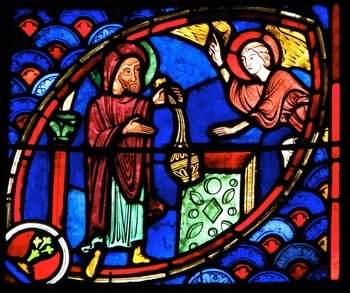
zechariah window

Zechariah and Gabriel at the incense altar in the Temple

Go back

Your message has been sent

Warning
Warning
Warning
Warning

Warning.

Don’t Sweat The Small Stuff?

Don't sweat the small stuff?

Don’t sweat the small stuff?

Readings: James 1:17-27; Mark 7:1-8, 14-15, 21-23

May I speak and may you hear through the grace of our Lord: Father, Son and Holy Spirit

There’s an American idiom that you may have heard of, ‘Don’t sweat the small stuff’. It’s basically something that might be said to someone in order to tell them not to worry about things that are not important. It’s actually not a bad thing to suggest, because sometimes we worry about getting the small things sorted out and forget to look at the bigger picture. So are the small things unimportant?

The bigger picture as far as Jesus was concerned was teaching people what their attitude needed to be in relation to God, not whether they had dotted the ‘I’s and crossed the ‘T’s on their membership application to the Christian faith.

In this section of Mark’s gospel people are flooding to him – he has just fed the five thousand, had a brief respite in prayer; and then walked out to his disciples in their boat, when they were fighting against an adverse wind, to calm the weather and their fears. On landing he has been immediately recognised and word has spread and people are rushing about the region, bringing to him their sick, begging for and being granted healing.

Now in this passage, the Pharisees and scribes, who had no doubt been sent out from Jerusalem to gather evidence against him are interrupting a well-deserved meal break to tell him that he’s breaking Jewish law by eating with unwashed hands. No wonder he decides to tell them as it really is! ‘Stop sweating the small stuff!’

To the Jews, and in particular the Pharisees, however, the small stuff was important. They believed that, alongside the written Torah, there existed another body of oral laws, interpretations and traditions transmitted by God to Moses orally and then memorised. In fact there are 613 statutes stated in the Halakhah, or Jewish Law, most of which are derived from the Torah’s books of Leviticus and Deuteronomy … never easy reads!… but some are laws that have been enacted by the rabbis, who have interpreted the Torah over time.

A few of them are related to particular groups of people such as the Nazarites, whilst a large proportion of the others relate to sacrifices and offerings which can only be made in the Temple, which no longer exists. There are some that sound rather quaint to our ears, such as ‘not to make a bald spot in mourning’ or ‘not to eat worms found in fruit once they have left the fruit’… presumably it’s okay to eat them whilst they are still in the fruit then! But there are some that are abhorrent… that a rapist must marry his victim if she is unwed and is never allowed to divorce her. Certainly tells us a lot about the status of women if nothing else.

The laws to which Mark was referring to, and which he explained in some detail to his mainly Gentile audience, are part of the Kashrut, the Jewish dietary laws concerning kosher foods and its preparation and handling, and were part of a highly complex and developed system of purity regulations. For orthodox Jews even today they throw up problems, such as how you are going to use a dishwasher for both meat and dairy utensils in a kosher home. Still sweating the small stuff!

Kashrut symbols blog

For many modern non-orthodox Jews, however, they believe that the laws of kashrut are simply primitive health regulations that have become obsolete and that the legalistic aspect of traditional Judaism reduces religion to a set of rituals devoid of spirituality, which was not the intention of Halakhah, which can be translated better as ‘the path that one walks’. So they no longer see the need to sweat the small stuff, perhaps having been persuaded by changes in society that these laws are no longer important or relevant to their faith.

However, back in first century Palestine, Jesus points out the hypocrisy of the Pharisees, in that by interpreting and applying scripture in this way they are only honouring God with what they say rather than what they do. His kingdom message has nothing to do with how and what you eat, that is not what will stop you becoming pure. Rather the challenge of the gospel is much more a challenge of the heart. He is insisting that good and bad external and physical actions come from internal and spiritual sources, and that it is human motivation that is the real problem.

His list of evil intentions seem full on, and perhaps it is easy for us to glance at the list and feel comfortable with the fact that on the whole we’re fairly sure we haven’t indulged in many of them, especially the biggies like fornication, murder or adultery. Yet can we be quite sure that in some small way we haven’t practiced theft… the pen ‘borrowed’ from work and never taken back; or licentiousness… the extra packets of cakes or food bought which never got eaten and which had to be thrown away; or slander… the sarcastic insult offered veiled with a smile? What about envy, pride or avarice?

Yes, we might say, but that’s only the small stuff… even so, Jesus doesn’t seem to rank them in order of importance; they are all equally said to be possible evil intentions that are present in and come from the human heart.

He also at this stage doesn’t seem to offer a solution as to what we can to do to either avoid or resolve this problem, we are simply left to infer it… of course later on and with our gift of hindsight we do know what the solution will be, through Christ’s ultimate revelation of the kingdom. However, our reading from the letter of James, does give us something concrete to act upon. It tells us that rather than drawing from our hearts those things that make us sordid that we should listen to that part of us that God has already placed within us.

We are to be quick to listen so that we can exercise self-control and know what the right thing to do is; take time to consider what the effect of our words might be on others so that we act with kindness; to be patient so that our actions are those of love rather than hate.

Christians are called to be above reproach and yet we are only too well aware that we so often fall short. But despite this we can’t casually set aside bits of scripture that we don’t like or understand. We shouldn’t allow ourselves to justify our actions because society around us doesn’t seem to worry about the small stuff; that’s how we become tainted by the world.

Yes, we make mistakes and get it wrong… yes we can seek forgiveness… and yes we will be forgiven; but we need to take an honest look at how we behave and change the things that make us follow human traditions rather than being doers of the word.

‘Do not think that I have come to abolish the Law or the Prophets;
I have not come to abolish them but to fulfil them’. Matthew 5:17

The important thing is that Jesus came not to set aside the law but to fulfil it. The scriptures were not necessarily irrelevant then or now. They act as signposts to the reality that was Jesus. Everything that they were getting at reached a climax in Jesus Christ, and from then on everything was different. He became the perfect law, the law of liberty. So by keeping his law we can constantly remind ourselves of our relationship with the divine so that it becomes an integral part of our existence.

The Pharisees were more concerned that the rules were followed and that keeping the laws was more important than how people were treated. Jesus was more concerned with how we treat others; that we were love God and our neighbours as ourselves, because on those two commandments hang all the law and the prophets.

Should we sweat the small stuff?… I’ll let you decide.

Amen

Do not think that I have come to abolish the law or the prophets; I have come not to abolish but to fulfil' Matthew 5:17

‘Do not think that I have come to abolish the Law or the Prophets; I have not come to abolish them but to fulfil them’ Matthew 5:17

Go back

Your message has been sent

Warning
Warning
Warning
Warning

Warning.


Salt and Light

You are the salt of the earth... the light of the world

You are the salt of the earth… the light of the world

A fifth Sunday at St James, West End provided the opportunity to come together for evening worship in the style of Taizé. Prayer and silence are at the heart of Taizé worship along with the singing of repeated prayer chants, often highlighting simple phrases from the Psalms or other pieces of scripture, which are designed to help meditation and prayer.

A  candlelit San Damiano Cross, a large Romanesque rood cross, is usually the central focal point and is the cross that St. Francis of Assisi was praying before when he is said to have received the a divine commission to rebuild the Church. St James is lucky enough to have its own copy and was placed in the centre of the chancel steps for our service

Focusing on the San Damiano Cross

Focusing on the San Damiano Cross

What follows is excerpts from the evening service, including a meditation on Salt and Light.

Opening prayer (said together):

God our Father, be with us in our time of worship. When we pray, help us to concentrate our thoughts on you; when we listen to the reading of the Bible, help us to understand it; when we sing your praise help us to sing because we really love you: help us to worship you in spirit and in truth, through Jesus Christ our Lord. Amen.  

Opening Chant:
Confitemini Domino quoniam bonus.
Confitemini Domino. Alleluia!
(Give thanks to the Lord for he is good).

Psalm 27:1-6, 13-14 was read, with a special emphasis on verse 14

Wait for the Lordbe strong, and let your heart take courage; wait for the Lord!

Before the next chant:

Wait for the Lord, his day is near. Wait for the Lord: be strong, take heart!

Our reading Matthew 4:23 – 5:16 then led us into our meditation, that was in two parts. Firstly concerning salt

13 ‘You are the salt of the earth; but if salt has lost its taste, how can its saltiness be restored? It is no longer good for anything, but is thrown out and trampled underfoot.

 ‘You are the salt of the earth!’

Salt, that precious commodity that purifies, preserves and penetrates;
and we are called to be as salt into the world of human society
to purify, preserve, and penetrate that society for the kingdom of God

Who hasn’t felt the tiny flecks of salt on their skin when next to the ocean?
Or maybe you remember the jars packed with salt and green beans at harvest time
to provide a delicious treat in the depths of winter;
or licked your lips and tasted the saltiness after physical exertion?

Silence

Salt – as precious as gold
It paid the Roman soldier his salarium
and indicated your standing in society
as to whether you sat above or below the salt.

Salt – to purify and to heal
A gargle for sore throat, a soother of stings and burns,
a pain reliever for toothache and sore gums
a natural ‘miracle’ medicine

Salt – to preserve and penetrate
Adding flavour and preventing food from spoiling
and saving people from starvation
A symbol of fellowship and the common meal

Yet salt can become contaminated,
often burnt in ovens to increase the heat,
then no longer useful it is thrown out onto the ground
and mixes with the dirt and gets trampled underfoot

Silence

Therefore, God calls us, his precious creation,
to be like salt, to penetrate society
and show in our lives and our dealings with others
how in living differently and seeking purity
that we can bring healing and hope,
both now and for the future through Christ;
and to avoid those things that would contaminate us,
and seek ways of making life liveable, healthy and good

Silence

Taste and see...

Taste and see…

We are also blessed with special receptors on our tongues that can detect saltiness and know when things are good;
so take your pinch of salt, and if you want dip your finger in and taste and see that the Lord is good [small glasses with a pinch of salt had been given out to everyone at the beginning]

Our service continued by singing, as a chant, the chorus from the beautiful anthem ‘Taste and See the Goodness of the Lord’ by James Moore Jr. I am sure we didn’t do it as much justice as the soloist at the Washington National Cathedral*, but it provided a special moment in the midst of our worship.

Taste and see, taste and see the goodness of the Lord.
O taste and see, taste and see the goodness of the Lord, of the Lord.

Then concerning light:

14‘You are the light of the world. A city built on a hill cannot be hidden. 15 No one after lighting a lamp puts it under the bushel basket, but on the lampstand, and it gives light to all in the house. 16 In the same way, let your light shine before others, so that they may see your good works and give glory to your Father in heaven.

‘You are the light of the world’

Light is vital to enable us to see in the darkness
and to help us to avoid stumbling.
Light is also an expression of inner beauty,
truth and the goodness of God.

Who hasn’t stood under the night sky and gazed up at the infinity of space
and seen the pin pricks of light of a million stars?
Or been awakened by the sunlight creeping in through their curtains;
or come home on a winter’s evening to a darkened house and been grateful to flick on the light?

The psalmists tell us that ‘In [God’s] light we see light’ (Psalm 36:9) and that
‘[His] word is a lamp to my feet and a light to my path’ (Psalm 119:105)
Through God’s grace our darkness is illumined and banished
and we are filled with spiritual light, joy and peace.

Silence

Light dispels the darkness and nothing can be hidden;
From others, from ourselves, from God
Everything is known to God, who sees all.
Yet there is great freedom and joy for those
who live in God’s light and who seek his truth.

As believers that light shines in our hearts
and we are called to act as light-bearers of Christ
so that others may see the truth of the gospel
and be set free from those things that blind them

Silence

We should seek to show light and healing in every part of our lives
to every relationship, every activity, every word;
to bring Christ’s light and hope, joy and peace
to those who need it the most;
as well as discovering God’s light shining in unexpected places
revealing his glory.

Silence

glory of god blogSo let us light our candles and place them at the foot of the cross
to better illuminate that glory.

During the following chant, we were invited light a candle and place it in the bowl of sand at the foot of the Taizé cross.

The Lord is my light, my light and salvation: in God I trust, in God I trust

There followed five minutes of silence, introduced by saying together:
Lord, you are living water, You are light and fire, You are love.
Come, O Holy Spirit! Come, O Holy Spirit

Our service concluded with intercessions and a final chant:

Within our darkest night, you kindle the fire that never dies away, that never dies away. (repeat)

 and a final prayer:

Be with us Lord as we go out into the world. May our lips that have sung your praises always speak the truth; may our ears which have heard your word listen only to what is good, and may our lives as well as our worship be always pleasing in your sight, for the glory of Jesus Christ our Lord. Amen.  

Before we departed, having said the Grace.

There are not many fifth Sundays during the year, so it was nice to be able to be part of something special , something that was beautiful as well as uplifting, exactly what worship should be like.

Salt and light reveal the glory of the Lord

Salt and light revealing the glory of the Lord

*YouTube link to a soloist singing Taste and See The Goodness of the Lord at the Washington National Cathedral © James Moore Jr.  

The Service was put together by David Forster and Linda Galvin using both resources from the Taizé community and original material.

Mere Mortals

Mere Mortals

© ‘Mere Mortals’ Linda Galvin

A piece of artwork based on Psalm 8:3-4, and completed on my pre-ordination retreat. The idea came out of a talk by Abbot Stuart Burns OSB on the unimaginable greatness of God…somewhere in there are the mere mortals!

When I look at your heavens,
the work of your fingers,
the moon and the stars that
you have established;
what are human beings that
you are mindful of them,
mortals that you care for them?

Psalm 8:3-4

Go back

Your message has been sent

Warning
Warning
Warning
Warning

Warning.