Category Archives: Ministry

When Is A Toilet Not A Toilet?

Can all members of the public use the Public Conveniences?

Can all members of the public use the Public Conveniences?

You may well be asking what has a question about toilets got to do with ordination training? Yet it has turned out recently to be the most basic and essential necessity of finding a toilet that really brought it home to me how we so often both intentionally and unintentionally exclude a large group of people within society

One of my fellow ordinands, Helena, is a former lawyer and is a passionate advocate and fierce protector of people’s rights. She also has Multiple Sclerosis and uses a mobility scooter and therefore knows first-hand what the world looks like to a disabled person. She, like the majority of disabled people, doesn’t just want and need to be as independent as possible, but believes that each and every one of us has to become much more aware of what needs to be done to create a naturally inclusive society; which brings me back to toilets!

We’ve all heard the stories of inconsiderate able-bodied car drivers who blatantly park in a disabled parking space thus denying any genuine blue badge holders from doing so; but what about all those who deliberately use the designated disabled toilets, because they are the closest, which on becoming blocked force the person in the wheelchair to have no facilities at all?

That is just one specific instance, but what about when a community in which disabled people live shows too little consideration or awareness of their needs? A case in point is when we went on a field trip to a neighbouring village to the college. Firstly, I have to say that I am not singling out this particular community, as regretfully it is not unique, and it should be acknowledged that the organisers of the trip should have completed a health and safety assessment prior to the visit. However, if what happened, on the surface appears laughable, it is also deeply thought provoking

Everybody needs to go to the toilet – fact. Everybody is aware that not all buildings they visit will have toilet facilities – fact. Everybody knows that where public toilets are provided they can use them…………

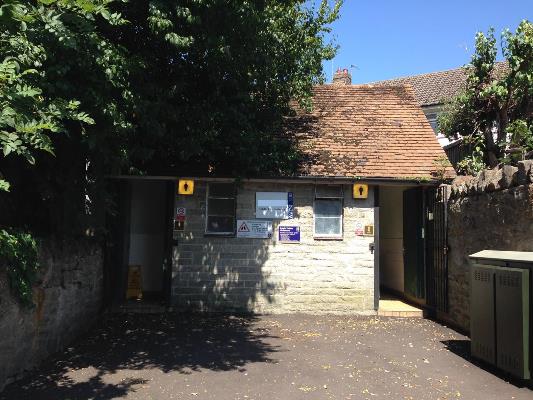
The church we were visiting did not have a toilet, which was reasonable enough given its age and listed-building status; the vicarage did have toilets (as you would expect) except the vicarage itself was inaccessible to a person in a wheelchair. Where then was Helena, who not unreasonably had reached the point when she wished to avail herself of these facilities, to go? The public conveniences were about 200 yards from the vicarage but on arriving at them we saw that there was no designated disabled toilet, in fact there were steps to get into both the ladies and gents (see picture above)

Where else could we try? Fifty yards down the road, the Catholic church was situated in a lovely new building with signposted disabled parking and push button entry access to presumably up to date toilet facilities – but the building was locked and empty. Around the corner there was a public house, and calling through the open back door we asked if we were able to use their toilets. We may, but whilst we could get into the pub, the toilets had a step down to them. Retracing our steps, we were advised that a key had been found for the village hall, this was some 500 yards in the opposite direction. Here there was a small disabled toilet, barely large enough to allow Helena to enter with her scooter and hopelessly maintained so that the clutch rail would not stay upright. We spend several minutes with the two of us trying manoeuvre ourselves, one holding up the rail, the other trying to fit into the cubicle, before I could step outside and she was finally able to relieve herself – so much for self-esteem and independence!

All in all this farce lasted about 40 minutes, and I jokingly said to Helena that it was good job she could hold on. To my dismay she told me that for many disabled people this was not the case – it’s called ‘social incontinence’, where lack of disabled facilities force otherwise continent people to resort to incontinence products simply to be able to go out into the world for any length of time. One more example of the removal of a person’s dignity.

Helena was just one person in that place at that time, but how many more people have come up time and again against the same problems and instead of feeling welcomed and able to play their full part in their communities have felt excluded and devalued.

What good is it, dear brothers and sisters,
if you say you have faith but don’t show it by your actions?
James 2:14

It is a hundred years since people and governments became more aware of the need to make provision for the disabled, following the many thousands of men who returned incapacitated from the First World War, either blind or limbless. One hundred years in which we have come a long way to recognise the equality of all in society and yet we still exclude and marginalise the disabled through not consulting or considering fully their needs, so that they can just BE

Maybe it’s time to look around the places you live and work in, remembering that it’s not just toilets but other things like ramps and rails; and when you spot something that needs changing, then do what needs to be done to make that change happen, including asking the people for whom you are doing it  what it is they really need.

Helena, endures much in the way that she has to adapt in order to undertake her studies and she shouldn’t have to. As I walk alongside her she has made me more and more aware of issues that should change and transform how we think and act as individuals, as a society and as Christians. This sort of teaching, in my mind, will always be more valuable than anything that an academic text book has to say.

An inclusive society means no-one should feel excluded

An inclusive society means no-one should be excluded

This piece has been written with the full permission of my friend and fellow Ordinand, Helena 

Go back

Your message has been sent

Warning
Warning
Warning
Warning

Warning.

One Year And Counting

For we walk by faith, not by sight. 2 Corinthians 5:7

For we walk by faith, not by sight. 2 Corinthians 5:7

I received a notification last week to congratulate me on the one year anniversary of my blog. One whole year of sharing a journey with those who have graciously chosen to follow the blog; those who have commented on my posts; and all those who have clicked onto the site and may have lingered a while to read something.

As it happens I have actually published 52 posts – thus hitting my hopeful target of writing something once a week. If you know me as my family does you will realise that this is something of an achievement, as I am usually the type of person, who on receiving a brand new diary on the 1st of January and with all good intention, barely manage to complete the first week or two before popping it away in the drawer with those other almost pristine earlier versions [they’ve stopped buying me diaries now!]

Some of the posts have been very popular, perhaps talking into a current situation or speaking to others about something in their own lives. For myself, I know that doing this has been an invaluable exercise; helping me to chart my own journey and progress as I prepare for ministry and ordination. Thank you, therefore, for being a part of that.

God bless

Linda

My top five most popular posts by viewing stats – just in case you missed them

1. Coming Out Into the Light

2. A State of Flux

3. V is for Vulnerable

4. Pivotal Moments and the Parable of the Lobster

5= Holy Hogwarts!… An Induction!
5= Children Should be Seen and Not Heard

Go back

Your message has been sent

Warning
Warning
Warning
Warning

Warning.

Let Them Eat Cake!

The Opulence of Versaille

The Opulence of Versaille

I suspect that most of us have heard the phrase ‘Let them eat cake’ and would hazard a good guess that we know who is supposed to have uttered those words. They have become famously attributed to Marie Antoinette, the Queen consort to Louis XVI, although the original French phrase ‘Qu’ils mangent de la brioche’†, refers to brioche, an enriched bread made with flour, butter and eggs – but let’s not get into an argument about pastries!

A portrait of Marie Antoinette at VersailleIn the late 1700’s, Louis and Marie Antoinette lived in great opulence in the Palace of Versailles, just outside of Paris, whilst millions of ordinary Parisians, like the great majority of their countrymen at that time, were starving and destitute, and itching for revolution. The phrase has come to portray the ruling classes as insensitive, ill-informed and ignorant of just how dangerous it would be to hold on to attitudes such as these.

Whether Marie Antoinette actually had any sympathy for her unfortunate people – and it would appear she might have from a comment she DID make, “It is quite certain that in seeing the people who treat us so well despite their own misfortune, we are more obliged than ever to work hard for their happiness” – the French revolutionaries and history did not treat her so kindly and she felt the sharp bite of the guillotine blade in 1793.

Some 200 years later, and the poor and the destitute still roam the streets of Paris and still look for succour and relief from the more affluent.  On the Champs Elysees, one of Europe’s wealthiest shopping streets, the glittering facades of Mercedes Benz, Louis Vuitton and the House of Guerlain entice you to browse and exclaim at the prices. While just around the corner in the Avenue Montaigne and Rue Faubourg Saint-Honoré the fashion houses such as Christian Dior, Chanel and Versace have no need to display price tags – because if you need to ask, ‘How much?’ you can’t afford it!

In amongst all of this showy extravagance, there are people who sit silently, holding up a paper cup in which there are a few small coins; their clothes more shabby chic than haute couture; or else they prostrate themselves, remaining motionless, their faces hidden. Yet they somehow blend into the scene,  almost invisible to the thousands of shoppers and tourists who manage to skillfully sidestep them without looking or pausing.

In 2011, these ‘delinquents’, as described by the French authorities, were controversially banned from approaching and ‘pestering’ people in several of the cities high profile areas but on a recent visit to the city, it was obvious that this was either being ignored or circumvented, and  I was presented with a moral dilemma that I hadn’t anticipated – to give or not to give?

Begging on the streets of Paris

Begging on the streets of Paris*

My initial reaction was that here were people in need, but at the same time I was aware of the stories of ‘professional beggars’ who made a good living scamming tourists. Indeed, the woman who dropped a ‘gold’ ring at my husband’s feet as we crossed a bridge over the Seine and exclaimed that it was our lucky day and perhaps we could reward her for pointing it out, got short shrift, especially when we observed her and her partner waiting to pull off the same trick on the next hapless tourist. There were also the youngsters, who thrust a clipboard under my nose near the Louvre on which there was a unnamed charitable petition sheet, which they urged me to sign and to donate €10 or €20 to help deaf-mute children, but which I regretfully declined,

At the same time there seemed to be so many that might legitimately be in need of assistance to simply afford their next meal while others might simply slip away at the end of the day and drive back home to their families in the suburbs – how was I to know which was which without being judgemental?

In the middle of these deliberations two bible verses came to mind,

Give to the one who begs from you, and do not refuse the one who would borrow from you.
Matthew 5:42

and,

Each one must give as he has decided in his heart, not reluctantly or under compulsion, for God loves a cheerful giver.
2 Corinthians 9:7

It would of course be easy to not make any judgement at all and to give to each and every one, but realistically this wasn’t possible. Or to give to nobody, thus avoiding fear of discrimination, and also making me a miserable non-giver! In the end I came to a compromise, which wasn’t wholly satisfactory, but which I hoped meant that at least there was a fair chance that it benefited some – that is, I would keep the coins that we had gathered over the week in my pocket, and without checking would drop a handful into the proffered cups as they appeared, until my pocket was empty… as I said, an unsatisfactory compromise, because I knew I would be unable to use the coins once home, but it was a the option I went with

I am curious, therefore, as to what others feel or do in these situations. Perhaps you could let me know?

On a similar note, because unfortunately it is often the appearance of the person that goes towards our decision-making as to who we might help, this experiment, filmed on the streets of Paris reveals some interesting but not unsurprising attitudes. Please be aware that some of the comments made on this YouTube video are quite forthright: Les Poids des Apparences/The Importance of Appearances Experiment

Go back

Your message has been sent

Warning
Warning
Warning
Warning

Warning.

† The phrase was actually recorded by Jean-Jacques Rousseau in Book 6 of his autobiography ‘Confessions’, which was written around 1765-67 when Marie Antoinette was nine or eleven years of age. The biographer, Lady Antonia Fraser believes it relates to Maria Theresa the wife of Louis XIV, but who the ‘great princess’ was, “who, on being informed that the country people had no bread, replied, “Then let them eat pastry!” no-one can be absolutely sure.

*Neither of these photographs were taken by myself but are of genuine people in need on the streets

V Is For Vulnerable

Detail from Gentle Spring by Frederick Sandys (1829-1904)

Detail from Gentle Spring by Frederick Sandys (1829-1904)

For someone who keeps a lot of their deepest emotions well hidden, I hesitate to write this. Yet, whilst I don’t believe it is my nature to be completely self-indulgent, I have a feeling that my experiences are not in any way unique, but that they may resonate with others and therefore be of some help.

It’s really hard when you’ve done your very best and it turns out that it’s not actually good enough. Some of which is down to your level of understanding and some of which is not having been given the proper blueprint and tools to complete the task in the first place.

When we set out to do something new we will have many things at our disposal. We will have some previous generic knowledge as to how we might approach the task; to which we will add new learning, from books or instructions and if possible from other people. We will take all of this and try to form it into a cohesive understanding of what we need to do and then attempt the task. Add into this a willingness and desire to do our very best and we open ourselves up to the vulnerability of being tested and tried and sometimes found wanting.

This is the most painful part of the whole process. It’s the tears at a drop of a hat time; when you feel vulnerable to any sense of judgement or act of kindness; when you want to withdraw even deeper into your shell….

Detail from Gentle Spring by Frederick Sandys (1829-1904)

Detail from Gentle Spring by Frederick Sandys (1829-1904)

… and it’s easy to stay there, and bemoan the situation, scrutinising your discomfort internally or if you’re lucky sharing it with your closest confidantes; and if this stage is the most painful, then the next stage is often the hardest.

It will come inevitably to a point though when you can no longer disguise what you’re feeling on the inside and then the dam will burst and you will find that all of your anxieties and fears are laid bare. In some ways your worst nightmare and in others a blessed relief.

For this is where the healing process can begin. Not some overnight miracle, but a gradual reflection on why what has happened has happened and how you can move forward from it. You will need to be honest with yourself and recognise what part your own desires and expectations have played in the situation; where things might have been done differently, both on yours and others parts.

You also have to be prepared to accept that the advice and encouragement you are being offered is genuine and that you are worthy to receive it; because we don’t always recognise ourselves when seen through the eyes of others, but they are so often the mirrors to our souls.

We can then be ready to move on. A little stronger, a little wiser

The Lord is close to the broken hearted and saves those who are crushed in spirit (Psalm 34:18)

Life itself is never easy, and our trials may be incomparable, even trivial, to those faced by others on a daily basis. Our greatest comfort though is knowing that if we can hold on to our faith then the bigger picture for us is already known by God, and that he will be beside us as we travel over the rough and the smooth paths to get there

So I would encourage you to be prepared to allow yourself to be vulnerable from time to time, to open yourself up emotionally and honestly; because in that way you may just find out where your strengths lay.

Detail from Gentle Spring by Frederick Sandys (1829-1904)

Detail from Gentle Spring by Frederick Sandys (1829-1904)

Go back

Your message has been sent

Warning
Warning
Warning
Warning

Warning.

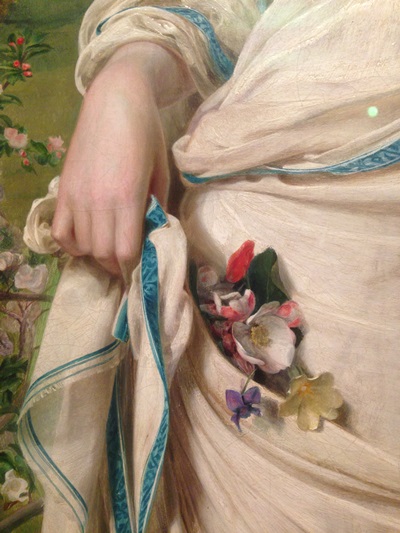
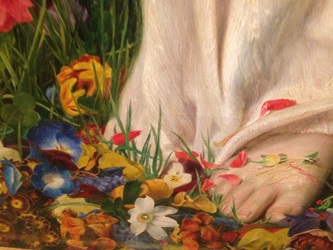
The pictures that accompany this blog are details from the painting Gentle Spring by Frederick Sandys (1829-1904), a Victorian Pre-Raphaelite painter; which hangs in the Ashmolean museum in Oxford. It’s relevance is simply no more than that it is such a beautiful painting that draws my attention on each visit, and each time makes my heart soar.

Consolation and Desolation

Light and Shadow together

Light and Shadow together

Consolation and Desolation… two words that I came across during a Spirituality Day recently held in college. In relation to Ignatian Spirituality they are used to help us discern which direction our life is taking us – is it toward God (consolation) or away from him (desolation).

Consolation also brings us closer to people, so that we are aware of their joys and sorrows and shows us where God is active, both in our life and theirs. It charges us with energy, so that we become more creative and our focus is away from ourselves. Whereas desolation, cuts us off from people, so that we turn in on ourselves. We are bombarded by negative feelings and become withdrawn, totally drained of energy and unable to sustain an interest in those things that previously had meaning for us.

It’s deeper than just being aware of the things that make us happy and trying to do more of them and avoiding the things that make us sad.  It’s more about having an understanding that there will be both moments of consolation and desolation in our lives; but that in wishing to draw closer to God, even if negative doubts seem overwhelming, God’s will for us ensures that our hearts, both God’s and our own, continue to beat in harmony.

It is also possible that these moments will occur simultaneously. This fact was brought home to me as we listened to a piece of music. The choir were singing a psalm and the different voices oscillated between the clear high notes of the trebles and resonant, low tones of the baritones and basses as they exchanged verses. Yet even as the one range sang, the other did not remain silent, but was still audible if muted

As this thought occurred my eye was also caught by one of the trees outside, its leaves filling the frame of the window, as the wind shook them and light and shadow danced together. On a sunlit day this produced a feeling of warmth and happiness as the large leaves absorbed and reflected the light, but I could also imagine on a wet, winter day, the dark bare branches would be oppressive and shadowy. Yet in both scenarios neither light nor dark was completely absent

The light shines in the darkness, and the darkness did not overcome it
John 1:5

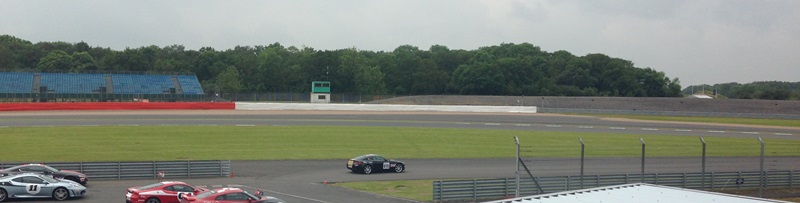
My mind then raced to think of other examples where the presence of ‘good’ and ‘bad’ might not only be present, but might be necessary for us to appreciate the need for both to exist concurrently. Things such as batteries, where positive and negative terminals have to be present in order for power to flow through it. Or when racing a car on a track, where the exhilaration of driving at high speeds needs to be tempered by a fear of the consequences of crashing and so teaches us to develop braking and manoeuvring skills. Of maybe even a margarita cocktail where the combination of saltiness and sourness adds to the whole experience!

The thrills of racing

The thrills of racing tempered by the need for safety

We only need to think of the disciples at Easter. Theirs was utter desolation as they abandoned Christ in the Garden of Gethsemane and had to deal with their fear and response to what they had done; yet just like Peter, they kept their focus on God,  so that their and our consolation came through the cross.

Yet even as we acknowledge that there will be consolation and desolation in our own lives, if we continue to maintain our focus on looking toward God then our consolation should never remain self-centred – there are many other directions in which God is trying to catch our eye!

Oh Master, grant that I may never seek,
So much to be consoled as to console,
To be understood, as to understand,
To be loved, as to love with all my soul

Make Me A Channel of Your Peace – Temple
© Copyright 1967 OCP Publications

Go back

Your message has been sent

Warning
Warning
Warning
Warning

Warning.

One Race

I have a dream - Martin Luther King

I have a dream – Martin Luther King Jr.

Martin Luther King Jr.’s famous ‘I have dream speech’ was delivered on the 28th August 1963 in Washington, D.C. at the height of tensions surrounding racial discrimination and the freedom movement in America. His vision was that one day all people would be united regardless of the colour of their skin or their religion – that there would be one race.

How often do we regard ‘race’ as the basis for discrimination, as we try to define it through skin colour, stature, physical attributes…”You don’t look the same as me therefore you cannot be the same as me!”… Things get even worse when we make comparisons based on wealth, education and perceived intelligence. We end up with a system of categorising people into ever smaller sub-groups, concentrating on the minute differences rather than the broader similarities, and using these as an excuse for our behaviour.

Love is the only force capable of transforming an enemy to a friend
Martin Luther King Jr.

The trouble is that we all do it to some degree or other, however non-judgemental we consider ourselves to be. Which is why it was refreshing to hear Bev Thomas talk about Race Relations this week. Bev was born in the Black Country, an area in the West Midlands of England and has Jamaican ancestry. She belongs to a Black-Majority church in London (a description she wishes was less proscriptive) and loves doing family research.

Now, I also like doing family research and have managed to trace over 18,382 ‘relatives’ on my tree. Bev has also done lots of research, some of it including DNA testing. This has thrown up some interesting connections from all around the world and involving people of every hue and colour imaginable – none of which should really be all that surprising. After all our genetic make-up is dependent on an almost infinite number of historical relationships

How many ‘races’ are included in these ancestors? Actually only one……

For those who cite biblical creation texts, then we are all descended from one man and one woman, Adam and Eve via their descendent Noah. For evolutionists, the genetic proof is linked to one common DNA ancestor, Mitochondrial Eve and her counterpart Y-chromosome Adam*. Whichever way you look at it, human beings are part of creation.

Of course I’m not so naive not to notice that there are very clearly differences between people, and that some people’s attitudes and characters are not always in tune with our own; but it helps us understand that racial discrimination shouldn’t exist simply because we continue to highlight those differences through fear and hatred but that we should seek instead to recognise the common inner spirit at the core of humanity.

By doing this we are able to be reconciled to each other and as Christians to be reconciled to God; but more importantly if we don’t do this then how, as Bev reminded us, are we ever going to bring about what we pray for each time we say the Lord’s Prayer – that is for God’s Kingdom to come? That is, a kingdom not of different peoples, different nations or different races but one kingdom of one people, one nation, one race.

After this I saw a vast crowd, too great to count, from every nation and tribe and people and language, standing in front of the throne and before the Lamb.
Revelations 7:9

We pray for it, but I wonder, do we have the will-power, the vision, the capacity to dare to believe that this might be possible on a global scale?  Surely it’s too big an ask to consider such an incredible occurrence? But why not believe it can be so. It just needs to start by what you ‘see’ when you walk down the street, browse the shops, go to work, meet someone new. Is this a total stranger or is this a not so distant relative? Do I discriminate against them because they ‘seem’ different to me or do I rejoice in our diversity.

After all, It’s a fact that it would be impossible for racism to exist if we were simply to acknowledge that we really do all belong to the same, one unique race…… that is the human race

Go back

Your message has been sent

Warning
Warning
Warning
Warning

Warning.

*Scientific discoveries are an ongoing fact of life. Mitochondrial Eve and Y-Chromosome Adam are the scientifically-proven theories that every man alive today is descended from a single man and every man and woman alive today is descended from a single woman.

A Chinese Legend


The Noble Bamboo

The Noble Bamboo

In the church, we have just celebrated Ascension, when the risen Christ traditionally ascends to heaven, having been crucified on the Easter cross. Ahead, we look forward to Pentecost; when the promised Advocate or Holy Spirit will be given to his followers. Without these things happening we would have nothing distinctive about our faith. 

If there is no resurrection of the dead, then Christ has not been raised;
and if Christ has not been raised, then our proclamation has been in vain
and your faith has been in vain.
1 Corinthians 15:13-14

So for his death not to have been in vain there had to have been a purpose. The son of God, who came to earth, and set aside his divinity to take on earthly flesh had to die in order that he and us might live and there is no doubt that giving your life for the greater good is the ultimate sacrifice anyone can make. Throughout history men and woman have made this sacrifice, as martyrs, as servicemen and women and civilians serving their country, as ordinary everyday people; in the hope that it helps others to live.

At Morning Prayer in college recently a fellow student read a beautiful story which illustrated this selflessness perfectly. However, it also made me think that God does not contain himself to our slightly arrogant assumption of exclusivity. For example, I have always been amazed at the fact that creation stories from around the world contain so many similar attributes. For those who believe in a creator God, this is not so strange, as we cannot be so precious that we think God only revealed the story of creation,  based on a Mesopotamic myth and passed down in verbal form, before being adapted to Israel’s belief in one God, by a group of Yahwehist writers in the late 7th or 6th century BC

God indeed reveals himself time and again in all of his creation, both physically and linguistically and so I hope you enjoy reading this legend from China and draw your own conclusions about where God could be working his purpose out in the world right now

A Chinese Legend

Once upon a time, in the heart of the Western Kingdom, lay a beautiful garden. And there in the cool of the day was the Master of the Garden wont to walk. Of all the denizens of the garden, the most beautiful and most beloved was a gracious and noble bamboo. Year after year, Bamboo grew yet more noble and gracious, conscious of his Master’s love and watchful delight, but modest, and gentle withal. And often, when Wind came to revel in the garden, Bamboo would cast aside his grave stateliness, to dance and play right merrily, tossing and swaying and leaping and bowing in joyous abandon, leading the Great Dance of the Garden which most delighted the Master’s heart.

Now upon a day, the Master himself drew near to contemplate his Bamboo with eyes of curious expectancy. And Bamboo, in a passion of adoration, bowed his great head to the ground in loving greeting. The Master spoke:

“Bamboo, Bamboo, I would use thee.”

Bamboo flung his head to the sky in utter delight. The day of days had come, the day for which he had been made, the day to which he had been growing hour by hour, the day in which he would find his completion and his destiny. His voice came low:

“Master, I am ready. Use me as thou wilt.”

“Bamboo ” — the Master ‘s voice was grave — “l would fain take thee and — cut thee down.”

A trembling of a great horror shook Bamboo. “Cut. . . me.. . down! Me… whom thou, Master, hast made the most beautiful in all thy garden. . . to cut me down! Ah, not that, not that. Use me for thy joy, 0 Master, but cut me not down. “

“Beloved Bamboo” — the Master’s voice grew graver still — “if I cut thee not down, I cannot use thee.”

The garden grew still. Wind held his breath. Bamboo slowly bent his proud and glorious head. There came a whisper:

“Master, if thou canst not use me but thou cut me down.. then… do thy will and cut.”

“Bamboo, beloved Bamboo, I would . . . cut thy leaves and branches from thee also.”

“Master, Master, spare me. Cut me down and lay my beauty in the dust; but wouldst thou take from me my leaves and branches also?”

“Bamboo, alas, if I cut them not away, I cannot use thee.” The sun hid his face. A listening butterfly glided fearfully away.

And Bamboo shivered in terrible expectancy, whispering low.

“Master, cut away.”

“Bamboo, Bamboo, I would yet… cleave thee in twain and cut out thine heart, for if I cut not so, I cannot use thee.”

Then was Bamboo bowed to the ground.

“Master, Master. . . then cut and cleave.”

So did the Master of the Garden take Bamboo and cut him down and hack off his branches and strip off his leaves and cleave him in twin and cut out his heart. And lifting him gently, carried him to where was a spring of fresh, sparkling water in the midst of his dry fields. Then pulling one end of broken Bamboo in the spring and the other end into the water channel in his field, the Master laid down gently his beloved Bamboo. And the spring sang welcome and the clear sparkling waters raced joyously down the channel of Bamboo’s torn body into the wailing fields. Then the rice was planted, and the days went by, and the shoots grew and the harvest came.

In that day was Bamboo, once so glorious in his stately beauty, yet more glorious in his brokenness and humility. For in his beauty he was life abundant, but in his brokenness he became a channel of abundant life to his Master’s world.

Living Water

Living Water

Go back

Your message has been sent

Warning
Warning
Warning
Warning

Warning.

Thoughts of a Christian Aid Collector

Christian Aid Week 2014

Christian Aid Week 2014

We have just come to the end of the annual Christian Aid week, and all over the country collectors will be tearing open red envelopes, spilling out coins and plucking out paper money, counting it and sending off their collections to Christian Aid. Those same people will have been tramping the streets in all kinds of weather, opening and closing millions of front gates and greeting their neighbours and mostly strangers with the oft repeated greeting “I’m here to collect the Christian Aid envelope” all the while flashing their collectors badge just to show that they really are official volunteers. I love being a Christian Aid collector, but this year, for various reasons, I was unable to do so… and I’ve missed it.

 What I haven’t missed is the variety of postures you have to adopt to initially post the envelope through people’s letterboxes; or the people who swear that they never received an envelope when you both know darn well that (a) you put one through their door two days ago and (b) that they’ve probably recycled it into the waste bin…still smile! Or others who tell you to hold on, fetch the envelope and then hand it back to you… empty….. keep smiling!

I quite happily accept the “No thank yous” or “We already give to other charities” because I never feel that anyone should be under any compulsion to give to any charity they don’t or can’t support or to feel obliged to just because you’re standing there expectantly right in front of them on their threshold with your bright red collectors bag.

However, it’s great when their donation is there, ready and waiting to be dropped into the bag. or they pick up the envelope with profuse apologies for not having prepared it, then dash off to find their purses and wallets, while you often have to try and make small talk with their young children or pets on the doorstep; till they return with the envelope, which they are desperately trying to seal (I believe that the sealing of a Christian Aid envelope is one of the harder challenges in life) before handing it over with a huge smile. After all, God loves a cheerful giver!

Each of you must give as you have made up your mind, not reluctantly or under compulsion, for God loves a cheerful giver (2 Corinthians 9:7)

I even like the bulging envelopes, which you know are filled with pennies emptied out from various jars and pots, handed over apologetically because they think that it’s not very much but that you know will still make a difference; despite the fact that by the end of your collection round you know you’re going to need muscles like Channing Tatum!

But best of all, I love the fact that at least once a year Christians get out there, around the streets and homes in their neighbourhood, and become the human face of the Church. Door to door collections are very rare nowadays in an age when it’s probably easier and more economic to let your fundraising be done through the internet. An impersonal click of a button and an automatic email to acknowledge your donation is still valuable but showing people that you care enough about the work that is being done by Christian Aid to spend a few hours doing the legwork can be even more valuable.

So well done to all of you who did just that this year, your efforts will be greatly appreciated by the charity and by all of the projects that it supports – and well done to everyone who donated generously. I only hope that I can be part of it again next year.

In the meantime if you want to find out more about the work that your money and efforts could be involved in have a look on the Christian Aid website 

Donate to Christian Aid

Donate to Christian Aid

Go back

Your message has been sent

Warning
Warning
Warning
Warning

Warning.

Freedom of the Morning

Bluebells, Cuddesdon

Bluebells, Cuddesdon

There are not many occasions when you are literally stopped in your tracks by something that catches your eye. This stopping is even harder when you are driving your car; but over the last couple of weeks there have been two sights that did just that.  Luckily they occurred on country lanes that meant that with a quick glance in the rear view mirror I was able to pull over to investigate a bit further

Hare study by Nolan Stacey

Hare Study*

The first happened early in the morning as I drove past an open field of spring wheat. A movement caught my eye, which I mistook at first for a fox or rabbit breaking cover, but as I halted I realised it was a large male hare. This buck was paused, motionless; raised up on his hind legs as if checking out the terrain, before bounding away, too fast for me to grab my camera to capture the moment.

The second occasion was a few days later on my way home from college. This time it was blur of intense blue that made me step on the brakes. The woodland on my right seemed impenetrable with nettles and brambles, but by slowly reversing I could see a gap where the grass looked trodden down. It seemed a natural footpath led beneath the trees and I picked my way carefully over it to be met by a vista of bluebells in patchy sunlight under the newly budded green trees. Ahead of me stretched a path, made not by humans but an animal track, perfect as a byway for the resident woodland creatures and a perfect stimulus to imagination.

The following poem is a result of both encounters

Freedom of the Morning

Into the field of rippling wheat
bounds a wild creature of the wood.
Stopping abruptly; briefly silhouetted
against the emergent morning sun,
the buck raises himself on his hind legs,
his large ears attuned to nature’s rhythm.
Sensing no danger, he punches the air,
as if boxing the breeze; then lopes away,
quickly disappearing into the green sea

Above the hare’s wake, a lone gull
lazily flaps across the dark trees.
Disturbed, the rookery rises
in a dark chorus of harsh condemnation;
‘kaah-kaah-kaah’ echoes into the valley,
answered by mist muffled church bells
sounding the hour, and whose spire
stands sentinel over the slumbering town,
undisturbed by either fleeting interruption

Deep in the woodland, snuffling sounds;
as a black snout emerges from the ground,
followed by myopic eyes in monochrome skull.
The earlier rain has showered the undergrowth,
leaving the air cool and fresh, its sweetness
appreciated after a night underground.
Hunger draws the brock out further from his sett,
as he moves with assured gait along a trail,
his silvery-grey pelt camouflaged by twisting birch

This confidence is justified within his coppice kingdom,
There will be no challengers this morning;
His canine adversaries are confined to kennel;
Their baying silenced for lack of scent.
Yet, as he tramples a track through
the cerulean carpet of bluebells
a heady perfume sweetens his path,
and dappled sunlight dances for joy
as creation rejoices in the freedom of the morning

A path through the bluebells, Cuddesdon

A path through the bluebells, Cuddesdon

Brock = This is a descriptive noun for a badger and comes from Old English and Middle English. Its origins lie in an Irish-Gaelic word ‘broc’ which means badger

Go back

Your message has been sent

Warning
Warning
Warning
Warning

Warning.

*This beautiful pencil sketch of a hare is taken from a greeting card I recently purchased. The artist, Nolon Stacey, is self-taught, specialising in drawings of British wildlife, rural scenery, and farm animals. He currently lives in the Yorkshire Dales and gains inspiration from the picturesque surroundings and varied wildlife. More examples of his work, including items for sale can be found  at nolanstacey.com

Changing Doubts Into Hope

Baptism with water and the Holy Spirit

Baptised with water and the Holy Spirit

It’s not often that you start a talk in church with a piece of music. However last Sunday, the second of Easter (yes we are still celebrating Easter long after the chocolate eggs have been eaten and the hot-cross buns finally toasted) I decided to see if the congregation were up for a bit of ‘Name that Tune’ The piece in question was the theme tune from Star Wars, Episode 4, ‘A New Hope’

We were celebrating a Eucharist, made all the more special because it was to include a baptism. Our readings included the story of Thomas meeting the resurrected Jesus and it was, looking to the future we are being offered, that we hopefully were to discover that morning

First though I want to ask you a question… Is it just me?? Or do we all have moments of doubts? Doubts about whether we are capable of doing something – if we have the ability or the strength? Doubts about whether we can trust others to carry out the things they have promised to do. Doubts about what the right thing to do is? Doubts about what our purpose in life is? Doubts about where God is in our lives? Is it just me??

Everyone doubted that Noah could build an ark – and yet he went on to achieve this incredible feat of engineering; Sarah doubted that she would ever have children and even laughed in God’s face and yet she went on to be the co-founder of a great nation Moses doubted that he had the articulate skills to face up to Pharaoh, yet with the help of his brother Aaron he went on to bring the Israelites out of Egypt and into the Promised Land. Elijah doubted that God was with him when he fled in fear for his life to Mount Horeb and yet it was there that he encountered him in that ‘still, small, voice’ guiding him as to what to do; Peter doubted when he walked on the water and yet there he was at Pentecost speaking out boldly and clearly, and of course the eponymous Thomas

So the other disciples told him, ‘We have seen the Lord.’ But he said to them, ‘Unless I see the mark of the nails in his hands, and put my finger in the mark of the nails and my hand in his side, I will not believe.’ John 20:25

So it certainly seems that God has no problem with us having doubts from time to time, after all we’re only human and we’re very often not in a position to see the bigger picture or what the future holds for each of us. What is it that we need to turn those doubts into belief I wonder? What proof will be good enough? For Thomas it was physical proof that the man he had been following and believed in had truly risen from the dead and was very much alive and standing in front of him. Maybe the only proof we’ll accept is when something we’ve doubted would happen has actually happened then we’ll believe it, or maybe if something didn’t happen when we feared it might. Good concrete evidence is often what we seek to allay our doubts and fears

Doubt often comes about because of a fear of failure; fear that we will let people down; fear that what we desire won’t come about. And maybe it won’t – not in the way we think or hope it will… and that I think is the key. The need to change our outlook from negative to positive, changing our doubts into hopes, putting our faith in God not in ourselves. All the while we hold on to our doubts then we are stopping ourselves from believing that things are possible.

Psalm 16 is sometimes translated with the subtitle ‘the hope of the faithful, a prayer of trust and security in God’ and it’s a beautiful lament from David which contains the following lines,

I praise you, Lord, for being my guide. Even in the darkest night, your teachings fill my mind. I will always look to you, as you stand beside me and protect me from fear. With all my heart, I will celebrate, and I can safely rest. I am your chosen one. You won’t leave me in the grave or let my body decay. You have shown me the path to life, and you make me glad by being near to me.’

Appropriate words as we celebrate Christ’s resurrection, but also appropriate for our own lives, as Peter in his first letter tells us, ‘By his great mercy he has given us a new birth into a living hope through the resurrection of Jesus Christ from the dead’ – a living, breathing hope that has been placed in all of us.

Font blog

The waters of baptism in the font at St John the Evangelist, Hedge End

And this morning we witnessed that hope being placed into a young child, Noah; whose baptism symbolised a new birth, not of water but of the Spirit. A hope that will be new and vibrant, a hope that will be reflected in the love and example that he receives from his parents, grandparents and godparents; a hope that Noah will need to have reaffirmed from time to time not only by his family, but by the whole family of Christ.

Because it’s all our responsibility to look to the hope that has already been placed in our own lives and to remain steadfast in trusting that God knows what he’s doing and all will be well.

Regrettably, as we’ve already seen, there may still be creeping moments of doubt. Again as Peter puts it, ‘even if now for a little while you have had to suffer various trials.’ And let’s be honest, all of us have and may be having to face various trials, some more than others, some harder to bear than others. Maybe our faith has been tested to the limits, but, if through it all, we don’t lose hope and believe that we will be given the strength to endure it, then just like metal that when it is tempered by fire is made stronger, so our faith will emerge with genuine hope for whatever the future may bring; and just like Thomas we will be able to declare, ‘My Lord and my King

Jesus tells his disciples, standing there right next to him, that they are blessed because they have seen for themselves with their own eyes and have no reason to doubt only to believe. How foolish we must seem to others to believe in something we’ve never seen, yet we have all come to or are coming to faith in so many different ways. What is it that convinces us that we should believe? Is it a personal encounter with Jesus; is it the love shown to us by those around us; is it an example of a friend, or was it that we just couldn’t believe that our lives are nothing more that this brief span of time. Whatever it was that started you on your journey of faith, be hopeful and hold on to it and remember how blessed you are.

The promises we make to the newly baptised, to support them in prayer, example and teaching we should also make to each other. We should push all of our doubts to one side as we are welcomed into the fellowship of faith and remember instead the one hope to which we are all called

Let’s celebrate that hope, and as always, may Christ’s peace rest in you…Amen

Expect the unexpected in our font!

Always expect the unexpected in our font!

Go back

Your message has been sent

Warning
Warning
Warning
Warning

Warning.